‘The ideal ventilation system is no longer so far removed from reality’
Andy Camps, owner of luchtwinkel.be and Tri-Cam BVBA, and a lecturer at PXL Hogeschool, is well placed to consider the opportunities and challenges in ventilation. Demand-controlled ventilation is gaining ground, while zoned systems are still a prospect for the future, and developments are moving in the right direction. ‘You don’t notice, feel or hear an ideal ventilation system,’ says Camps.
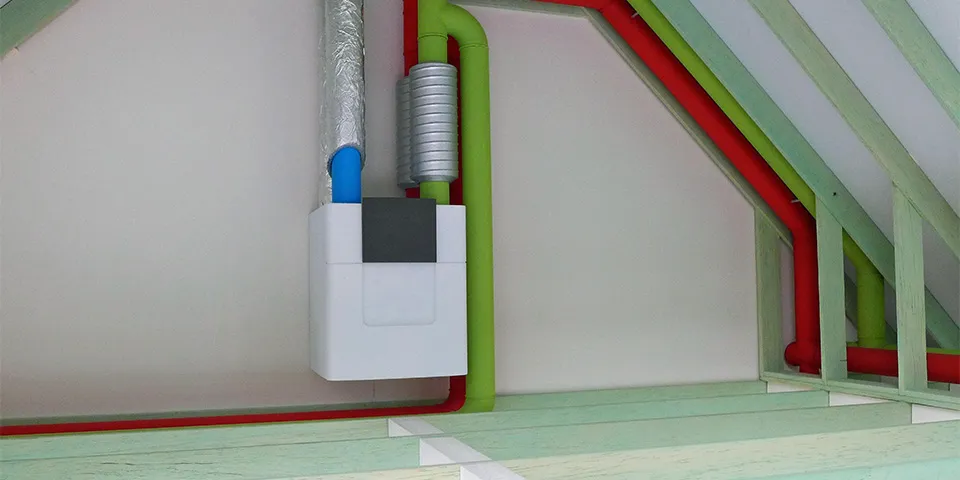
Camps has seen first-hand how demand control for C systems has gradually become the norm. “This means that the better demand-controlled C systems now perform almost as well as D systems, in terms of both electrical and thermal energy consumption.” D systems are also undergoing significant development: “Demand control has been possible for D systems for some time, but it wasn’t widely promoted. CO2 sensors have become considerably cheaper in recent years. As a result, many manufacturers have started promoting demand control for D systems, which can only improve energy consumption. A few years ago, it was still quite normal to say that a D system cost between 200 and 500 euros a year to run. Demand control can bring this down to less than 100 euros a year.”
‘Two types of ventilation installer are emerging’ (Image: Pixabay).
Another interesting development is the so-called zoned system, says Camps. “A number of manufacturers have zoned systems in their range. These give a ventilation system (D system) a day zone and a night zone. The unit uses dampers, either built into the unit or installed externally, to direct air where it is needed in the home. At night, air is directed mainly to the bedrooms, and during the day mainly to the living room.”
The importance of ventilation
The importance of good ventilation has only grown in recent years, says Camps. “Until a few years ago, misconceptions such as ‘Why do we need this?’ or ‘It’s just a way to rip people off’ were still particularly prevalent. Now, people are increasingly looking for quality.”
‘A few years ago, it was still quite normal to say that a D system cost between 200 and 500 euros a year to run. Demand control can bring this down to less than 100 euros a year.’ (Image: minimus.be)
Camps: “An ideal ventilation system is one you don’t notice. You don’t feel it or hear it, but it does bring enough air to the right place in the home at the right time. At present, too much emphasis is still placed on the lowest price, resulting in undersized ducts and units that are just too small to deliver what they need to. However, greater attention to issues such as unit noise has improved the quality of installations. “Customers now understand that it isn’t normal for a ventilation system to make noise or cause draughts. The ideal ventilation system is no longer so far removed from reality.”
“Unfortunately, not everyone has yet realised that outdoor air quality is also affected by what happens nearby,” Camps continues. A neighbour with a cosy open fire or stove can leave the whole neighbourhood smelling of smoke. Ventilation systems draw this smoky odour indoors. The result is that people quickly switch off the ventilation or look for expensive filtration solutions. New and/or alternative filtration technologies could potentially improve the situation.”
‘An energy-efficient installation is about more than an efficient unit’
“A well-designed (and installed) duct network can enable a less energy-efficient unit to perform better than an efficient unit with a poorly designed duct network,” says Camps. “Low air speeds in the ducts (1.5m/s or less) and larger ducts reduce resistance in the network, meaning the units have to work less hard to deliver the required pressure. This results in a more efficient system.”
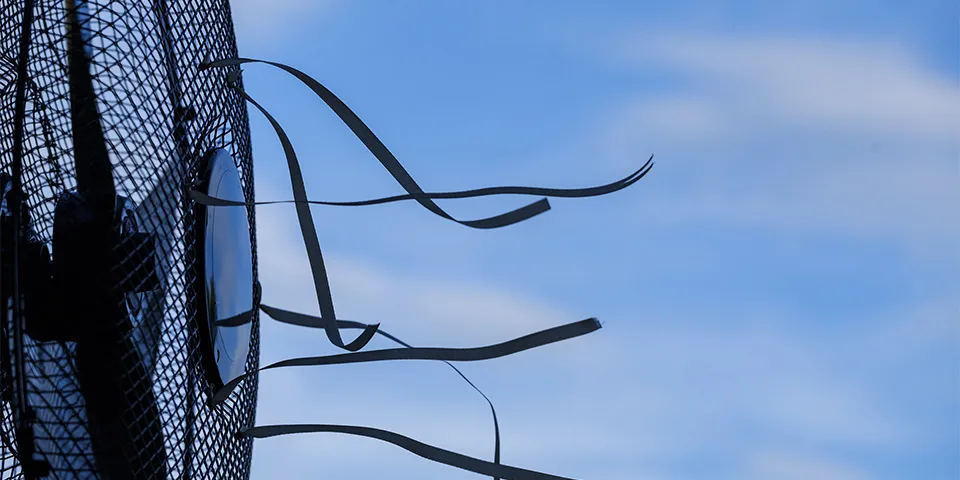
‘Unfortunately, not everyone has yet realised that outdoor air quality is also affected by what happens nearby.’ (Image: Stocksnap)
Although installers are keeping up with the latest ventilation technologies, according to Camps, it is difficult to see the wood for the trees. “Two types of ventilation installer are emerging. One group specialises in installing systems designed by manufacturers and/or wholesalers. This group is highly dependent on its suppliers. The other group consists of installers who also do their own designs. These are usually installers who either work for a larger company or are specialists who focus solely on ventilation,” Camps concludes.
Question about this story? Ask your question
Keep following this
Get an email when a new story is published. No account needed.
- ThemeHealthy air and summer comfort
- SubjectHVAC