











‘The HVAC sector must lead the transition to a post-CO2 society’
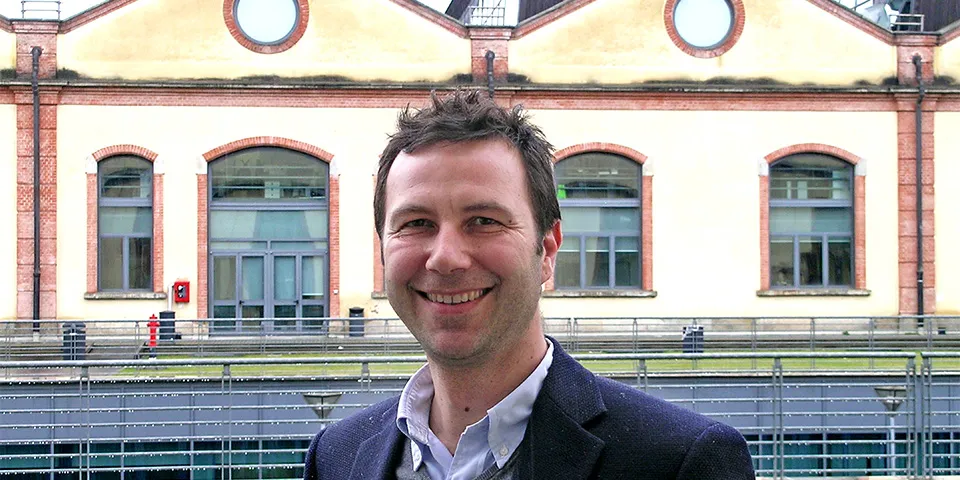
REHVA is the Federation of European Heating, Ventilation and Air Conditioning Associations. The organisation was founded in 1963 by 9 countries. The Belgian sector federation Atic was among the founding members, and this year celebrated its 80th anniversary. REHVA President Professor Stefano Corgnati spoke to Installatie & Bouw to take stock and look ahead to the future.
REHVA’s mission is to exchange technical knowledge, promote European policy, develop standards and advocate for healthy, high-performance buildings. REHVA now has 26 member federations, representing a total of 120,000 engineers across Europe.
REHVA was closely involved in drafting the recently adopted EU Energy Performance of Buildings Directive, which will have a significant impact on the HVAC sector of tomorrow. “We are pleased to see the growing focus on indoor air quality and the energy performance of buildings,” says Corgnati. He believes there is still work to be done on energy consumption. “We urgently need to close the ‘performance gap’: the difference between calculated energy performance and actual energy consumption. To do this, we need to gain a better understanding of how occupants’ behaviour affects the energy consumption of buildings.” Corgnati therefore has high hopes for the digitalisation of the buildings and HVAC sectors.
‘We urgently need to close the ‘performance gap’: the difference between calculated energy performance and actual energy consumption.’
The revised EPBD introduced the ‘Smart Readiness Indicator’ (SRI), among other things. “SRI could play an important role in helping us understand the energy dynamics at work in a building. But the methodology for SRI still needs to be defined. That is a major challenge, and the HVAC community must take a leading role,” says Corgnati.
Human-centred design
REHVA strongly believes in ‘human-centred design’: designing to maximise indoor air quality while reducing energy consumption. Corgnati says: “We want to make this vision a prominent feature of the HVAC sector, at both European and local level through our members. The HVAC sector must lead the transition to a post-CO2 society. We are therefore continually researching ways to reduce energy demand and increase efficiency by integrating renewable energy sources. At the same time, ICT, digitalisation and the Internet of Things offer considerable potential. Connecting them to HVAC systems could usher in a new era of optimising energy consumption in buildings.”

‘We no longer see buildings as individual units,
but as groups of connected buildings.’
According to Corgnati, the emergence of data science in the building energy sector offers a unique opportunity to create new products and services. “We are seeing a shift from selling HVAC equipment or energy to selling comfort-related services. This is an entirely new model, in which these services are sold directly to the end user or building owner. It will have a huge impact on the HVAC market and our society.”
Buildings interacting
Building management and data analysis also open up possibilities for buildings to interact as part of larger energy communities. “We no longer see buildings as individual units, but as groups of connected buildings, where different energy vectors can be selected to meet users’ varying energy needs. The transition to an all-electric, digitalised, connected community of smart-interacting buildings is inevitable. This is comparable to what is happening in the mobility sector.”
From 26 to 29 May, REHVA will host the CLIMA Congress 2019 in Bucharest. There will be plenty of debate at the congress about the prospects and challenges facing the HVAC sector.
Question about this story? Ask your question
Keep following this
Get an email when a new story is published. No account needed.
- ThemeHealthy air and summer comfort
- SubjectHVAC







