The crucial role of ventilation in a healthy learning environment

Children need a high-quality, healthy and safe learning environment to reach their full potential.
Poor indoor air quality can lead to drowsiness, difficulty concentrating, coughing, sneezing, headaches and many other complaints. The right balance of temperature, ventilation and lighting is essential to optimise learning ability and performance, and minimise sickness absence.
By law, CO2 levels in workplaces such as schools must not exceed 900 parts per million for at least 95% of the day. Research has shown that CO2 levels in a classroom without ventilation or airing can reach 1,500 parts per million after just half an hour. This means the air quality is particularly poor, so a continuous flow of air must be provided. This is the case in 60-70% of older school buildings.
In response to COVID-19, healthy air has received more attention than ever as a way to limit the spread of the virus. Small saliva droplets remain airborne for longer, and poor ventilation can cause their concentration to rise, increasing the risk of infection. Ventilation is therefore highlighted as one of the key measures needed to prevent the spread of coronavirus.
How can Ventilair Group, as a manufacturer and distributor of ventilation solutions, do its bit? Ventilair Group understands better than most that every project is different and requires a different solution. Whether that means an affordable solution that can be implemented immediately, or one that looks to the future and is fully integrated and energy-efficient.
Flexroom Concept
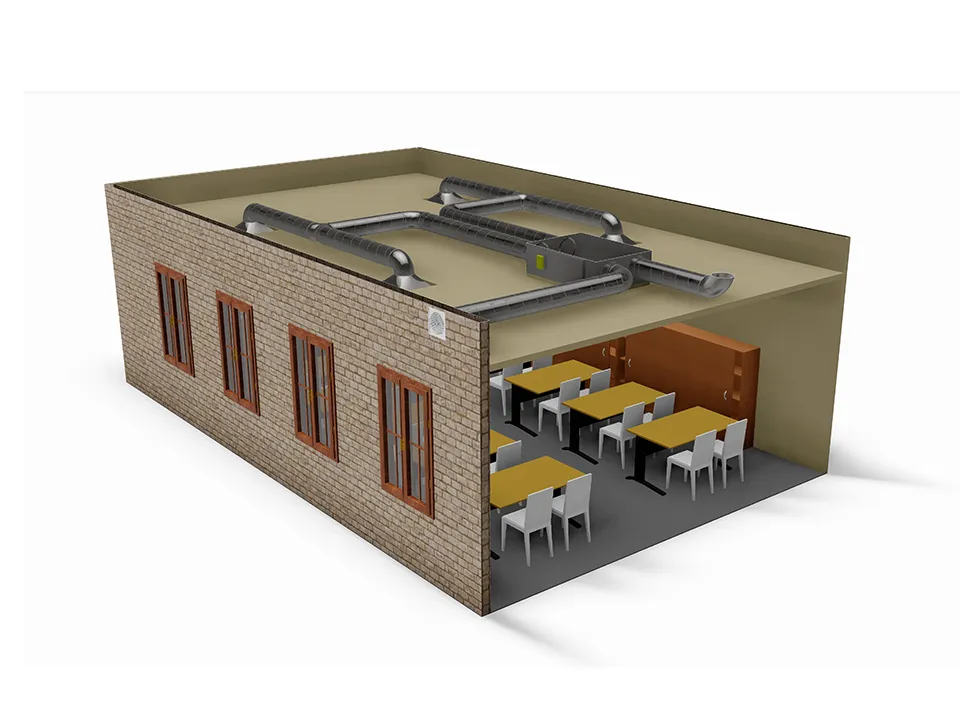
With a Flexroom solution, Ventilair designs a flexible solution to improve air quality. It is based on maintaining the classroom bubble. A central controller continuously monitors the air by measuring CO2 levels and adjusts the ventilation rate to meet requirements. In each classroom that needs ventilation, two separate fans supply fresh air and extract contaminated air.
Energyroom Concept
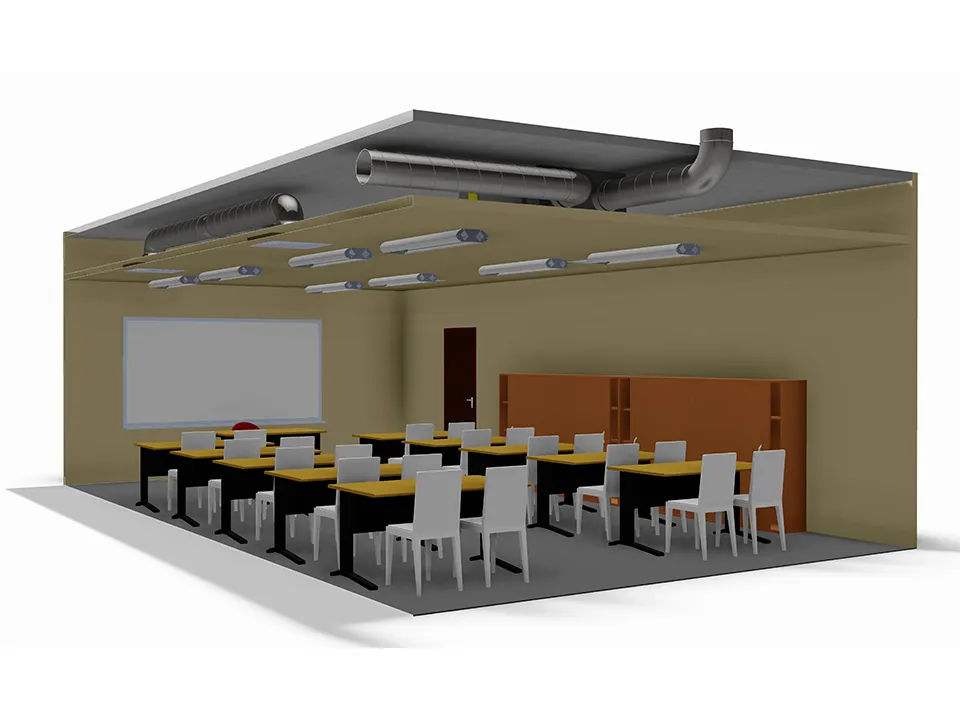
With Energyroom, Ventilair takes a forward-looking approach, giving maximum consideration to the environment. The result is a complete, energy-efficient and sustainable solution. Each room has its own ventilation system, with air ducts and supply and extract grilles concealed against or within the ceiling. A central intelligent control system adjusts ventilation based on time schedules, CO2 levels or manual intervention. An intuitive control panel monitors all parameters and performance to ensure optimum operation. The system can also be operated remotely. Heat recovery retains 70-90% of the temperature and thermal energy, while supplying fresh air at a comfortable temperature without draughts. During periods when overheating is likely, the summer bypass is activated and cooler outside air is supplied to help cool the rooms.
What gets measured gets managed
In collaboration with AirTeq, Ventilair offers CO2 monitoring. This provides a reliable and safe way to assess the health of classrooms. User-friendly Smart Sensors take measurements on site. After a week, the school receives a detailed report showing which classrooms are performing well and which may need attention. The analysis shows when peaks occur and when air quality is adequate, with CO2 levels below 900 ppm. The handy app or clear dashboard lets you see at a glance whether a classroom is healthy. Pressing the Smart Sensor also immediately shows the air quality at that specific moment using a colour code, indicating whether action is needed, for example opening the windows or leaving the room briefly to air it.
Een zakelijke vraag aan Ventilair Group? Get in touch
Companies in this story
Keep following this
Get an email when a new story is published. No account needed.
- ThemeHealthy air and summer comfort
- SubjectHVAC
- CompanyVentilair Group