











The business model for heat pumps is constantly evolving

“2021 was a decisive year for the heat pump sector,” begins the European Heat Pump Association (EHPA) in its ‘2021 market outlook’ for heat pumps. The sector recovered remarkably well from the coronavirus pandemic and grew by 25 per cent in Europe. More than two million heat pumps were installed in 2021, accounting for a quarter of all heating appliances installed on the European market. Even so, the outlook is far from consistently favourable for heat pumps.
There was also an increase in Belgium. This is clear from the annual report by ATTB, the Belgian association of manufacturers and importers of energy-efficient solutions for a comfortable indoor climate and domestic hot water. “Sales of heat pumps, mainly air-to-water models, rose by 11% to 17,000 units, but compared with the 245,000 boilers sold, this technology still accounts for only a small share of the market. And that is likely to remain the case as long as heat pumps are used almost exclusively in new buildings and major energy renovations,” it says. EHPA, however, is more optimistic: “Heat pumps are well on their way to becoming the standard solution for new buildings.
Technological development, combined with smart renovation, also makes the direct replacement of heating systems a viable option in existing buildings. It bears repeating: ‘heat pumps work in renovation projects’.”
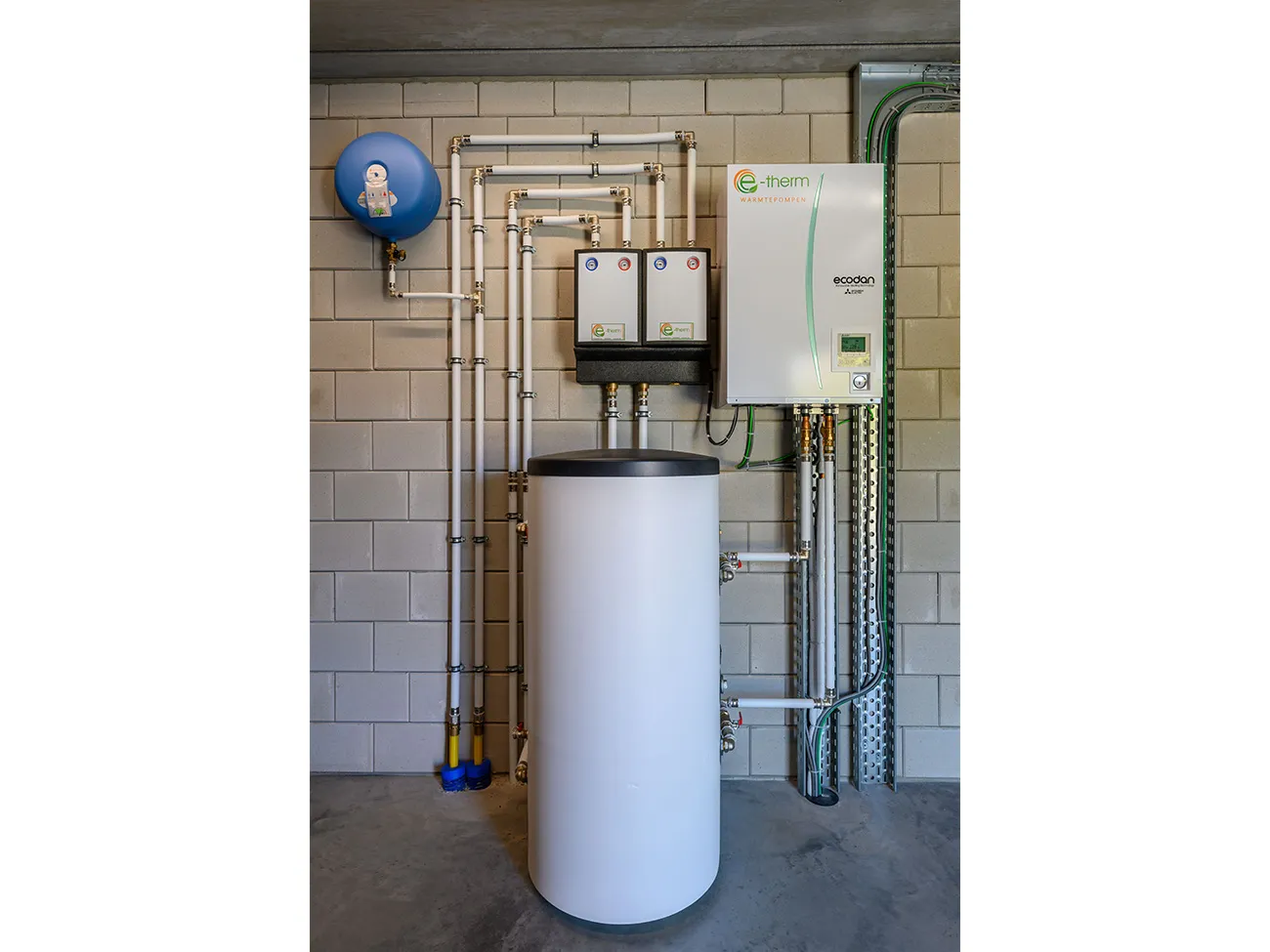
‘The payback period for a heat pump? Never’
Other factors, of course, act as a barrier in Belgium. It is well known that electricity is taxed far more heavily than gas in Belgium. “The payback period for a heat pump? Never,” energy expert Ruben Baetens (3E) wrote in a telling tweet. “You could practically give away an electric heat pump for free today and it still wouldn’t be cost-effective,” he added in De Tijd. At the end of 2021, he elaborated on his views at ODE’s Warmtepompsymposium. “I don’t even think there has to be a payback period. The future doesn’t always have to be cheaper than the present. Once the operating and investment costs are no higher than they are today, you could even consider making heat pumps compulsory.”
According to Baetens, the key problem is that the business model, and therefore the competitiveness, of heat pumps has changed significantly over the years. This was the result of a changing policy framework. “Between 2008 and 2015, for example, the difference between gas and electricity prices was much smaller than it is today. But because of the high investment costs and less stringent EPB requirements, there was little incentive to install heat pumps at the time. By the end of January 2016, electricity had become six times as expensive as gas. The abolition of the principle of the turning-back meter for solar panels further increased the operating costs of heat pumps,” he says. “And so the business model has changed completely once again. Today, there is a great deal of uncertainty, because households are being advised to increase their self-consumption, but it is particularly difficult to predict the potential for each household. After all, every household is different.”
The future will be different
Baetens’s conclusion: “Bear in mind that any business model could be a thing of the past in just two years. The future is also likely to look completely different from the situation today. The sizing of a PV system installed in 2008 makes no sense at all today, because all the factors that affect it have changed significantly. The focus now is firmly on self-consumption, and this is given considerable weight when sizing PV systems. But suppose a tax shift follows in the coming years, with lower taxes on electricity and higher taxes on gas. In that case, the value of self-consumption disappears, and the figures no longer add up.”
Baetens, too, believes that heat pumps will eventually achieve a genuine breakthrough. “You have to make it clear to people that gas and heating oil will eventually be phased out. This is especially important because people are becoming increasingly aware that something is wrong with the discrepancy between gas and electricity prices. A tax shift is inevitable. People have short memories and don’t realise that this gap was much smaller barely 10 years ago.”
Question about this story? Ask your question
Keep following this
Get an email when a new story is published. No account needed.
- ThemeFossil-free heating and cooling
- SubjectHVAC







