











Swedish-made heat pumps: quality and sustainability assured
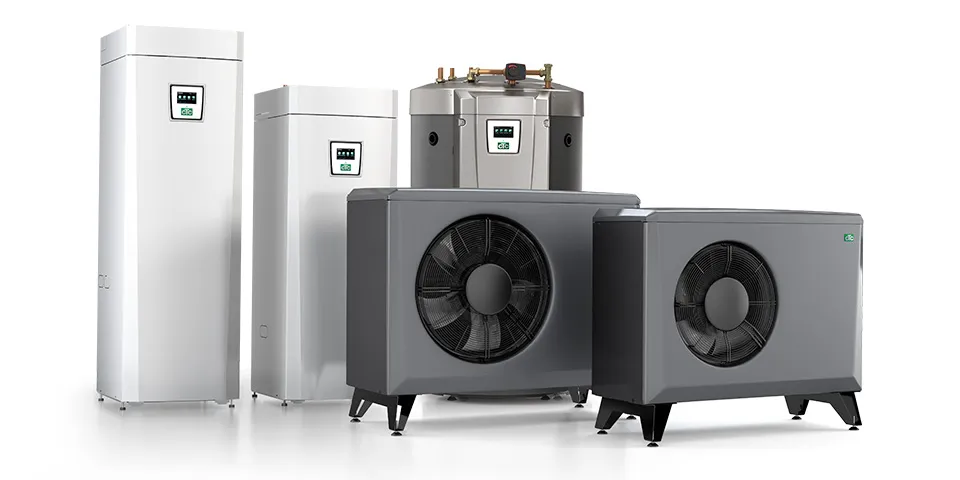
As many as 96 years ago, CTC introduced the concept of ‘central heating’ in Sweden. In 1981, the company began working with what was then a revolutionary technology: the heat pump. Over the years, CTC has increasingly focused on heat pumps. It was a deliberate choice: “Did you know that 78% of CO2 emissions are attributable to fossil fuels? Heat pumps are therefore an important part of the solution to the climate problem,” says Danny Dierckens of CTC Benelux.
Danny Dierckens realises that Belgium still has a long way to go when it comes to heat pumps: “In Scandinavia, the use of fossil fuels has been restricted for years. Anyone replacing an old boiler there is required to switch to renewable energy. Or look at the Netherlands, where the price of gas has been doubled and the price of electricity slightly reduced. It is time for Belgium to take action on a genuinely green tax shift too.”
Quality comes first
CTC Benelux is not waiting for a tax shift to start working on the energy transition now, with a range of quality heat pumps that proudly bear the Swedish stamp. Quality is a top priority for CTC. “We don’t aim to offer the cheapest product on the market. Our modulating units achieve near-perfect EPB scores, which has not gone unnoticed by architects and EPB assessors. They are starting to recommend our products too.” The range continues to expand: towards the end of the year, CTC will introduce new modulating ground-to-water units with outputs of 12 and 16 kW.
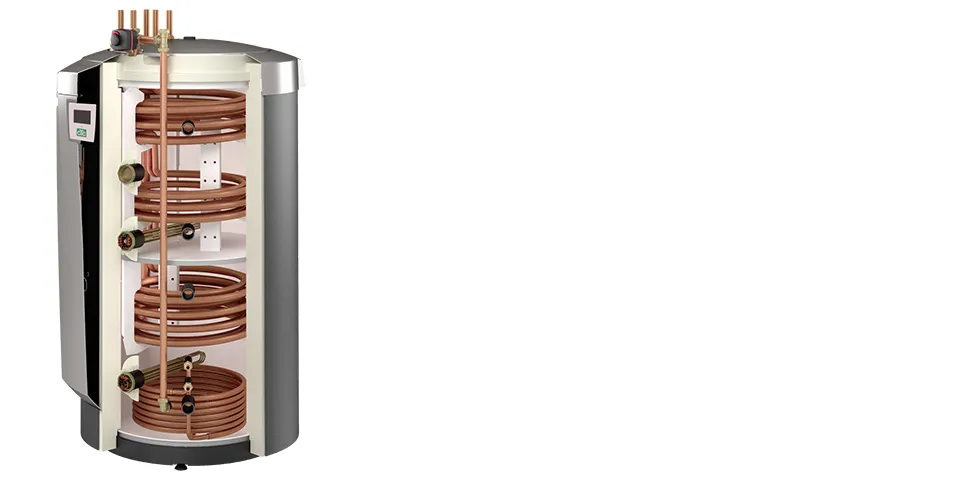
‘Our heat pumps weigh up to twice as much as a heat pump from another brand, and that’s not because we put lead in them.’
“Our heat pumps weigh up to twice as much as a heat pump from another brand, and that’s not because we put lead in them,” Dierckens continues. “The units are finished to a high standard. Nor do we try to make the heat pumps as small as possible. Some people think that a larger unit automatically produces more noise, but nothing could be further from the truth. Our heat pumps are up to 12 dB(A) quieter than smaller units.”
CTC’s range includes both ground-to-water and air-to-water heat pumps. “Our share of ground-to-water units is slightly higher than that of other manufacturers,” says Dierckens. “Both systems have advantages and disadvantages. Customers need to consider whether the improved efficiency of geothermal energy outweighs the higher installation cost. And of course, you need to have the space for it.” In one situation, air-to-water is definitely recommended: “If you have an outdoor swimming pool, you can use an air-to-water heat pump to heat it in summer.”
Monobloc
One important feature of CTC’s heat pumps is that they are only available in monobloc versions. “We don’t have split units. That means no refrigerant work is required during installation. This improves quality, because we can test the refrigerant circuit for leaks and efficiency at the factory. And of course, it makes the installer’s job easier.”
The controls are one of the standout features of CTC’s heat pumps, says Dierckens. “They are very intuitive for both end users and installers. No complicated codes, just clear text, available in several languages. When I visited ISH last month and looked around the various manufacturers’ stands, I saw lots of elaborate, flashing controls that are far too complicated for customers and installers.”
Question about this story? Ask your question
Keep following this
Get an email when a new story is published. No account needed.
- ThemeFossil-free heating and cooling
- SubjectHVAC







