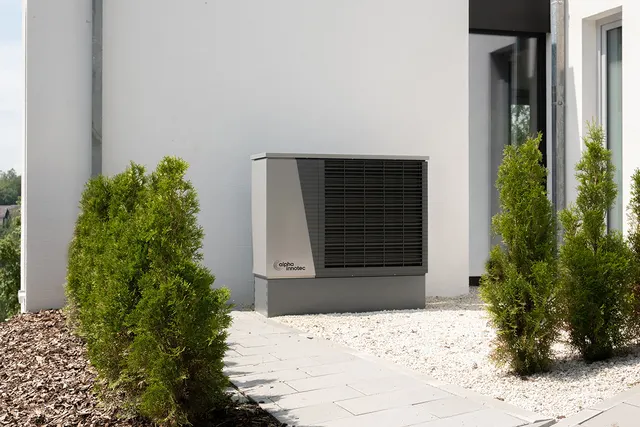
Smart HVAC systems are also moving towards cybersecurity and connectivity protocols
Text Adria Security SummitImage Adria Security Summit / Google / Somchai Sanvongchaiya / Suchat Bea
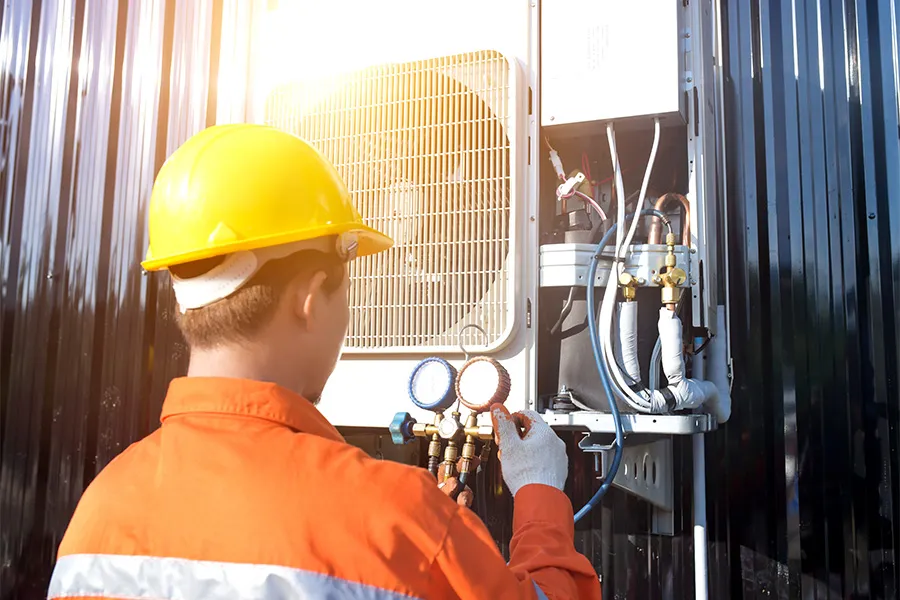
In the near future, machine learning will further expand the capabilities of smart HVAC systems. Smart HVAC systems powered by machine learning will then be able to send alerts about potential problems, whenever sensor readings are abnormal, and even before a customer actually experiences a problem. In the near future, remote diagnostics and smart monitoring systems will also be available in every technician’s van.”
There is currently a strong drive to provide the HVAC industry with smarter, on-demand solutions, driven primarily by energy-efficiency requirements. A smart HVAC system offers benefits such as lower energy consumption, condition-based maintenance, the prediction of performance problems, and remote, automatic system adjustments. This can make tenants more comfortable, help building managers manage more efficiently and make it easier for HVAC technicians to do their jobs. It can also further reduce the total energy costs of buildings.
There are various reasons for using a smart HVAC system. The following questions need to be considered: Is the building old or new? Which wireless protocols should be used for the smart system? Does the system have sufficient cybersecurity?
Market needs have recently broadened from residential to commercial buildings, with smart HVAC systems now also providing a comfortable living experience for people working in offices.
From diagnosis to prediction
Energy savings are achieved through smart HVAC systems that require continuous performance monitoring and can meet optimum conditions. As a result, the system must carry out energy diagnostics, energy forecasting and modelling, fault detection diagnostics and model-predictive control to save energy.
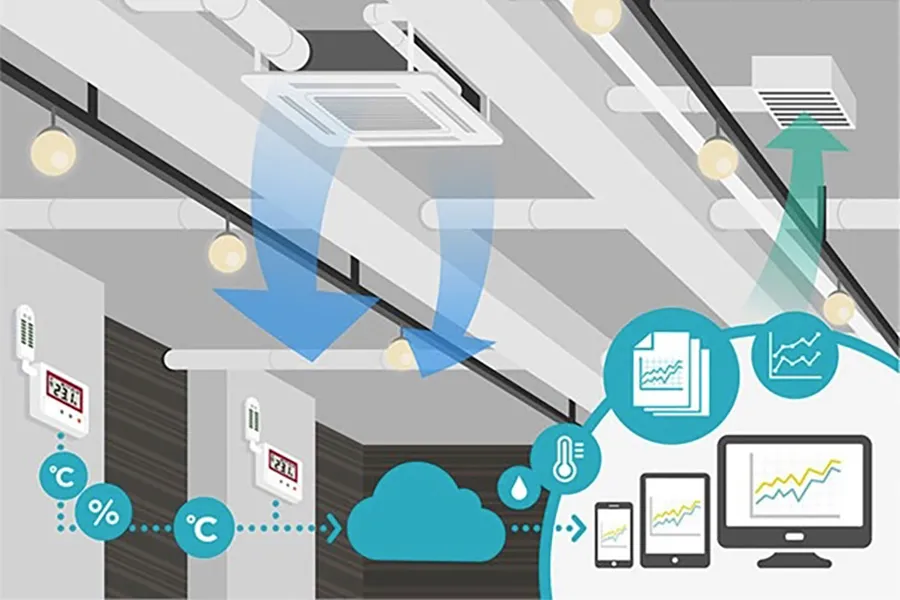
“A truly smart system needs to be able to anticipate optimal performance and adapt quickly to achieve those goals,” says Sudhi Sinha, Vice-President & General Manager of Digital Solutions at Johnson Controls. IoT-enabled HVAC solutions give users access to data beyond temperature readings, including humidity readings and indoor air pollution levels. In addition, smart interfaces, dashboards and apps already enable building managers and tenants to monitor equipment continuously and adjust its operation remotely. At the same time, this creates a personalised user experience.
Vital components of smart HVAC systems
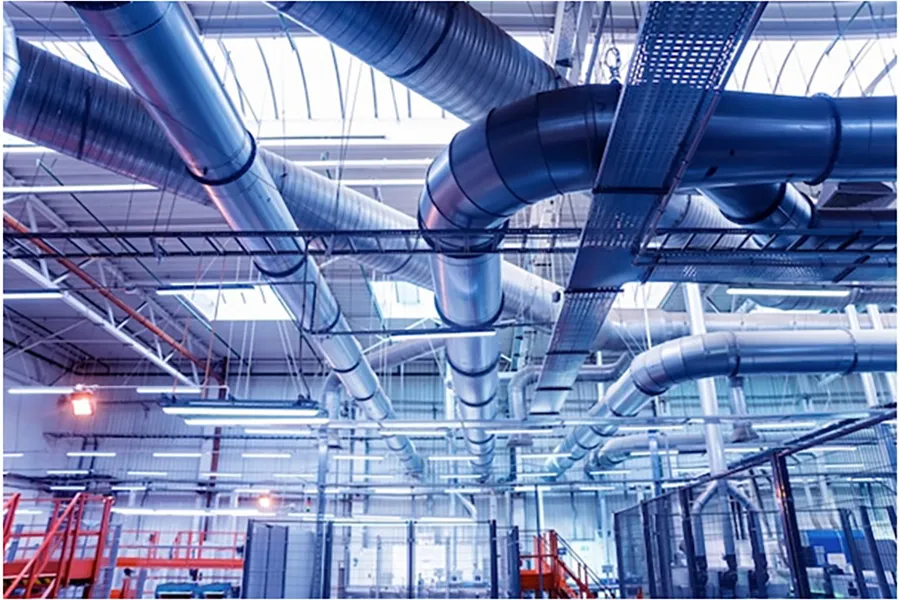
Compared with traditional HVAC systems, various components of smart HVAC systems are adapted to achieve energy savings. First, the compressor, the electric pump that compresses the refrigerant, and even the air-handling unit that blows air across the heating and cooling coils need to be optimised. Why? Because they consume large amounts of energy. Significant energy savings can be made by running these two devices only when needed. Second, the ventilation system regulates the airflow in a building when external assistance is needed, helping to reduce energy consumption further. For example, strong airflow is not needed in an empty meeting room or corridor, or outside office hours. With sensor-based technology that detects the number of people in a particular space, the ventilation system operates only when needed. Finally, smart thermostats that can read temperature, humidity, occupancy and other variables are crucial to the HVAC system as a whole. The thermostats learn from data collected from the environment and also make intelligent decisions for the entire building, such as eliminating uncomfortable heat caused by humidity.
“At a basic level, the key components of a smart HVAC system are the sensor hardware and software that provide ways to collect information, as well as a user interface for viewing that information, receiving alerts and notifications, and taking appropriate action,” says George Tsintzouras, CEO of Alert Labs.
Retrofitting older buildings
It is easy for new buildings to embrace smart HVAC systems. Some even have them installed from the outset. But connected smart sensors also play an important role in setting up smart HVAC systems in older buildings. By installing sensors in the existing system and using components and back-end software, data can be analysed. This allows older buildings to benefit from smart HVAC systems too. However, applying smart HVAC systems in older buildings can be challenging. The term ‘retrofit’ was coined to describe older buildings that use smart technologies.
“In older buildings, a wireless, battery-powered sensor platform can be crucial, precisely because it can be very difficult or even prohibited to install external cabling along the walls,” says Peter Lindkvist, Sales Director at Lumen Radio. This means older buildings do not need to remove all the existing components of their HVAC system to adopt smart HVAC technology. They can keep their current equipment and install wireless, battery-powered sensors to enjoy the benefits of a smart HVAC system too. “Alert Labs sensors can be installed in any type of building and on any air-conditioning system,” adds George Tsintzouras.
Take the water flow sensor designed for indoor water meters, which detects water leaks, flooding, humidity, temperature and power outages. By providing immediate alerts for all these variables, the sensor can help reduce water bills and prevent damage. The homeowner dashboard, for example, provides information on A/C performance and status. The contractor dashboard enables the service team to offer proactive maintenance and repairs. For managers responsible for multiple buildings, the company also offers a command centre, enabling them to monitor multiple properties in one place, assign service teams to individual properties, and receive alerts and air-conditioning analytics.

More efficient maintenance
“A smart HVAC system enables contractors to send out the right technician with the right parts, so the problem can be fixed on the first visit. This reduces the number of vans on the road and inevitably increases customer satisfaction,” says George Tsintzouras. Sensors around the HVAC system enable contractors to operate equipment more efficiently by showing them exactly when problems occur. Service or maintenance visits can therefore even be scheduled before a fault occurs.
In addition to energy and cost savings, smart HVAC systems improve management efficiency and help build customer satisfaction. With smart sensors and backend analysis and monitoring software, older buildings can benefit from smart HVAC systems just as much as new ones, without replacing all the existing equipment.
Recruiting talented HVAC technicians with the right experience is time-consuming. As a contracted technician, you need to keep up with new service requirements and business requests, and last but not least, retain satisfied customers. Fortunately, a smart HVAC system can now help these technicians in their work too.
New market challenges
“There are still a few challenges that need to be addressed: cybersecurity, engagement with IT organisations, wireless and communications reliability in view of interference zones in areas where HVAC systems are usually located, retrofitting and compatibility with older systems, and data sovereignty in the case of cloud systems,” says Sudhi Sinha. “We must also remember to train operators and technicians in new digital and smart HVAC capabilities,” adds Peter Lindkvist. The Sales Director of Lumen Radio also refers to the design of new product platforms that can be scaled up to large sites, enabling fully integrated solutions.” Demand for more connected buildings and smart HVAC systems is steadily growing. He believes all partners should therefore come together to tackle these major challenges and work towards the next generation of smart building solutions.
Question about this story? Ask your question
Keep following this
Get an email when a new story is published. No account needed.
- ThemeSmart building integration
- SubjectHVAC