











Small-scale CHP on the rise
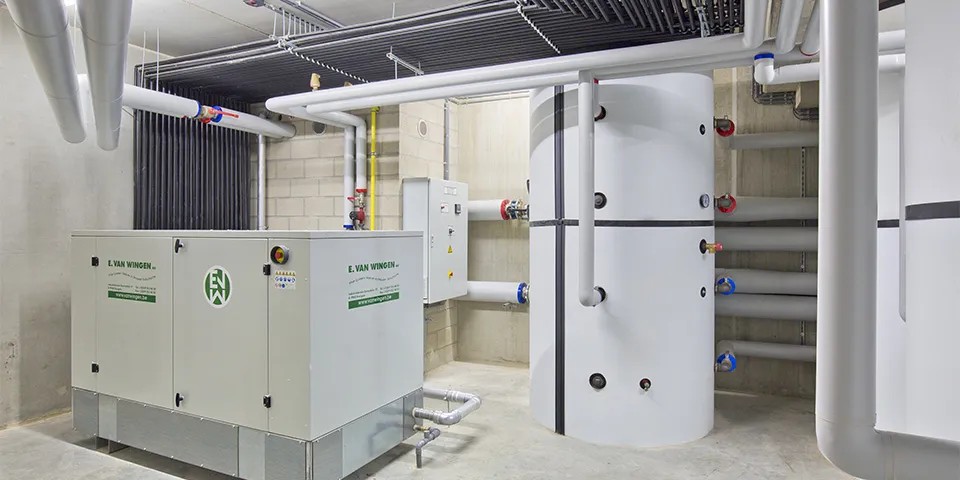
With total capacity of around 2,700 megawatts, the combined heat and power (CHP) sector is running at full tilt. Electricity generated by CHP meets around 18% of total consumption in Belgium. But CHP is not limited to large industrial installations. One notable trend is that smaller installations are also delivering good, energy-efficient results where heat demand is lower. So-called micro-CHP units, with a capacity of 1-50 kW, are being installed more and more often.
COGEN, the sector federation, is also seeing CHP evolve rapidly. “At first, CHP was mainly aimed at industry. Greenhouse horticulture joined the picture over the past ten years. In recent years, however, we have seen more and more smaller capacities: instead of installations rated at several megawatts, we are increasingly seeing CHP plants with a capacity of 200 to 500 kW, for example in the care sector. And this is not the end of the story, as units rated at 5-50 kW are also being installed more and more often, alongside an expansion in the range of applications for CHP,” says communications officer Jörg Baeten. There is also a trend towards operating CHP flexibly, by combining it with thermal storage. This makes CHP an ideal complement to renewable energy. A network of increasingly smaller installations can support the grid at local level, resulting in greater energy availability.
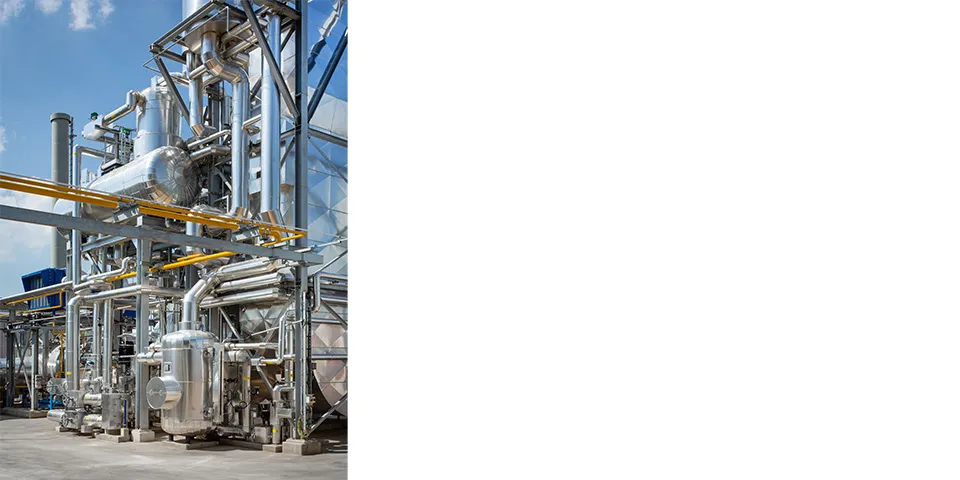
E.ON CHP at Promat.
Another development is that capacity is increasingly being split between units. Jörg Baeten: “In the past, for example, you might have chosen to install a single 40 kW unit. Now, it is more common to have two units, each rated at 20 kW. This helps deal with seasonal fluctuations: in summer, for example, it may be enough to run just one of the two engines.”
For SMEs too
A lower-capacity CHP installation also makes CHP increasingly attractive to SMEs. That does not mean that every small business would benefit from CHP: without a certain level of heat demand, preferably constant, a CHP unit will not deliver sufficient benefits. “CHP is useful only for businesses with above-average energy requirements, such as a caterer or a bakery,” says Baeten.
Specialist E. Van Wingen NV also has strong faith in the potential of micro-CHP, particularly for SMEs. The company already has a substantial presence in both industry and the hospital sector with larger CHP systems. Drawing on more than 25 years’ experience as a CHP manufacturer, it has launched a standard plug-in product for lower energy needs under the name Mini-WKK. General Manager Jean-Pierre Van Wingen says: “For a budget similar to that of a company car, an SME can now make substantial savings on its energy bill. A Mini-WKK generates electricity and heat with a total efficiency that often exceeds 90%.”
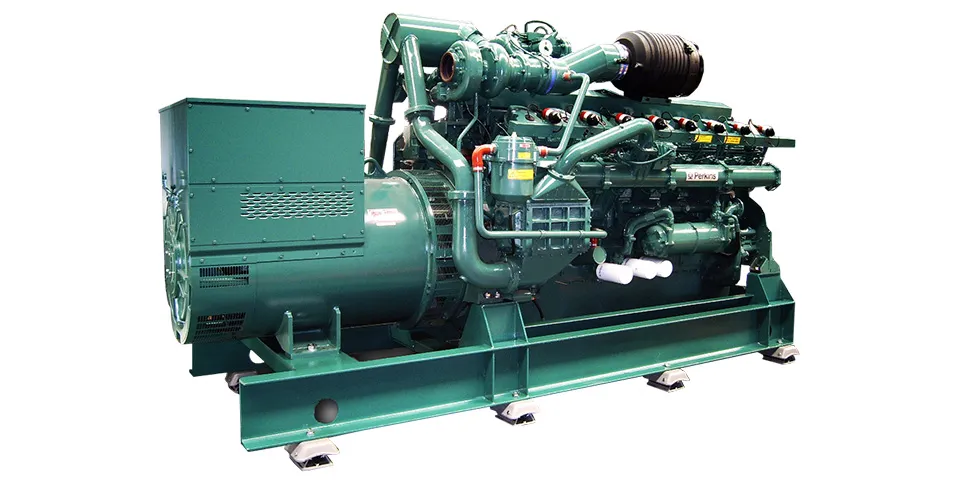
CHP is not limited to large industrial installations. (image: Van Wingen)
Van Wingen believes that the number of SMEs using CHP could increase significantly. For businesses that do not want to put the installation cost on their balance sheet straight away, it is possible to lease a micro-CHP unit or use an ESCO model, under which the user pays in line with the energy saved. A third party then invests in the installation and is responsible for its monitoring and maintenance.
Care sector
Micro-CHP units are already widely used in smaller industrial facilities and residential care centres, for example. Yet there is still work to be done in these sectors too, says Jean-Pierre Van Wingen. “With a few exceptions, every care institution should have at least one CHP unit. Its typical consumption profile is ideally suited to this. Yet sustainable energy management is still not the norm throughout the care sector, which is surprising for a sector traditionally seen as relatively low-energy.”
CHP units can of course also be deployed at neighbourhood level. Micro-CHP offers an interesting solution here. “Housing developments and neighbourhoods offer opportunities. CHP will fulfil its role within an intelligent, local and autonomous electricity and heat network, supplying residents with the cheapest and most sustainable heat and electricity,” concludes Jean-Pierre Van Wingen.
Residential micro-CHP solutions are now also available to private households. Fuel-cell CHP units offer thermal and electrical efficiencies that are well suited to residential consumption.
Question about this story? Ask your question
Companies in this story
Keep following this
Get an email when a new story is published. No account needed.
- SubjectHVAC
- CompanyPromat







