‘Measuring is knowing’
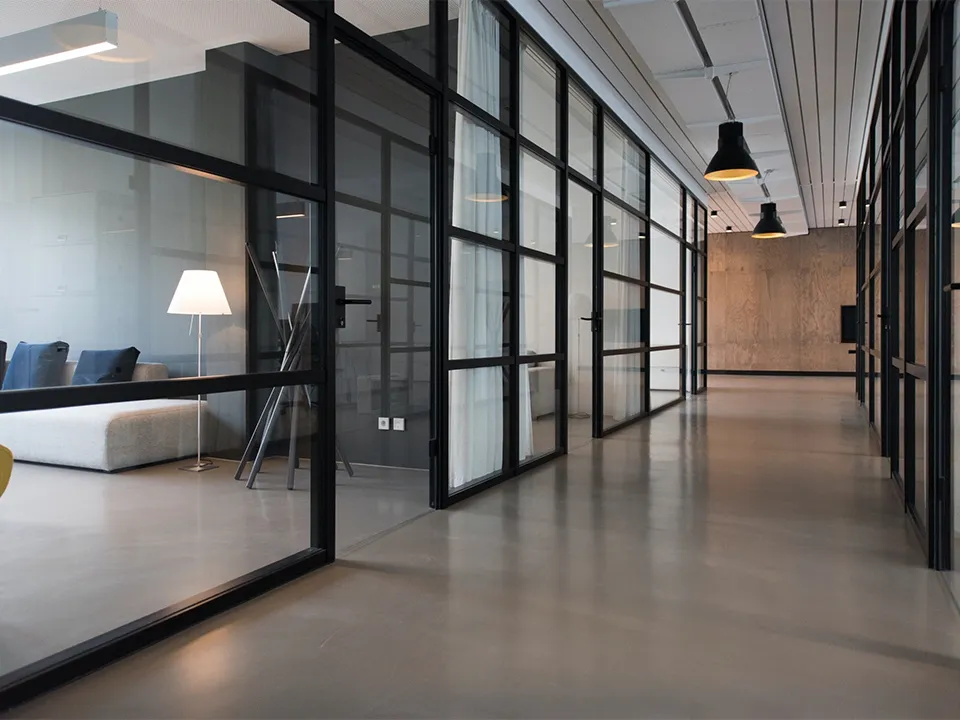
Opening windows to refresh the air in the workplace is not an option during the cold winter months. Still want to bring in fresh air? Then you need to consider a ventilation system. A good indoor climate helps employees feel better and perform better. In addition, a well-maintained and properly commissioned ventilation system contributes to a workplace that is safe from coronavirus. Ventilation specialist Ventilair Group advises employers, architects, engineers and installers on creating an optimal workplace climate at Belgian companies.
Text Kevin Moens | Image Ventilair Group
Since 21 May 2019, workplace climates have had to comply with certain guidelines on the ventilation of workplaces, as set out in Book III, Title 1, Chapter 4 of the Code on Well-being at Work. This stipulates that the absolute minimum ventilation rate for buildings with mechanical ventilation is 25 m3/h of fresh air per person, with the CO2 concentration remaining below 1,200 parts per million (ppm). The preferred minimum ventilation rate is 40m3/h of fresh air per person, keeping the CO2 concentration below 900 ppm. The CO2 concentration threshold must not be exceeded for 95% of working hours. But how can employers or building managers determine the quality of the indoor air in the workplace? “A healthy workplace depends on several factors: emissions from building materials, the number of people present, occupancy duration and so on. In principle, employers are required to carry out a risk analysis. This involves a visual inspection of any existing installation, or taking other steps such as opening windows regularly or placing plants in the workplace,” explains Steven Braekeveldt, marketing & product manager at Ventilair Group. “If necessary, an occupational health and safety adviser can be brought in. They will carry out a full analysis of the workplace and assess the indoor climate. The required ventilation rate is then determined: 25 m3 or 40 m3 per person per hour. In short: measuring is knowing.”
Controls at the heart of the ventilation system
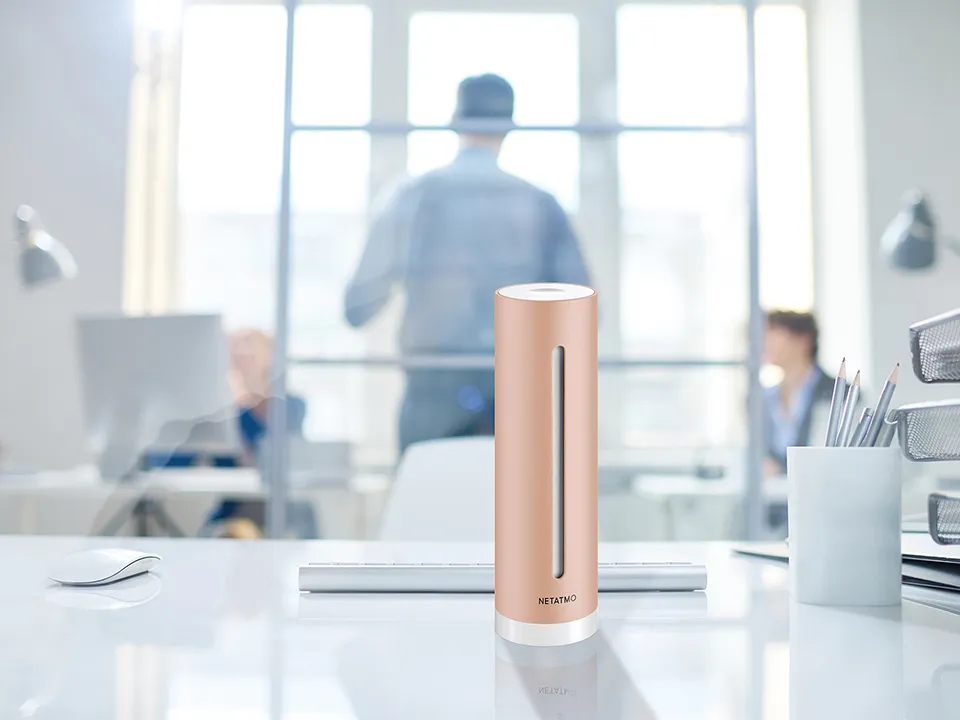
According to Tineke Holvoet, marketing coordinator at Ventilair Group, architects and engineers keep a close eye on regulations for new-build projects. Older buildings, however, still have plenty of room for improvement. “There is hardly any monitoring, and in 70% of cases ventilation is inadequate or even non-existent.” Ventilair Group therefore aims to use its expertise to optimise the climate in Belgian workplaces. Braekeveldt: “We first determine the required airflow rate together with the architect, engineer or installer. We then develop a bespoke solution based on that. Are we talking about an entire building or a smaller space? Where can the ventilation equipment be installed? What kind of controls should we use?” The controls are at the heart of the ventilation system. According to Braekeveldt, a business premises with ventilation can still perform poorly if the system has not been properly commissioned and controlled. “Manual control is no longer permitted in public spaces or businesses. You can opt for a time-controlled system, but that still requires manual settings. It is better to regulate ventilation using a CO2 sensor, to prevent unnecessary ventilation.”
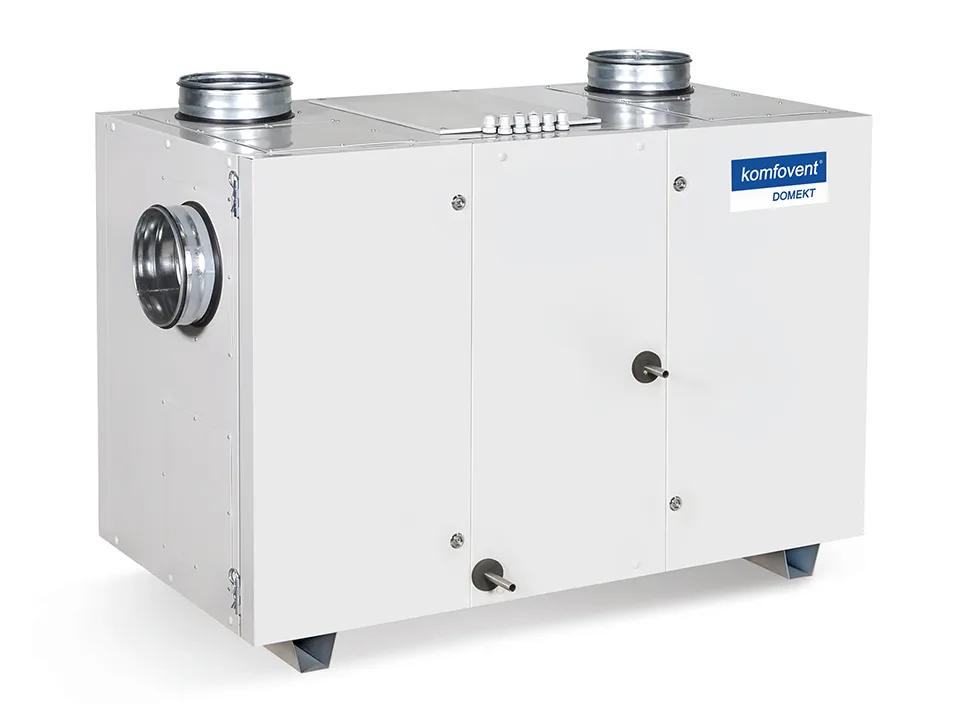
Ventilair Group also ensures that air is supplied in a controlled way. “There are still many misconceptions about ventilation,” says Braekeveldt. “Ventilation is noisy, causes draughts or draws in cold air. These are all misconceptions. At Ventilair Group, we focus on conditioned ventilation. We supply air at a comfortable temperature, preheated and filtered, in the right place and at the right time. You can go a step further and use ventilation for cooling too. Our range includes ventilation units with a built-in heat pump for this purpose: the Komfovent RHP series.”
Making the workplace safe from coronavirus
Ventilation was low on the agenda for many employers, as CO2 and coronavirus are invisible adversaries. “A good indoor climate offers employers many benefits, however,” says Braekeveldt. “With good air renewal, employees feel better and perform better in the workplace. COVID19 can act as a catalyst here. A workplace with excessively high CO2 concentrations is also an environment where the risk of the virus spreading is many times higher. In autumn and winter, it is also impossible to leave the windows open constantly. Ventilation is then a good way to keep air quality healthy and free from coronavirus. We are seeing growing awareness of this among employers and employees.”
Question about this story? Ask your question
Companies in this story
Keep following this
Get an email when a new story is published. No account needed.
- ThemeHealthy air and summer comfort
- SubjectHVAC
- CompanyVentilair Group