Hydronic balancing delivers optimum comfort and lower energy bills
It is important to get the best possible efficiency from your central heating system. But that is not always achieved. Hydronic balancing offers a host of benefits. It improves home comfort, reduces energy bills and cuts CO2 emissions.
Consumers increasingly find that, after buying a new boiler, they enjoy far less comfort than they expected. Some rooms do not get warm enough, or take a long time to reach a comfortable temperature. They soon assume that their new boiler is not working properly. Turning up the room thermostat or, where necessary, switching off the pump’s modulation seems to solve the problem. It does indeed put an end to the lack of comfort, but the underlying issue remains. What is more, it uses more energy, increases costs and raises CO2 emissions. After all, when you buy a new boiler, you naturally expect your energy use, and therefore your bills, to fall.
Consumers, and sometimes installers too, often lack the knowledge needed to address the cause or prevent the problem. In many cases, the system has not been hydraulically balanced. Hydronic (or hydraulic) balancing brings the system into balance, ensuring that each radiator receives the correct flow of hot water.
With a new boiler, the system is unlikely to operate at its best if it has not been hydraulically balanced.
How does it work?
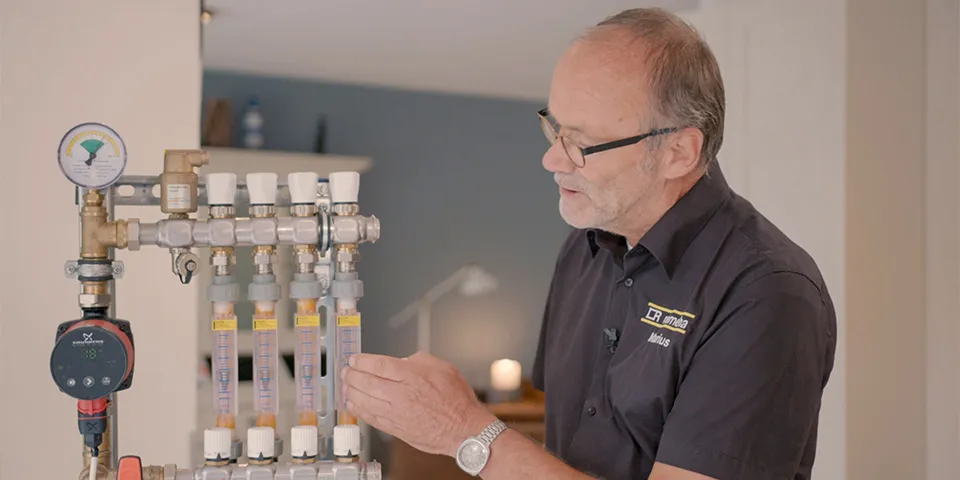
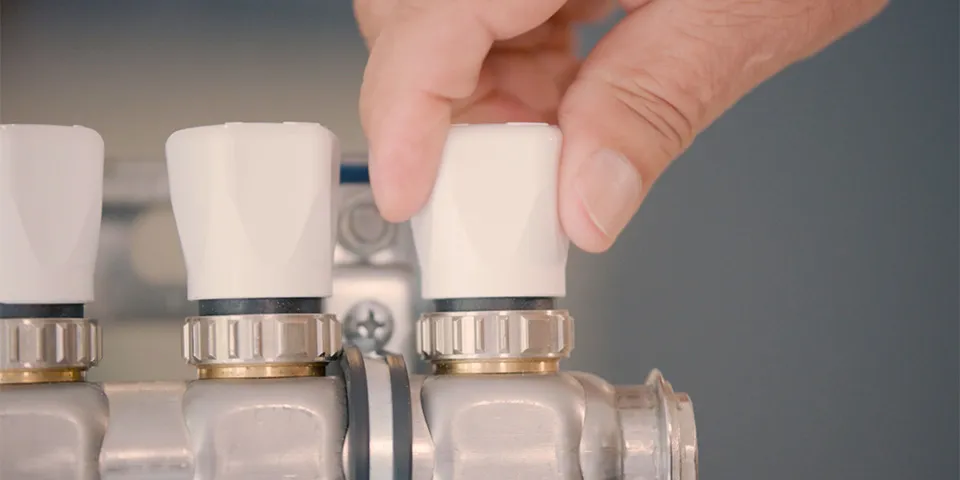
A central heating system is relatively easy to balance. First, the installer drains the system. The radiator valves are then replaced with adjustable dynamic valves. The system is refilled and bled. An app is used to set the dynamic balancing valves to precisely the right flow rate. Finally, the boiler’s maximum output must be matched to the maximum capacity of the heating system. Depending on the number of radiators, the work takes an installer around half a day.
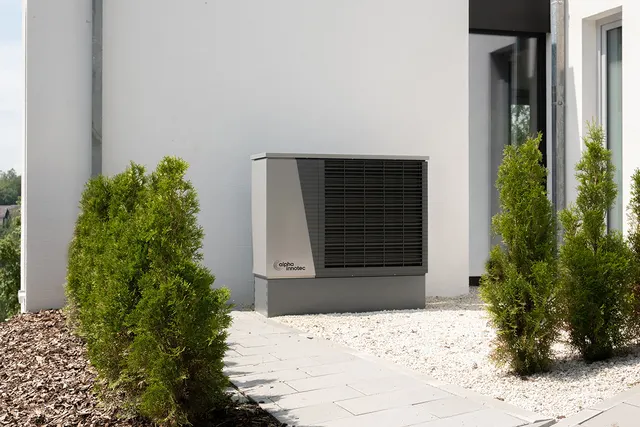
With a new boiler, the system is unlikely to operate at its best if it has not been hydraulically balanced. If balancing is not carried out, the impact is greater than with older boilers. Hydronic balancing does not necessarily have to be done when a new boiler is installed. It can also be carried out on an existing system. The savings will then depend on the type and condition of the boiler. It is also worth noting that balancing underfloor heating and heat pump systems helps them deliver the highest efficiency and greatest comfort.
The installer’s role
As an installer, you work with your customer to find the best solution. It is therefore important to share your knowledge of hydronic
balancing with customers who have comfort issues or are buying a new boiler. At present, few installers offer this service to their customers and/or include it in a quotation. Installers looking to provide an even better service to their customers can contact Remeha for training in hydronic balancing.
Question about this story? Ask your question
Keep following this
Get an email when a new story is published. No account needed.
- ThemeImproving building services performance
- SubjectHVAC