











HVAC solutions manufacturer introduces circularity into production with RE:3
Text Wouter PolspoelImage Swegon
Whereas HVAC solutions manufacturer Swegon previously focused mainly on the operational carbon footprint of its products, it has recently started paying attention to the embodied carbon in its solutions too. To this end, the company developed the RE:3 concept, based on three key principles of circularity: reduce, reuse and revitalise.
Thanks to its focus on operational footprints, Swegon’s cooling, heating, ventilation and climate optimisation solutions now excel in low energy consumption. To contribute further to the transition to a more sustainable society, Swegon is now introducing the RE:3 concept, based on the circular principles of reduce, reuse and revitalise. “With this unique approach, we aim to make a significant contribution to making industry more sustainable and to raise awareness among a broad audience, encouraging informed long-term decisions that lower embodied carbon levels in buildings,” the manufacturer says, explaining its decision.
Preventing waste
RE:3 focuses on the embodied carbon in products. A product’s embodied carbon includes the carbon emissions associated with its manufacture, transport, installation and maintenance, as well as its disposal at the end of its life cycle. In practical terms, Swegon will now also offer solutions and systems with lower embodied carbon. These products carry the RE:3 symbol.
Swegon achieves this lower embodied carbon by focusing on reduce, reuse and revitalise, in other words reducing, reusing and upgrading materials. This approach stands in stark contrast to the linear use of materials characteristic of the still prevalent throwaway society. Take, make and dispose is giving way to the circular use of materials, with a drastic reduction in waste as the ultimate goal.
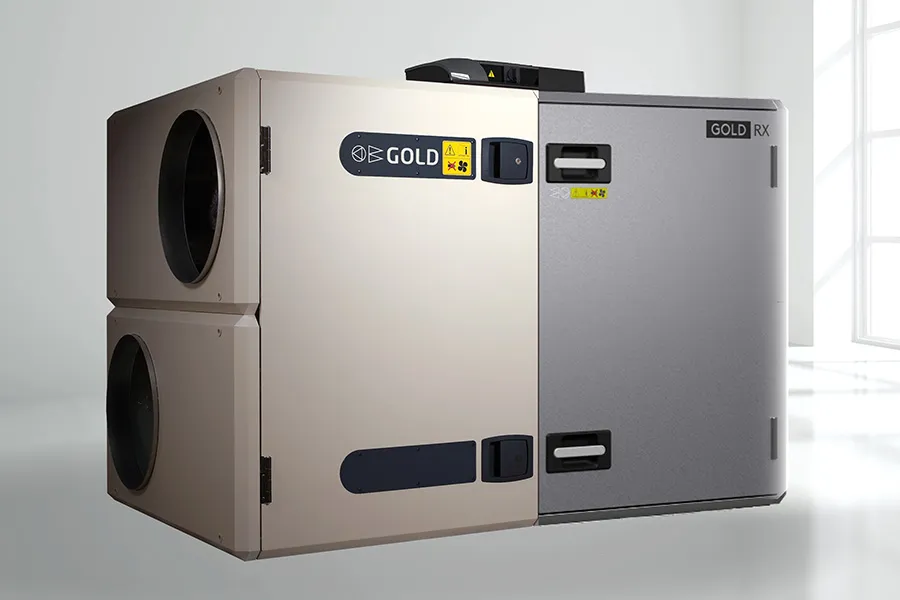
Specifically, Swegon’s RE:3 solutions use fewer materials, or materials with lower embodied carbon. For example, 75% of the steel used in GOLD air handling units bearing the RE:3 label is recycled steel, which naturally has a lower carbon footprint.
Designed for disassembly, the solutions can be reused when they need to make way for new products but have not yet reached the end of their service life. By also offering maintenance and repairs, which Swegon has done for some time, as well as upgrades and product and system take-back, Swegon aims to ensure that RE:3 solutions last longer or can be reused.
A flexible concept
Choosing a Swegon product bearing the RE:3 symbol means choosing a product that helps reduce the embodied carbon in a building. Please note that the RE:3 symbol is not a certification. It is a Swegon label designed to help customers navigate the products on offer.
Swegon also wishes to emphasise the flexibility of the RE:3 concept. “When RE:3 solutions become the norm, they will no longer carry the RE:3 symbol, but will be part of our standard offering,” says the manufacturer.
Een zakelijke vraag aan Swegon? Get in touch
Companies in this story
Keep following this
Get an email when a new story is published. No account needed.
- SubjectHVAC
- CompanySwegon







