











How the world’s largest electronics manufacturer is helping the HVAC sector become more sustainable
Text Wouter PolspoelImage Panasonic
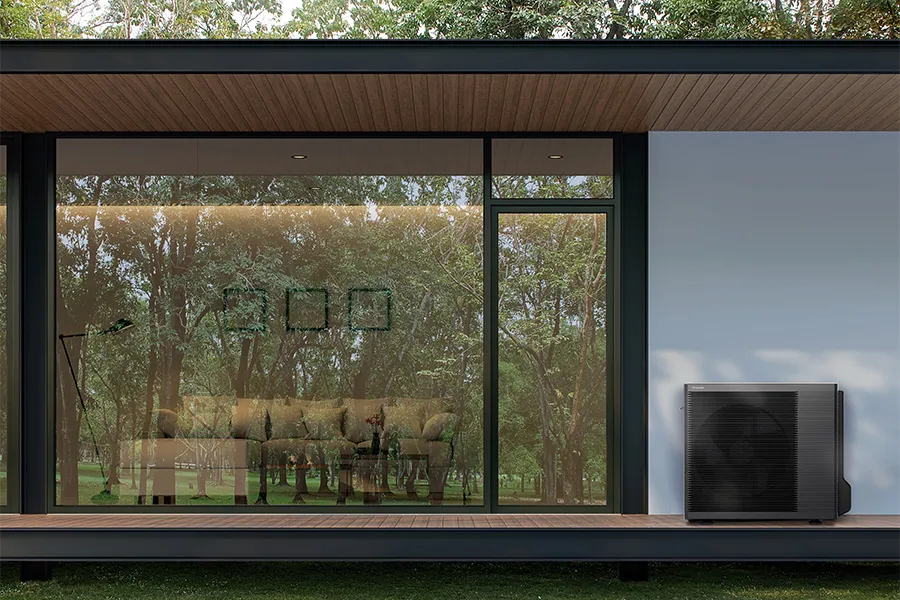
Keeping a close eye on environmental targets, Panasonic, the world’s largest electronics manufacturer, aims to reduce the energy consumption of all its solutions. That includes products developed by its heating & cooling division, which has no equal in Europe. “Our heat pumps are a prime example of our commitment to greater sustainability,” says Rudi Van Hemelrijck of Panasonic Benelux, highlighting one of its HVAC solutions. “For example, all our air-to-air heat pumps deliver more energy than they consume, even in winter.”
Although Japan’s Panasonic, which employs more than 260,000 people worldwide, is best known for consumer goods such as TVs, kitchen appliances and batteries, it now also has Europe’s largest heating & cooling division. The electronics conglomerate is also keeping a close eye on HVAC regulations, which is reflected in a product range that plays a significant role in making the sector more sustainable.
“Take our air-to-air heat pumps, for example, which can provide heating, cooling and ventilation without any reliance on fossil fuels,” says Rudi Van Hemelrijck, sales manager at Panasonic Benelux. “Using ambient air as their primary energy source, they deliver more energy than they consume, even in winter.”
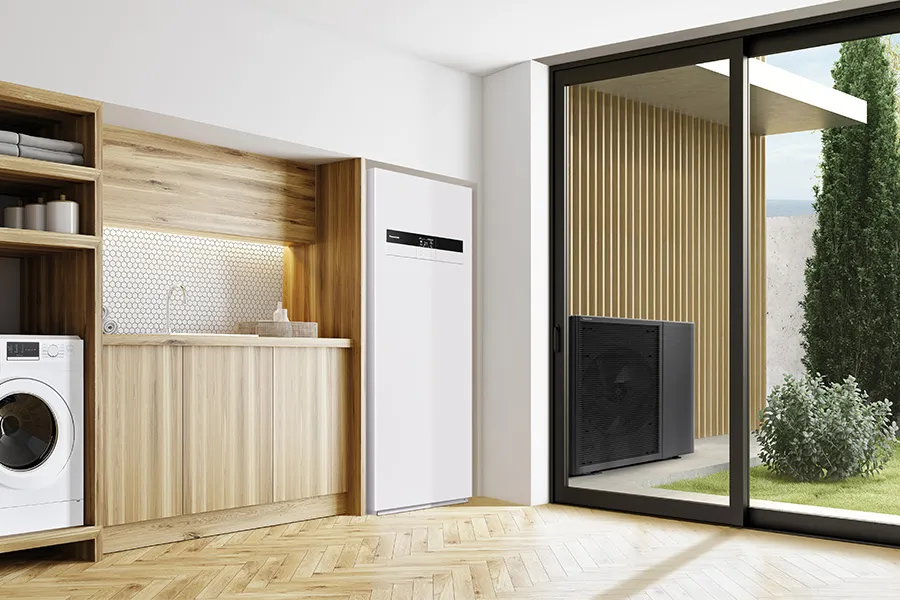
Aquarea K and L Series: a sustainability revolution
“Our latest air-to-water heat pumps, the Aquarea K and L Series, are also a sustainability revolution. With an A+++ energy rating and a SCOP (seasonal coefficient of performance, a coefficient that measures a heat pump’s performance, ed.) of up to 5.12, they make a fundamental contribution to a carbon-neutral world,” he continues. “The K and L Series take heat pumps to a new level not only in terms of efficiency, but also comfort and design, with advanced features and an impressive design. The K Series pumps are an excellent solution for new homes, while the L Series is best suited to retrofit applications in existing homes with radiators, where a higher water outlet temperature is required. Other advantages of the K and L Series heat pumps include ease of installation and maintenance, thanks to a wide range of control and connectivity options, and their ability to operate in extreme outdoor temperatures.”
Climate-friendly refrigerants
The K and L Series heat pumps help meet climate targets not only through their operating principles, but also through the refrigerants they use. Rudi Van Hemelrijck explains: “The K Series heat pumps use R32 refrigerant. It has a particularly low GWP, or global warming potential, a measure of how much a product contributes to global warming. The L Series pumps do even better, using R290 refrigerant, which has a GWP 225 times lower than that of R32. This significant difference is because R290 is a natural refrigerant, propane, rather than a synthetic one.”
Heat pumps help make Europe’s building stock carbon-neutral
According to Rudi Van Hemelrijck, using Panasonic’s latest-generation heat pumps in both the new-build and renovation markets can help Europe achieve its goal of having a carbon-neutral building stock by 2050, with zero emissions from building heating by 2040, provided that green electricity is also used. But urgent action is needed, he says. “Europe is pushing the use of green energy, and Ursula Von der Leyen has ambitiously called for 30 million electric heat pumps. We are still a long way from that target. Fortunately, the use of heat pumps is being encouraged by all kinds of policy initiatives, both nationally and internationally,” concludes the sales manager.
Een zakelijke vraag aan Panasonic heating & cooling solutions? Get in touch
Companies in this story
Keep following this
Get an email when a new story is published. No account needed.
- ThemeFossil-free heating and cooling
- SubjectHVAC
- CompanyPanasonic heating & cooling solutions







