











High-temperature heat pumps, the heating solution of the future

The EU, and the rest of the world, faces a major challenge as a result of climate change. In its 2009 climate and energy package, based on the Kyoto Protocol, the EU set important targets for 2020: a 20 per cent reduction in greenhouse gas emissions (compared with 1990 levels), 20 per cent of the EU’s energy to come from renewable sources, and a 20 per cent increase in energy efficiency. The 2030 target is even more ambitious, raising these targets to 50 per cent.
One of the biggest sources of emissions in heating systems is the traditional boiler, which in most cases runs on fossil fuels such as gas or oil. Pressure to find alternative solutions and switch to more sustainable heating systems is mounting, both in the EU and elsewhere. For example, both the UK and Australia will ban the installation of equipment powered by primary energy sources from 2025.
Fortunately, viable alternatives are already on the market, such as high-temperature heat pumps. This is a specific type of heat pump that uses energy from external sources to raise the water temperature to a level comparable to that of traditional central heating systems. High-temperature heat pumps can meet most residential, commercial and industrial needs, producing water at 70-80 °C with high efficiency.
Replacing a boiler with a high-temperature heat pump reduces energy consumption by around 30 per cent throughout the year. What is more, the efficiency gains at part load are even greater, as heat pumps operate more efficiently when the temperature difference between the outside and indoor air is smaller. Heat pumps can also run on renewable energy, significantly reducing greenhouse gas emissions from the heating system.

New Swegon GEYSER SKY, a natural source of comfort
This new range of reversible heat pumps from Swegon features variable-speed scroll compressors and a wide operating range, making it suitable for residential, light commercial and SME applications.
Thanks to the natural, non-toxic refrigerant propane (R290), GEYSER SKY has no impact on the ozone layer and has a global warming potential close to zero.
With hot water production up to 78°C, GEYSER SKY can easily replace a central heating system.
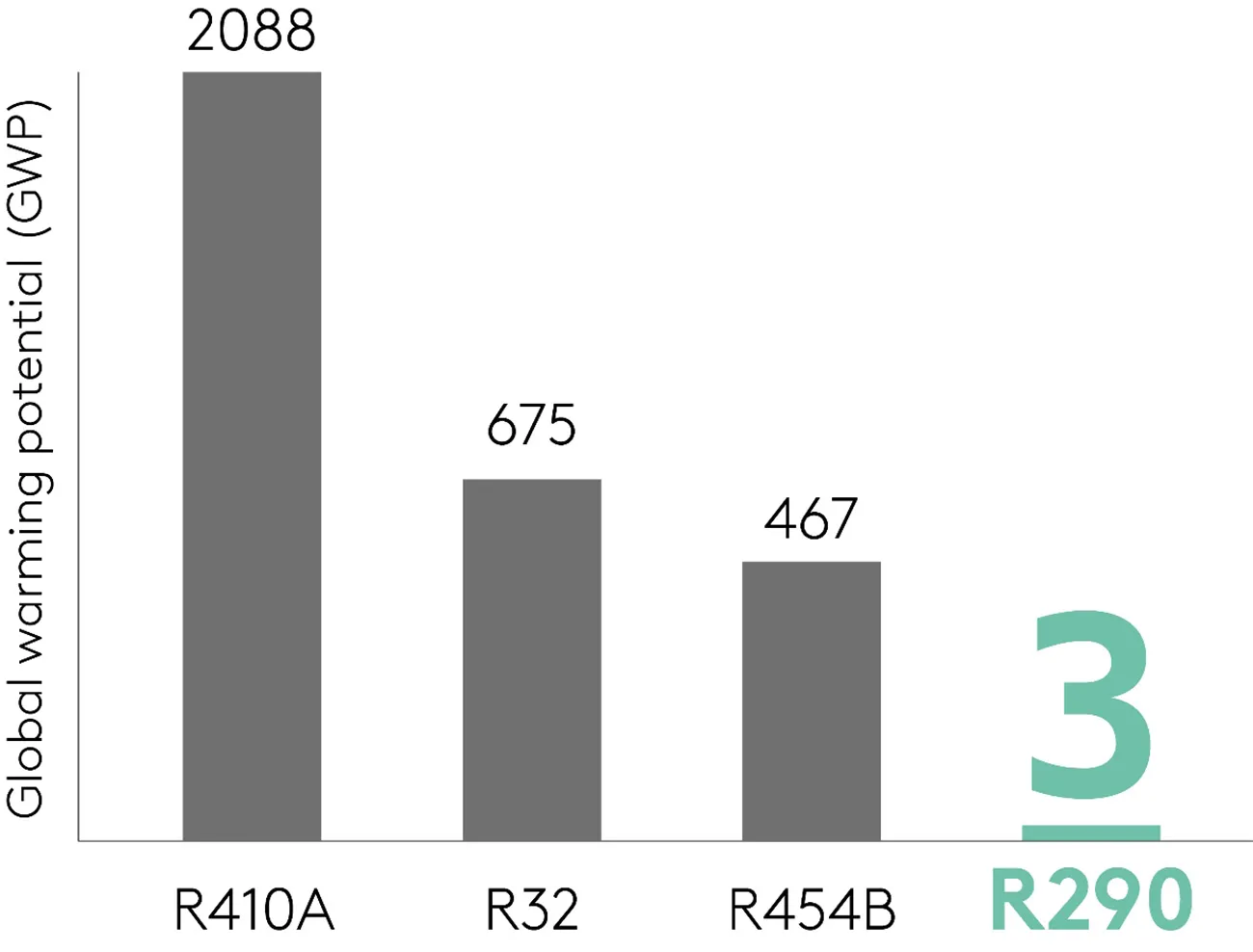
Propane (R290): a key component of the green transition
Propane, C3H8, is a hydrocarbon by-product of petroleum refining and natural gas production. It is a gas at standard temperature and pressure, but can be compressed into a liquid. It is already widely used in products such as barbecues and portable stoves, as well as to power vehicles, including buses, forklift trucks and taxis.
Propane is not only inexpensive, readily available and naturally occurring, it also has excellent thermodynamic properties as a refrigerant. Leaked propane has no impact on the ozone layer and almost no impact on global warming. It is also non-toxic, unlike ammonia, for example.
Information & contact
Een zakelijke vraag aan Swegon? Get in touch
Companies in this story

Keep following this
Get an email when a new story is published. No account needed.
- SubjectHVAC
- CompanySwegon







