











‘Heat pumps can now be used almost anywhere’
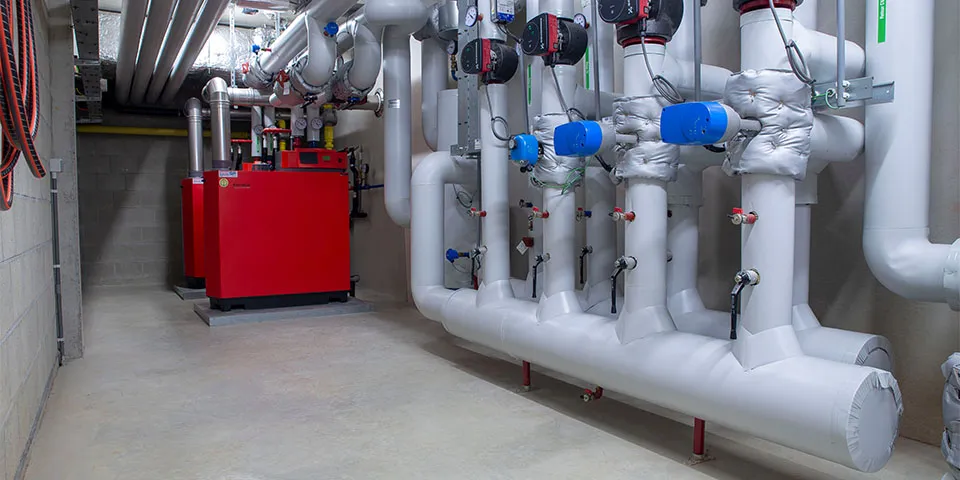
In a clear LinkedIn blog post, Thomas Nowak, Managing Director of the European Heat Pump Association, set the record straight: “Heat pumps are not only useful in new buildings.” We contacted him to explain his position in more detail and shed light on how heat pumps are developing in Belgium and beyond. “The best pupil in the class is being punished.”
“The claim that heat pumps only work in new buildings is misleading,” says Nowak. “We have ample evidence that a heat pump or hybrid heat pump can now be used in a large proportion of renovation projects. Heat pumps in residential applications can efficiently deliver temperatures of around 70 °C. This is sufficient for most buildings. Combined with a second energy source, such as a boiler, hybrid systems like these can deliver any temperature required.”

‘Fossil-fuel heating systems should be discouraged or even banned in new buildings’
Phased renovation
Of course, that does not mean there is no need to increase the renovation rate. Renovation can be carried out in phases, Nowak adds. “The first step is to install a hybrid heat pump. Later, when funds are available again, the building envelope can be renovated. In most cases, this means the supplementary heating can be switched off.”
Nowak: “If a building can be heated with a flow temperature of around 55 °C, it is suitable for replacing a boiler directly with a heat pump. Hybrid heat pumps are recommended for higher temperatures. In both cases, a well-considered approach to renovation will improve the building’s energy efficiency and reduce its energy demand. A proper system assessment is needed to determine which measures are most suitable. Comfort and ease of renovation will be key to success.”
Belgium falls behind
According to recent figures, heat pump sales in Belgium rose by 30 per cent last year. “A good start, but efforts are needed to sustain this growth over the next thirty years. It is also worrying that heat pumps are chosen for only one in five new-build projects in Belgium. Fossil-fuel heating systems should be discouraged or even banned in new buildings,” says Nowak.
The Belgian market is lagging behind the rest of Europe, says the president of the sector federation. “This is mainly because the price ratio between electricity and gas imposes an economic penalty on users who choose a heat pump: the best pupil in the class is being punished. Addressing this problem should be a top priority for governments. Unless energy prices are tackled, all other policy measures are purely symbolic.”
Nowak does not consider the argument that a CO2 levy on heating would cause financial problems for some income groups to be valid. “This can be addressed through social policy. Moreover, governments could focus on renovating social housing and use low-emission technologies in the process.”
‘The necessary renovation can be carried out in phases.’
Higher loans
Nowak is certainly not short of ideas. For example, he advocates better training for planners, architects, installers and maintenance technicians on the relationship between the building envelope and energy demand. He also proposes asking the financial sector to allow higher-than-usual loans when a 100% renewable solution is chosen.
The future looks bright, Nowak concludes. “The technology has developed very rapidly in recent years: heat pump energy efficiency has increased significantly, and the refrigerant cycle has been redesigned to enable the use of low-GWP refrigerants. The higher system temperatures now achievable reinforce my claim that heat pumps can be used almost anywhere today.”
Question about this story? Ask your question
Keep following this
Get an email when a new story is published. No account needed.
- ThemeFossil-free heating and cooling
- SubjectHVAC







