











Guaranteed robustness and fault-free operation of HVAC systems
Text Eric Ladang, Kris VandekerckhoveImage Aqualisys®
It may come as a surprise, but the energy-efficient equipment now used everywhere and new installation techniques mean that systems are far less robust than they used to be. “The solution? Chemical-free corrosion protection,” stresses Eric Ladang, chief believer, senior expert at Aqualisys® Belgium.
To meet the required energy performance, modern heating and cooling generators are designed very differently from those of the past. The water has to pass through much narrower sections, which means deposits pose a greater risk of blockages. “We also use thinner materials, which increases the risk of leaks,” says Eric Ladang. “With less steel and more and more plastic being used, there is less corrodible surface area in the system, increasing the corrosion pressure on the remaining metals. What is more, modern joining techniques using press fittings mean that systems are never truly completely oxygen-tight, even when designed and built in accordance with current guidelines. This, combined with their greater sensitivity, can quickly lead to premature problems. In the worst case, this means replacing expensive system components or carrying out unexpected and costly flushing operations to get the system back up and running. Even if it does not come to that, deposits reduce energy transfer and increase the pumps’ electricity consumption because of the higher frictional resistance.”
First line of defence: removing dissolved substances from water
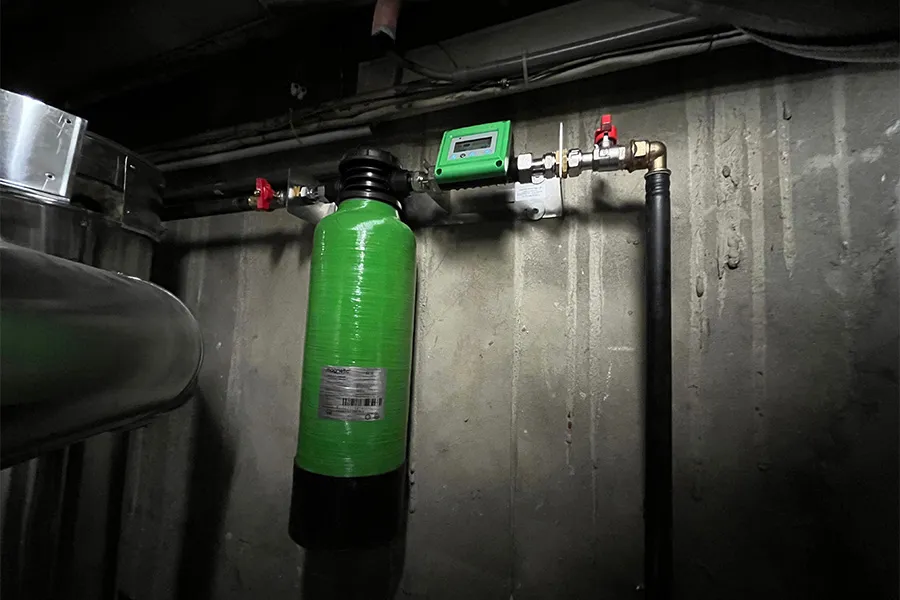
“The principle is simple: if something is no longer there, it cannot cause problems,” Eric Ladang continues. “Demineralising the fill and top-up water, or treating the system water through a bypass, removes all positively or negatively charged dissolved substances from the water. This prevents calcium and magnesium from precipitating out to form hard carbonates, while chlorides, sulphates and nitrates can no longer cause problems such as pitting or microbiologically influenced corrosion. The water also has low electrical conductivity as a result. This helps slow the corrosion rate when oxygen is present. For corrosion to occur, electrons must leave the metal at the cathode. They then react with the oxygen in the water in a partial reaction. Electrical conductivity in the water is required for this reaction to take place. The lower the conductivity after the water has been demineralised, removing conductive substances, the higher the Ohmic resistance and the more difficult the electron transfer. Removing the ‘problem substances’ from the water therefore has a double benefit: deposits can no longer form, and the corrosion rate caused by oxygen is reduced.”
Second line of defence: adding a controlled corrosion cell
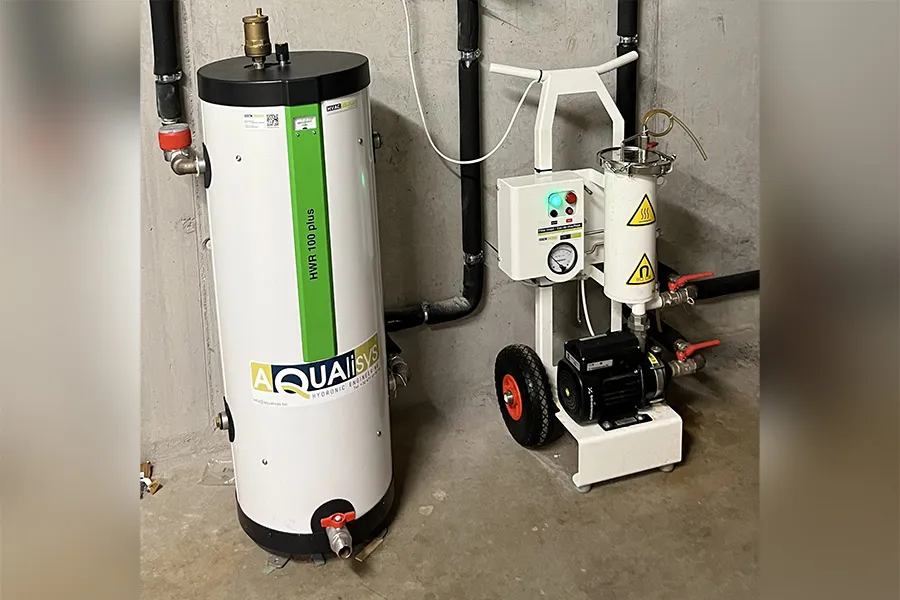
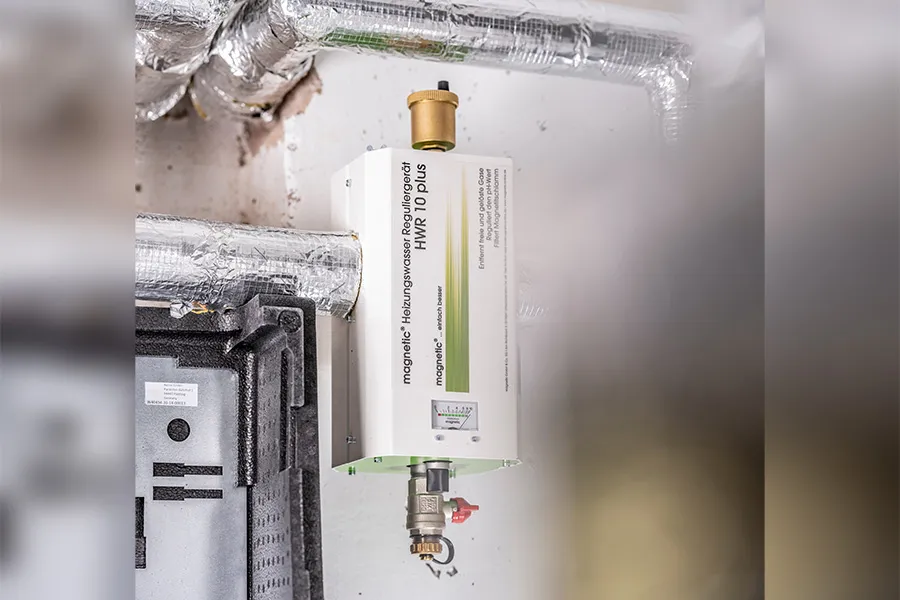
“Let’s keep it simple. Why carry out all kinds of complex chemical treatments when you can simply make use of the natural principle that some materials corrode more easily and quickly than others? If you add such a metal to the system as a component, it will corrode faster than the other metals. This protects the rest of the system and allows a stable oxide layer to form on it. The component installed in a reaction vessel is therefore known as a sacrificial anode. The amount of anodic material must be proportionate to the size of the system, so that it can provide sufficient protection for the rest of the system. The reaction vessel simply becomes a component of the system, making it more robust and durable as a whole. What is more, maintenance of the corrosion cell is limited to draining it once a year and replacing the anodes every three to five years. In short, we may not be able to help everyone, but we can certainly help everyone who wants to be helped,” concludes Eric Ladang.
Question about this story? Ask your question
Keep following this
Get an email when a new story is published. No account needed.
- SubjectHVAC







