











Environmentally friendly heating and economical cooling too? Welcome to the wonderful world of heat pumps!

Hot summers with heatwaves are likely to become a normal occurrence. For our increasingly well-insulated homes, that has an important consequence: they retain heat, much like coffee or tea stays warm in a thermos flask. This is already a reality in new-build homes, and it will become one for existing homes that undergo extensive insulation upgrades. Opening windows or switching on ventilation will not be enough to keep the heat out, because it is stored in the walls and floors. One solution could be a system that cools a home effectively. Surprisingly, a heat pump may well be the most sensible choice, says the InfoWarmtePomp.be consortium, an initiative by Belgium’s leading heat pump manufacturers and distributors.
To save energy and improve comfort in winter, our homes are being insulated and made airtight to ever higher standards. Combined with climate change, this unfortunately means an increasing risk of overheating in summer. What can you do about it?
Prevention is better than cure
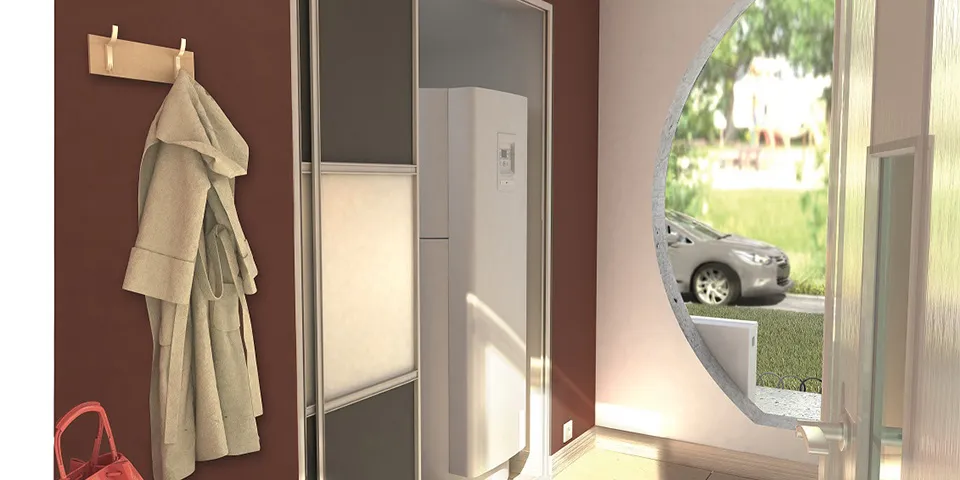
The first step is, of course, to try to prevent overheating. For new-build homes, there are several options. It is more difficult with an existing home. Where possible, you can make use of natural shade from plants, and/or install external solar shading or solar-control glazing. At night, once the outdoor temperature has fallen below the indoor temperature, natural or controlled ventilation can provide some relief. But because heat is stored in the internal walls and floors, it is often impossible to remove it all, at least using natural methods alone.
Cool with a heat pump
As the name suggests, heat pumps are primarily used to heat buildings or provide domestic hot water, but most systems can also be used to cool a home. Heat pumps can provide cooling in two ways: passively and actively.
Passive cooling
A ground-source heat pump uses the cool temperature of the ground (an average of +/- 12 °C) to circulate water at 20 °C through the underfloor heating pipes. The cool floor provides a pleasant sensation in the living space. As the compressor is not running, this is known as ‘passive’ cooling, and is sometimes also called free or natural cooling. The only costs are for the electricity used by the circulation pump and the source pump.

Another benefit of passive cooling is that it warms the ground, which has cooled during winter as heat is extracted to warm the home. This replenishes the ground source, enabling more efficient operation in winter.
Because of the scale of the installation work involved, this system can only be used in new-build homes and major renovations.
Active cooling
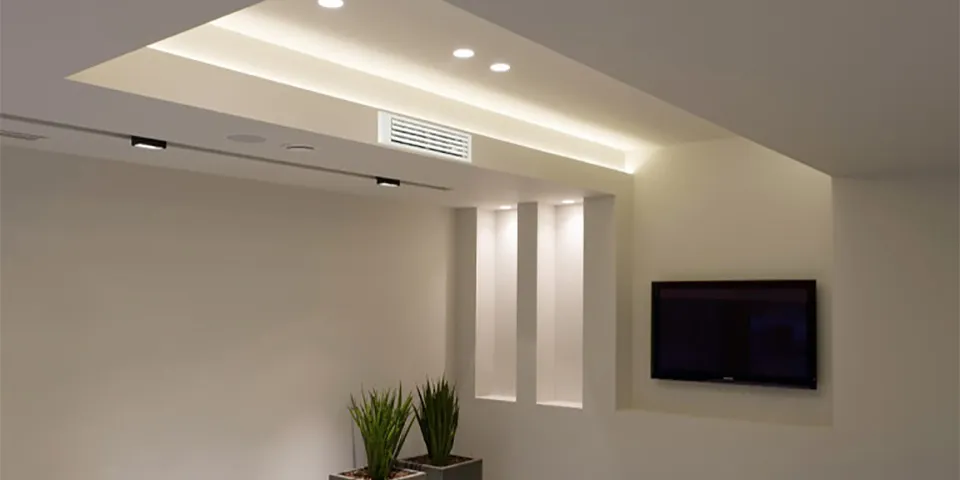
Air-to-water and air-to-air heat pumps provide active cooling. In this case, for example, the water in the underfloor heating system is cooled, or cooled air is blown into the home. The desired indoor temperature can be set as low as 18 °C. The lower the desired temperature, the higher the system’s energy consumption.
Check the heat pump’s energy label (with your installer)
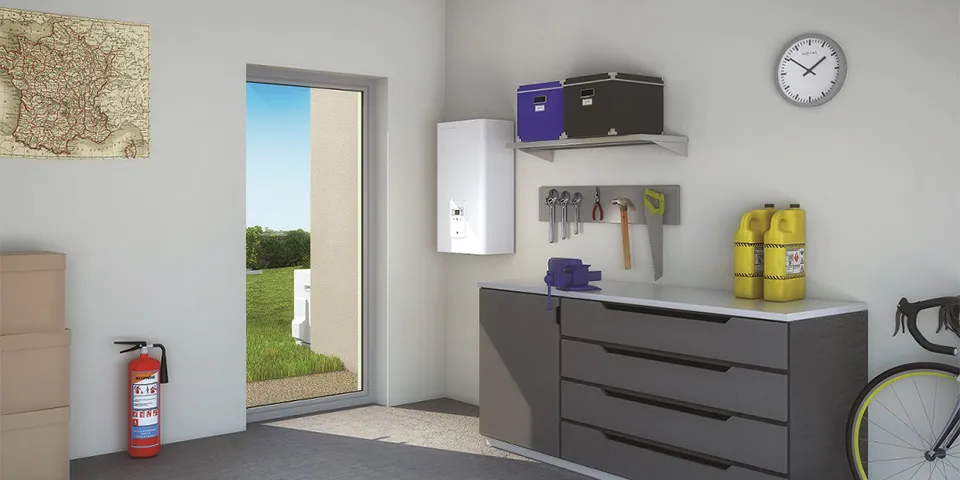
Heat pumps have been required to carry a label since 2015 under the European Ecodesign and Energy Labelling Directive. The label is similar to those used for household appliances such as fridges and dishwashers.
The seasonal efficiency of a heat pump in heating mode is expressed as a SCOP value (Seasonal Coefficient of Performance). There is no official label for cooling mode for passive cooling or air-to-water heat pumps. For air-to-air heat pumps in cooling mode, seasonal energy efficiency is indicated by the SEER value (Seasonal Energy Efficiency Ratio). The higher the SEER value, the more efficient the heat pump.
The energy label for an air-to-air heat pump also states how many kWh the heat pump uses for cooling and heating in a standard year. A heat pump that provides both cooling and heating uses an average of 15% more energy per year than one that provides heating only.
How much does it cost?
The answer depends, of course, on the weather and the type of heat pump. The cost of passive cooling is limited. A season of active cooling with an air-to-air heat pump rated SEER A+++ costs around 1 euro per m², and 1.30 euro per m2 with an air-to-air heat pump rated SEER A++.
This means that cooling an average living room measuring 8 by 4 m costs no more than 35 euro per year. Cooling a 4 by 4 m bedroom costs barely 20 euro a year.
At those prices, surely you would rather not sit in a hot living room or lie awake at night?
Everything you need to know about heat pumps
Would you like to find out more about heat pumps and get answers to questions such as “Why should I install a heat pump?”, “What types of heat pump are available?”, “What can I use a heat pump for?”, “How exactly does a heat pump work?” and “What grants can I apply for?” For an impartial answer, visit www.InfoWarmtePomp.be, a joint initiative by numerous Belgian heat pump manufacturers and distributors (members of ATTB, the Belgian sector association for thermal technologies involving heat pumps and alternative systems, and WPAC, the professional federation of heat pump suppliers).
Find out more
Question about this story? Ask your question
Keep following this
Get an email when a new story is published. No account needed.
- ThemeFossil-free heating and cooling
- SubjectHVAC







