











(Cost-)efficient installation of air handling units thanks to prefabrication and helicopter use
Text Wouter PolspoelImage Wolf Energiesystemen
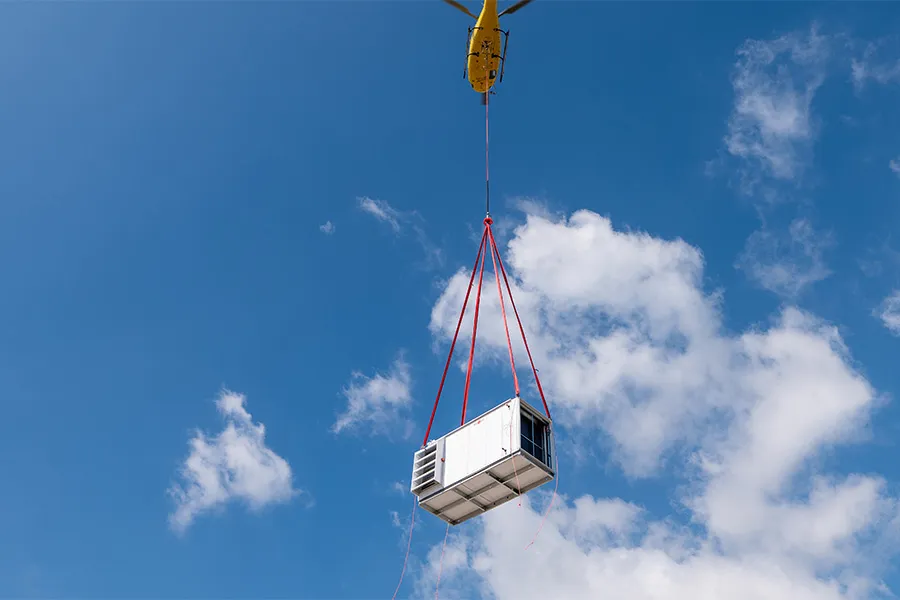
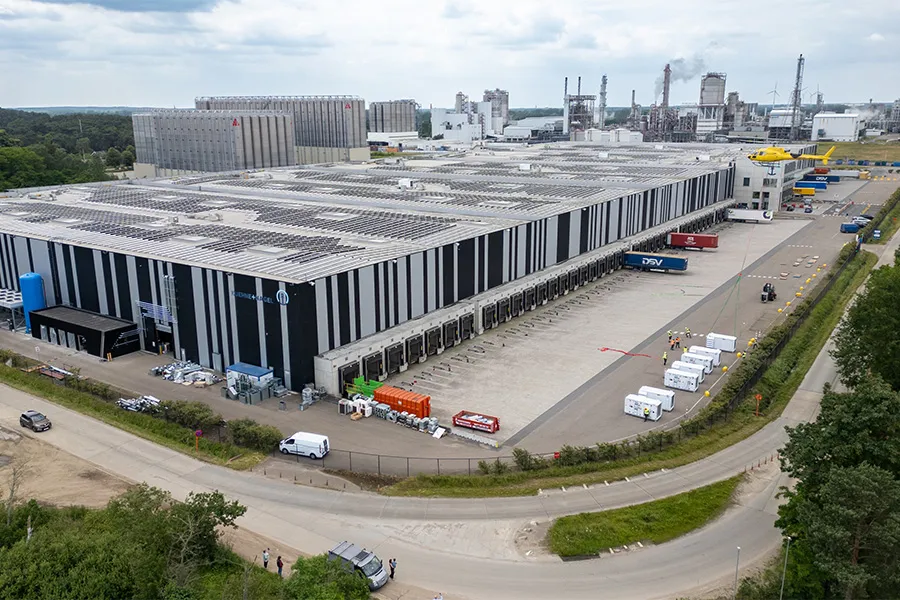
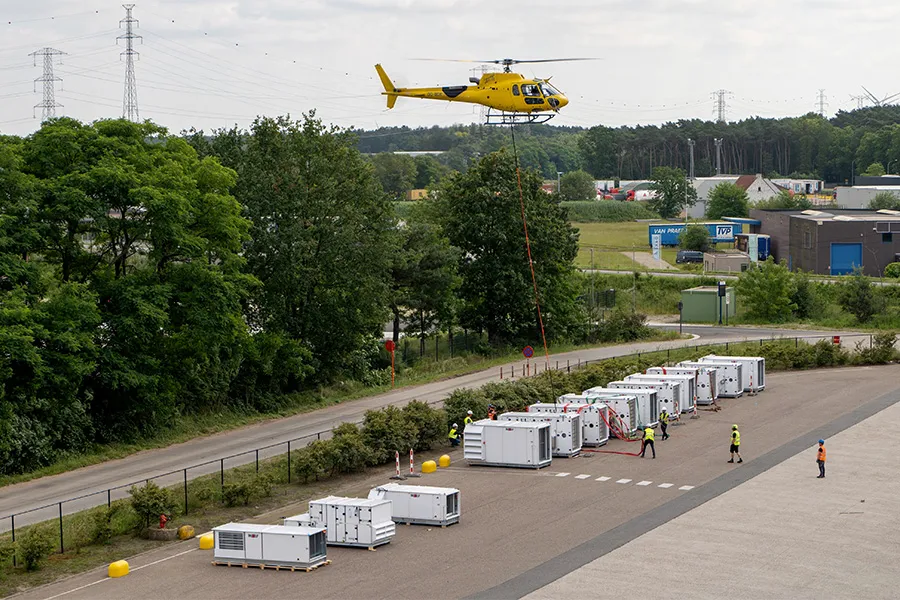
In Eindhout, WOLF Energiesystemen, a manufacturer of energy-saving solutions for ventilation, air handling, heating and cooling, equipped a large-scale distribution centre with new air handling units. Installation on the roof was particularly (cost-)efficient, thanks to prefabrication and the use of a helicopter for the lifting work. The latter meant that all fourteen air handling units could be installed in just one day (!).
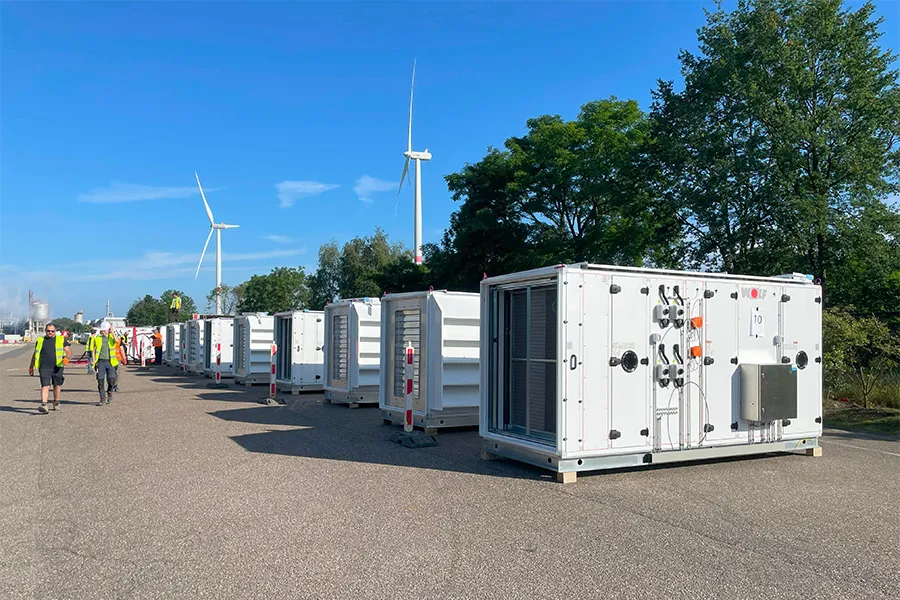
In summer 2022, installation company Mozaïek Engineering, a specialist in sustainable energy technologies, approached WOLF Energiesystemen. A large distribution centre in Eindhout needed a more sustainable heating and cooling system using a CO2 heat pump, and its existing, 30-year-old air handling units also needed replacing. WOLF Energiesystemen was responsible for the latter. Jimmy Dequeecker, technical expert and air handling adviser at WOLF Energiesystemen, explains: “We were involved in the entire project from the outset, which enabled us to optimise costs, logistics and the installation method. For example, we designed the fourteen new air handling units to fit the dimensions of the existing frames, avoiding the need for a new support structure and significantly reducing costs. Our KG FLEX casing makes this kind of bespoke design possible. We can engineer it to an accuracy of 5 mm. Not many other manufacturers can deliver this level of customisation. Of course, we can also work with standard sizes. Prefabricating the air handling units and delivering them as pre-assembled units also helped to keep costs down.”
Fan wall
The air handling units extract air at around 15 °C from the halls and heat it using water at 70 °C supplied by the heat pump. “The heated air, at approximately 40°C, is then blown back into the halls,” says Jimmy Dequeecker.
Each air handling unit also has a mixing section to introduce fresh air and is fitted with a fan wall with EC fans. “Because the units were short, a single large fan wasn’t an option. A fan wall with multiple EC motors also offers additional benefits: simple control via the building management system and lower energy consumption. The additional 60 kW air heaters in the halls are controlled in the same way.”
In summer, the heat exchanger in the air handling units cools the air. “The surplus energy generated by the PV panels makes this possible,” says Jimmy Dequeecker. “In practice, warm air that collects high up in the halls is extracted and cooled using water at 9°C from the heat pump. Alternatively, it can be cooled free of charge using outdoor air, if the temperature is low enough.”
ATEX-certified air handling unit
One of the fourteen air handling units is ATEX-certified because it serves a hall where products presenting a slight explosion hazard are stored. “As the unit is not located in the ATEX zone itself, only the extract air had to comply with the ATEX guidelines,” says Jimmy Dequeecker. “More specifically, the unit is fitted with ATEX-certified coatings, filters, dampers, fans, ductwork and sensors.”
Two other air handling units also differ slightly from the rest. Jimmy Dequeecker explains: “One supplies fresh air to the office and has a sorption wheel to prevent the incoming air from becoming too dry. The other serves the plant room and is used solely for air extraction.”
Helicopter
Alongside the smooth collaboration and careful preparation, it is the use of a helicopter for vertical transport that will particularly stay with Jimmy Dequeecker, he says: “It also saved us a great deal of time and money. A helicopter costs more per hour than a crane, of course, but it was able to complete the lifting work in a day. A crane would have had to remain on site for weeks.”
Careful preparation was crucial. “The air handling units were delivered with lifting eyes and load-bearing frames already fitted, so no time was wasted on site. The specialist helicopter company had received all the technical specifications in advance, allowing it to get straight to work with the right equipment,” concludes Jimmy Dequeecker.
A business enquiry for WOLF Energiesystemen? Get in touch
Companies in this story
Keep following this
Get an email when a new story is published. No account needed.
- ThemeHealthy air and summer comfort
- SubjectHVAC
- CompanyWOLF Energiesystemen







