Cooling is becoming more important: ‘New buildings are designed for winter’

The statistics speak for themselves: our country used to experience an average of one heatwave every four years, but we are now heading towards at least one heatwave a year.
In 2019, there were as many as three. This means that indoor climate is now being viewed in a completely different way. Overheating is becoming a major problem in more and more homes. At a panel discussion hosted by architectura.be, experts from various sectors gave their views on the issue.
Text Filip Van der Elst | Image Pxhere
“Cooling is just as important as heating, but unfortunately lawmakers are pushing active cooling into the background,” says Lieven Verstaen (Daikin). “Of course, a high-performance building envelope with as little heat gain as possible is essential. At the same time, we must be prepared to face the fact that passive measures are not always enough to ensure a comfortable indoor climate. Even with a perfect EPB score, you can still face overheating.”

‘Cooling is a phenomenon that is much harder to control than heating.’
Smart meter
Cooling is no longer an energy-guzzling technology, thanks to inverter technology and new, efficient refrigerants, Verstaen adds: “What is more, the energy used for cooling can be fully covered by green electricity generated by PV panels. These produce most of their energy in summer, precisely when cooling is needed.” The smart meter will also encourage residential users to consume the electricity they generate themselves as soon as it is produced, making the link with air conditioning an ideal solution. Geert Bellens (METIZ) agrees: “Many new buildings, with high levels of insulation and stringent airtightness requirements, are designed for winter, when they keep the heat in. But in summer, these buildings are very difficult to keep cool. We see this problem recurring particularly often in schools. There are, however, plenty of smart, intelligent and passive cooling solutions that need not be very expensive. “There is no alternative, either, because people will no longer accept this: nobody thinks it is normal to work in an office where the temperature rises above 26 °C.”
Overlooked in design
“Designs often overlook the prevention of overheating. It is also difficult for architects to build up in-depth knowledge of this subject and keep it up to date. EPB software also falls short in this respect,” acknowledges Steven Schreurs (Marge Architecten). Thomas Bockelandt (boydens engineering) says: “If you want to deliver a well-designed, high-performance integrated building, you need to be able to simulate the interaction between the building and its systems as effectively as possible in advance. EPB calculations add no value to this process. You really need to go a step further.”
Dirk Slagmulder (Duco): “There is no need to choose between cooling and heating. What matters most is cooling or heating intelligently. For cooling, that means keeping the sun out in advance with solar shading and ventilating intensively at night. That is how you achieve an optimal indoor climate in an energy-efficient way.”
‘There is still a large market for conventional air conditioning systems in the tertiary sector, too.’
“When homes are designed, their orientation is rarely taken into account. Yet this is an important first step in preventing overheating,” says Marc Achten (Vasco). “Once the heat is inside the house, it is harder to get it back out. Cooling is a phenomenon that is much harder to control than heating.”
A future for conventional air conditioning
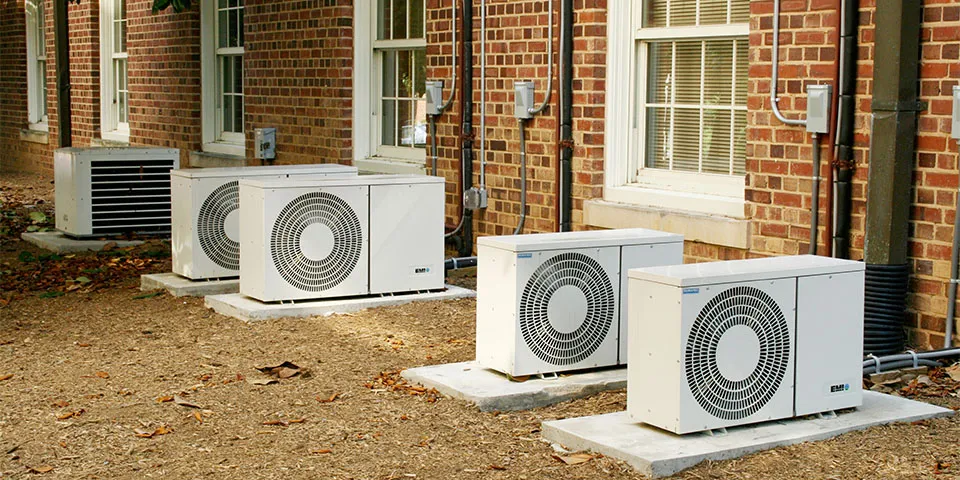
Is conventional air conditioning a dying breed? Lieven Verstaen (Daikin) does not think so: “In the residential sector in particular, we are seeing growing demand for conventional split and multi-split systems. There is still a large market for conventional air conditioning systems in the tertiary sector, too. Not every organisation can afford the high initial cost of the alternatives. In addition, many buildings regularly change their use and layout. This creates a need for flexible systems, whereas systems such as concrete core activation or chilled ceilings are built into the structure of the building.”
Question about this story? Ask your question
Companies in this story

Keep following this
Get an email when a new story is published. No account needed.
- SubjectHVAC
- CompanyVasco