











CHP meeting | Leuven: Combined heat and power is vital for security of supply
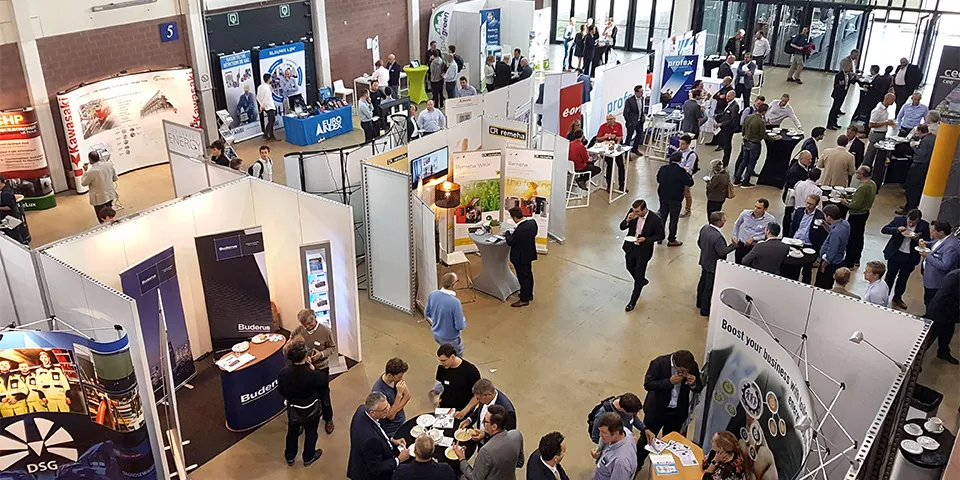
More than 300 people attended the latest CHP meeting at the Brabanthallen in Leuven, where the venue was packed. For organiser COGEN, it was an excellent opportunity to take stock of combined heat and power (CHP) in Flanders and look to the future.
Jean-Pierre Boydens opened the proceedings on behalf of COGEN Vlaanderen with an overview of the Belgian CHP landscape. The outlook is encouraging: at 2,700 MW, the electrical capacity installed in CHP is roughly equal to that of Doel’s four nuclear reactors. A further 1,000 MW of potential capacity could be developed by 2030.
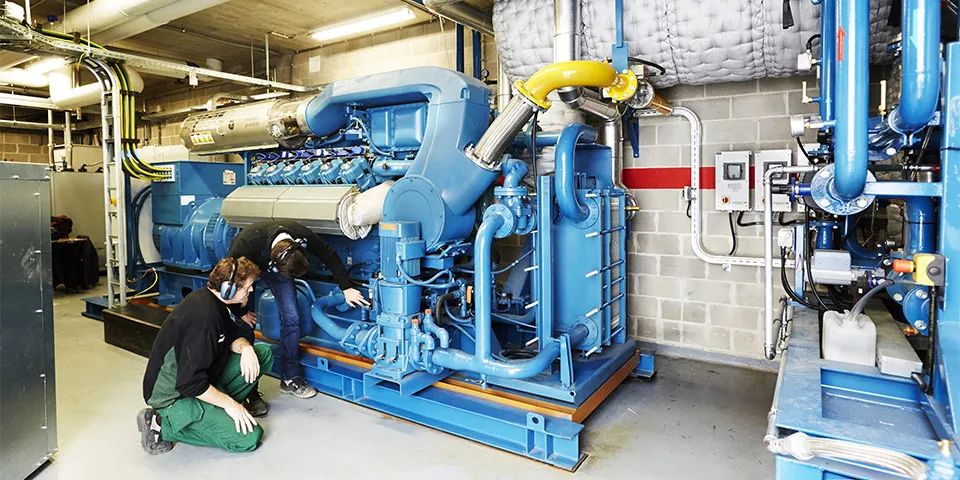
Although installed capacity is no longer growing as rapidly, as most large industrial companies already use CHP, the number of CHP plants is rising sharply. (image: Eoly)
Security of supply
COGEN says CHP must therefore be taken into account when considering security of supply. “If the nuclear power stations were to close, new conventional gas-fired power stations are being discussed. But CHP must also be part of the solution, especially where there is also a demand for heat,” said Boydens.
Although installed capacity is no longer growing as rapidly, as most large industrial companies already use CHP, the number of CHP installations is rising sharply. Many small units add up to a big contribution, and this is increasingly true in the CHP sector. CHP is also shifting towards lower capacities (see also the article on micro-CHP elsewhere in this magazine).
COGEN also notes that CHP is being used more flexibly. A CHP installation no longer needs to run continuously. In the horticultural sector, for example, COGEN has observed that high-capacity CHP units are always installed alongside thermal storage. This allows businesses to respond to the electricity grid’s needs at any given time, making CHP a valuable complement to renewable energy, particularly when renewable sources are unavailable.
The shift towards greener CHP is also gathering pace. CHP typically runs on natural gas, a fossil fuel. Biofuel produced from biogas can offer a solution. The opening of Belgium’s first organic waste anaerobic digestion plant to inject biomethane (green gas) into the natural gas grid, IOK in Beerse, is an important pioneering project in this respect.
Heat networks
COGEN also wants to make greater use of CHP as a heat source for heat networks. This can help heat networks expand and put the waste heat generated by CHP to good use. Many businesses need the electricity they produce, but not the heat. Jean-Pierre Boydens said: “Until recently, the energy debate focused mainly on green electricity, even though heat accounts for 50% of primary energy consumption, twice as much as electricity. It is impossible to meet sustainability targets unless heat is made sustainable too. Fortunately, the necessary shift in mindset is now slowly but surely under way.”
Question about this story? Ask your question
Keep following this
Get an email when a new story is published. No account needed.
- SubjectHVAC







