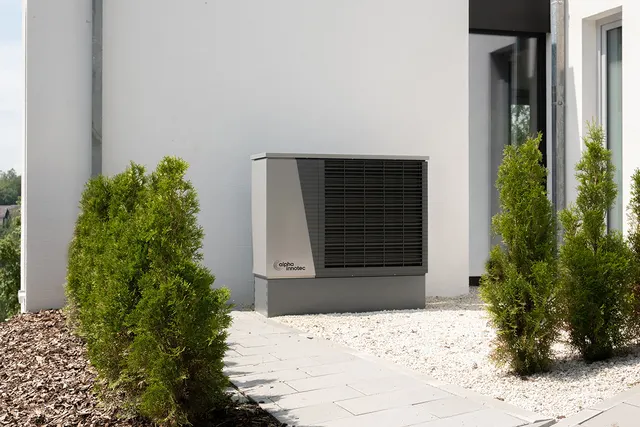
Buffer vessels in every size
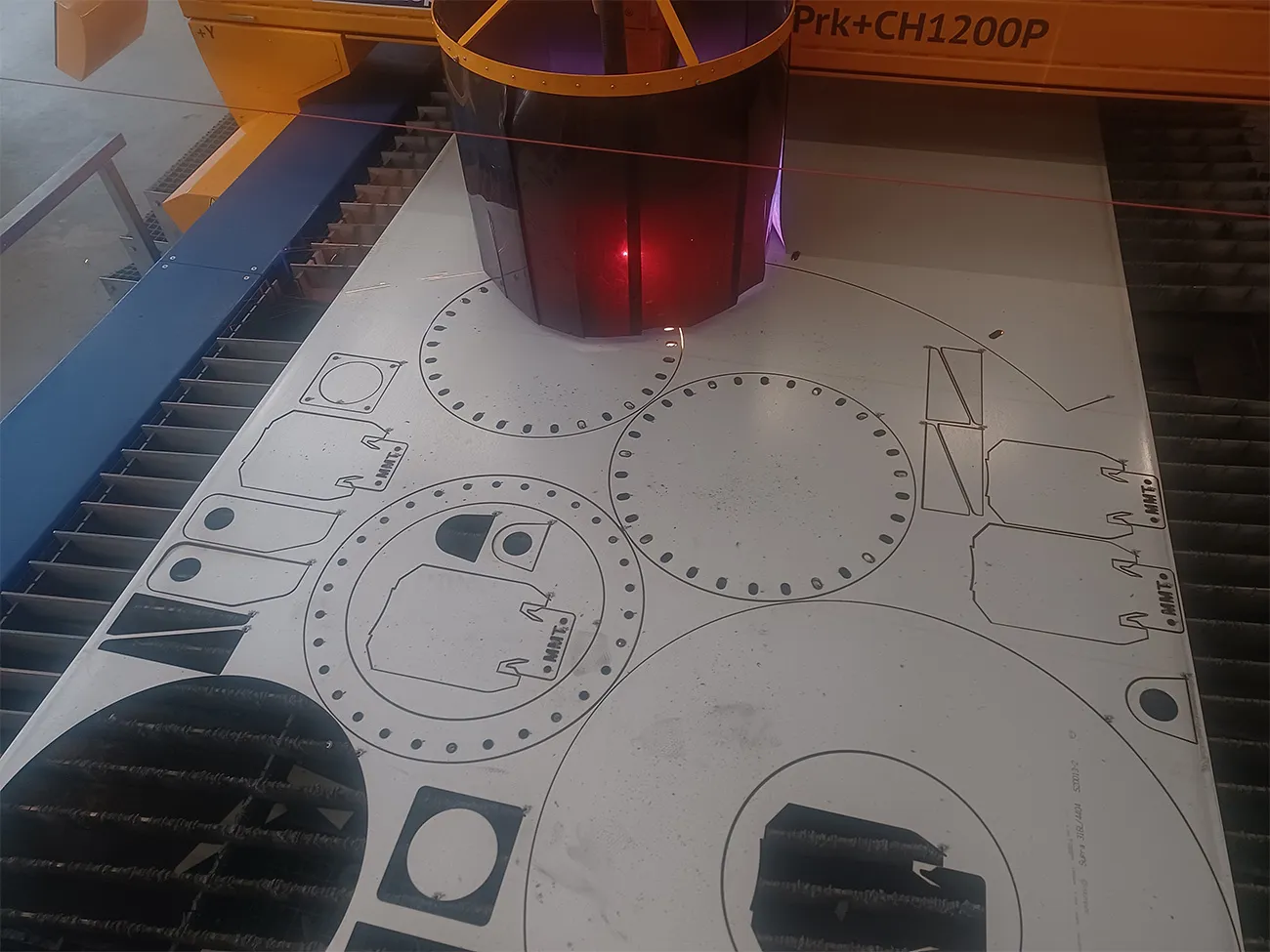
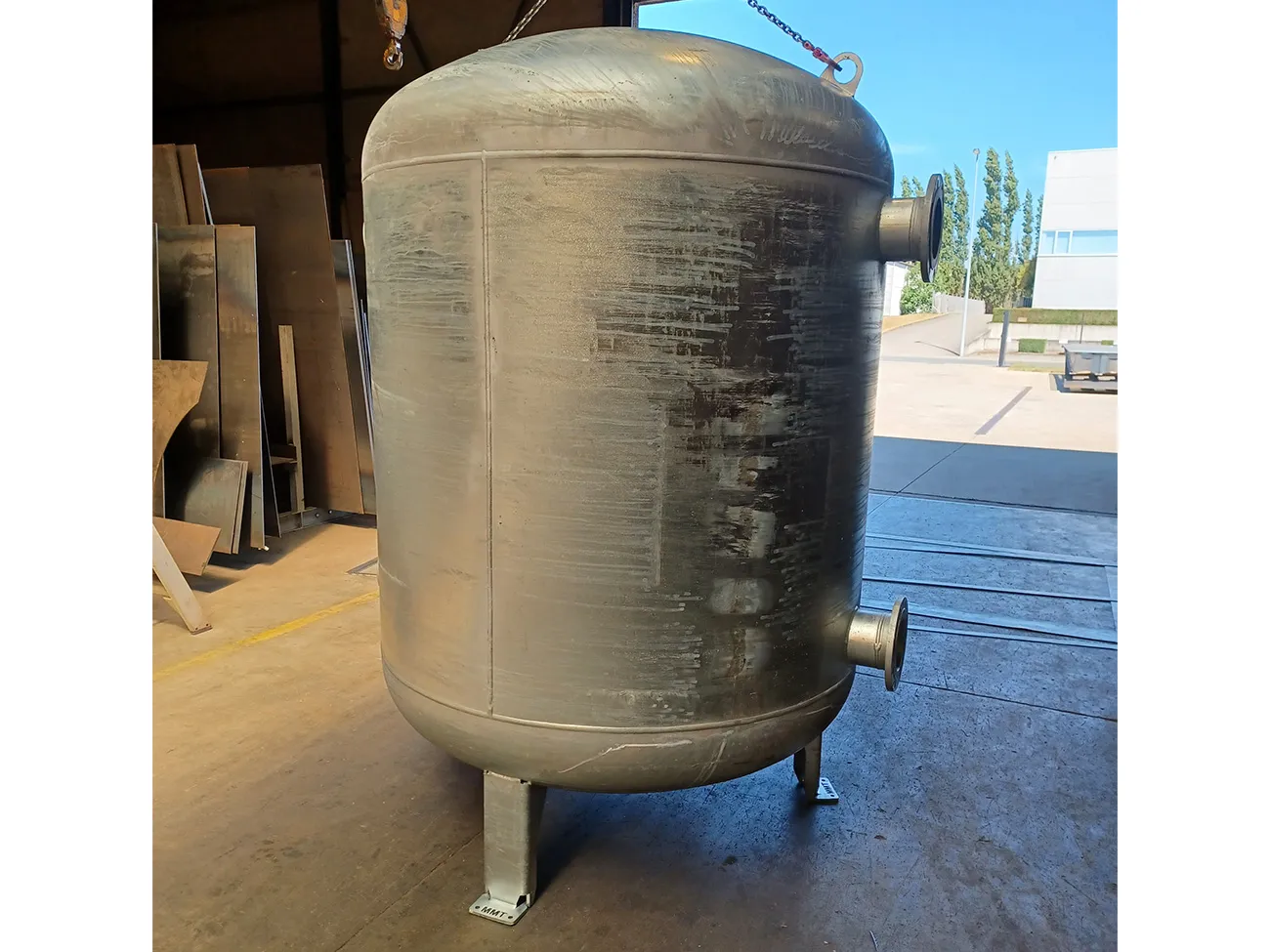
MMT is a well-established name in prefabricated HVAC components, including manifolds, low loss headers and buffer vessels, as well as complete prefabricated plant rooms and skid assemblies. Manufacturing buffer vessels involves a comprehensive process to deliver high-quality products and respond efficiently to customer requirements.
MMT is a metal fabrication company and part of the Altez construction group. Customers turn to the Tielt-based company for general metal fabrication and machinery for the concrete industry, but MMT is best known as a supplier to the HVAC sector. “Buffer vessels are a major part of what we do, and a large proportion of our machinery is geared towards making them,” says Francis Colpaert, managing director of MMT. “At the customer’s request, we can produce all kinds of bespoke products. Any volume, diameter or height to suit the available space: anything is possible, and with a short lead time. Other suppliers are often somewhat limited to fixed dimensions.”
Short lead times
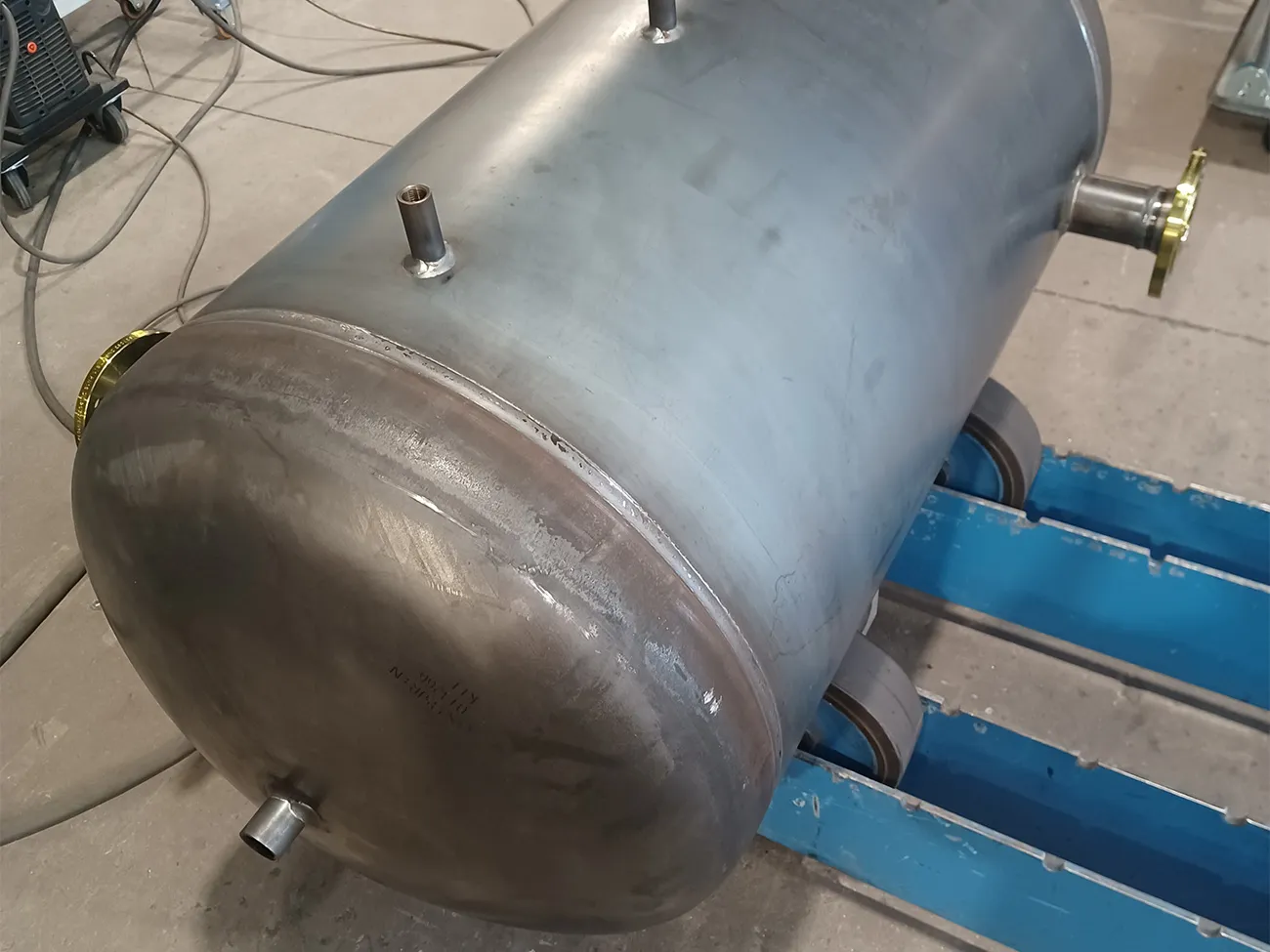
MMT offers a very wide range of options. Its standard range of buffer vessels has capacities from 25L to 6000L, with diameters ranging from 220mm to 1600mm. MMT keeps all the components in stock for fast production, including sheet metal, dished ends, flanges, inspection hatches and support feet. Customers can therefore order a buffer vessel to suit their requirements, with delivery in a relatively short time. Outside this standard range, MMT has already produced vessels with capacities of up to 100,000L and diameters of up to 3600mm. These are available with longer lead times.
New machine
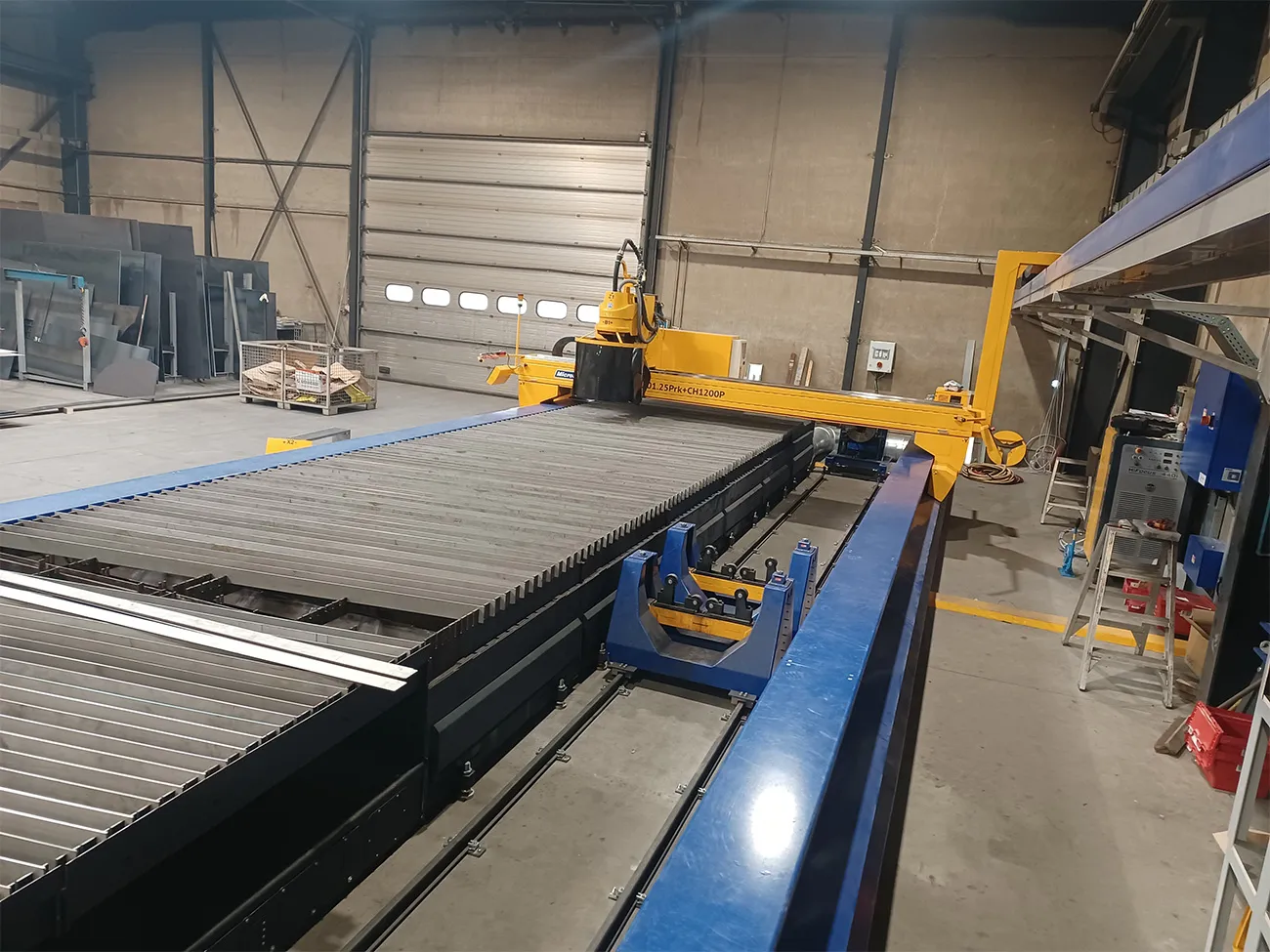
The first step in the production process is to cut the sheet metal to size on a plasma cutting table. The openings for branch connections are also cut at this stage. The sheet metal is then rolled using a plate rolling machine. “We then assemble the vessel and complete the welding in MMT’s welding department. We recently bought a new machine to handle larger sheets and make it easier to work with tubular sections. These are substantial investments that will help us strengthen our position,” says Colpaert.
After production, the vessel undergoes a hydraulic test at a test pressure 1.5 times its permitted operating pressure. This is followed by post-treatment. Most buffer vessels receive an anti-corrosion primer, but a customer-specific coating or galvanising at an external hot-dip galvanising plant can also be provided. The buffer vessel is then ready for delivery to site. A crane truck can be supplied to position it if required.
MMT also offers buffer vessels in stainless steel. These are not held in stock, however, and therefore have a long lead time.
Step by step
How does a project with MMT work? First, the customer sends MMT a request for quotation. This may be a complete tender package, in which case MMT uses the hydraulic schematic and specification to establish what needs to be offered. The request for quotation may also include a sketch or drawing showing what the customer has in mind. MMT then prepares a quotation to the requested specifications, listing any options separately if required. Once the customer accepts the quotation, MMT prepares a design drawing of the buffer vessel. This is submitted to the customer, who can check that it will fit into the proposed installation and that all the connections will be in the correct positions. Production can begin once the drawing has been reviewed.
Question about this story? Ask your question
Keep following this
Get an email when a new story is published. No account needed.
- SubjectHVAC