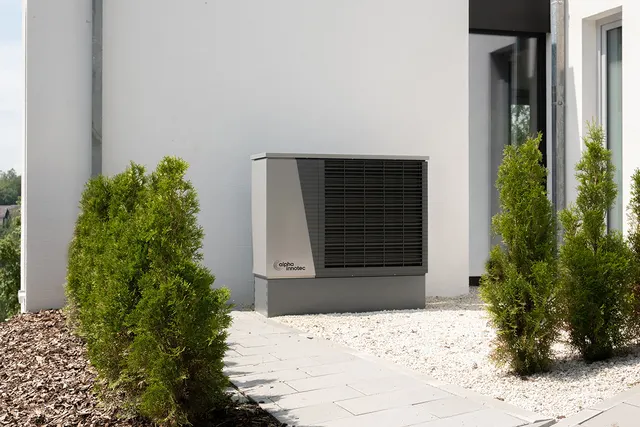
“Belgium’s complexity is holding back the breakthrough of heat pumps in our country”
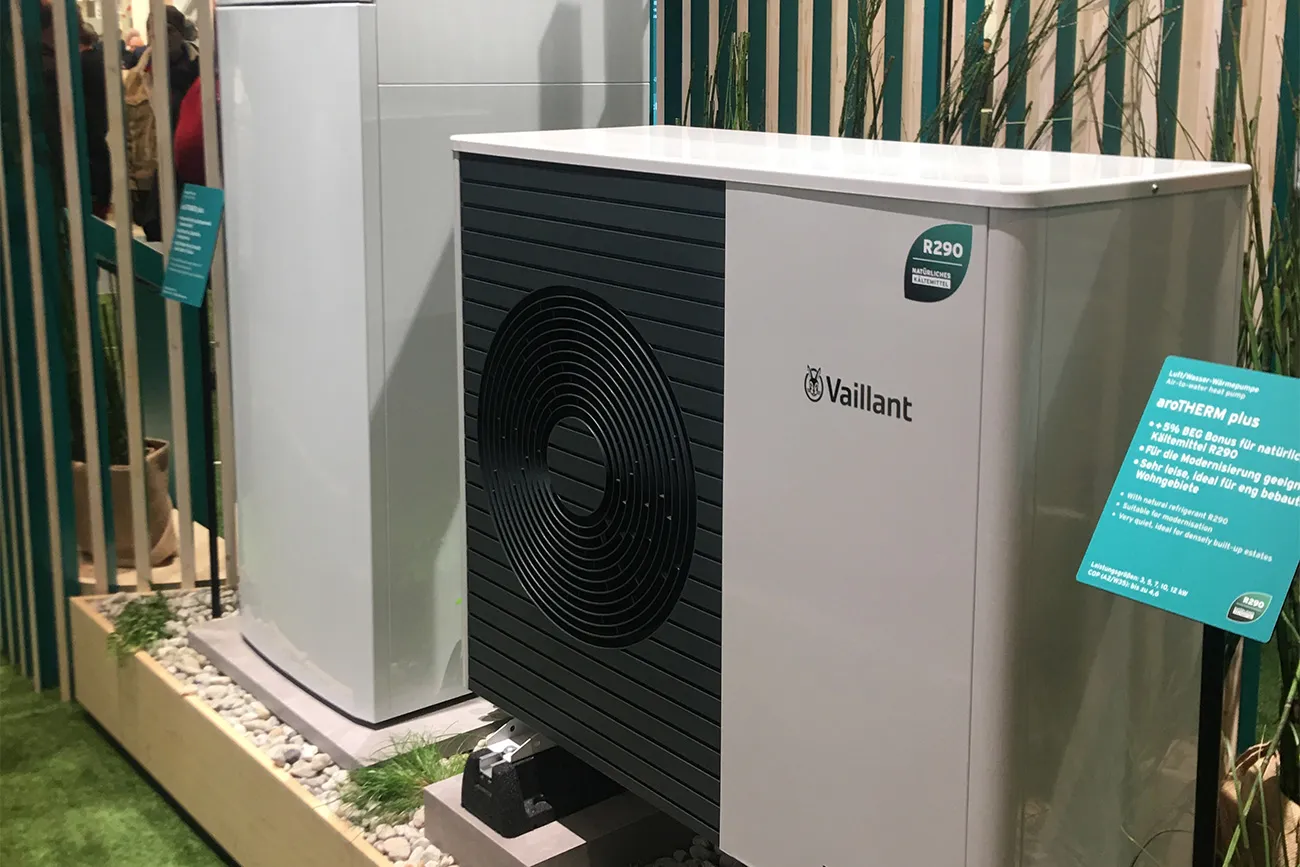
Heat pumps are the heating systems of the future, but it is not a case of one or the other, according to energy consultant Luc Dedeyne. We talk to him about trends at the recent ISH trade fair, future prospects and challenges.
Heat pumps were everywhere in Frankfurt, Luc Dedeyne confirms: “It is just a shame that Belgium is years behind, because some groups are still lobbying to retain boilers alongside heat pumps. The countries around us are moving ahead, with Germany leading the way. In Belgium, for example, some foreign manufacturers are currently not offering booster heat pumps because the country is so complex to operate in. There are too many inspections, and therefore too many costs.”

More sustainable R290 refrigerant
What trends and developments can we expect? Luc Dedeyne: “Without doubt, the new, natural and more sustainable refrigerant R290, or propane. It has a low global warming potential and high thermal efficiency. But here again, indoor units have to be inspected in Belgium, even though the heat pump contains only a tiny amount of gas. This causes further delays. It makes me wonder what we are actually doing.”
The rise of air-to-air heat pumps
Luc Dedeyne: “We are also seeing air-to-air heat pumps, or air conditioning units, become more popular, particularly in flats. They will take a large share of the market, especially as the EPB regulations in Flanders are such that, for the purposes of the calculations, they almost steer people towards installing air conditioning in bedrooms to cool them in summer and provide supplementary heating in winter. Yet an air-to-water or ground-source heat pump would be a better option. The regulations in Flanders urgently need to be reviewed. We lobby, but are usually presented with a fait accompli.”
Air-to-water heat pumps
According to Luc Dedeyne, the vast majority of heat pumps will be air-to-water units in future: “Of the two types, monobloc and split units, monoblocs will mainly take centre stage. Outdoor temperatures are rising considerably, after all. The monitoring system at my home measures the outdoor temperature every five minutes. It shows that last year there were only 300 hours when the outdoor temperature was +2 degrees or lower. That is just 12.5 days. Heat losses are calculated at -7, which did not occur.”
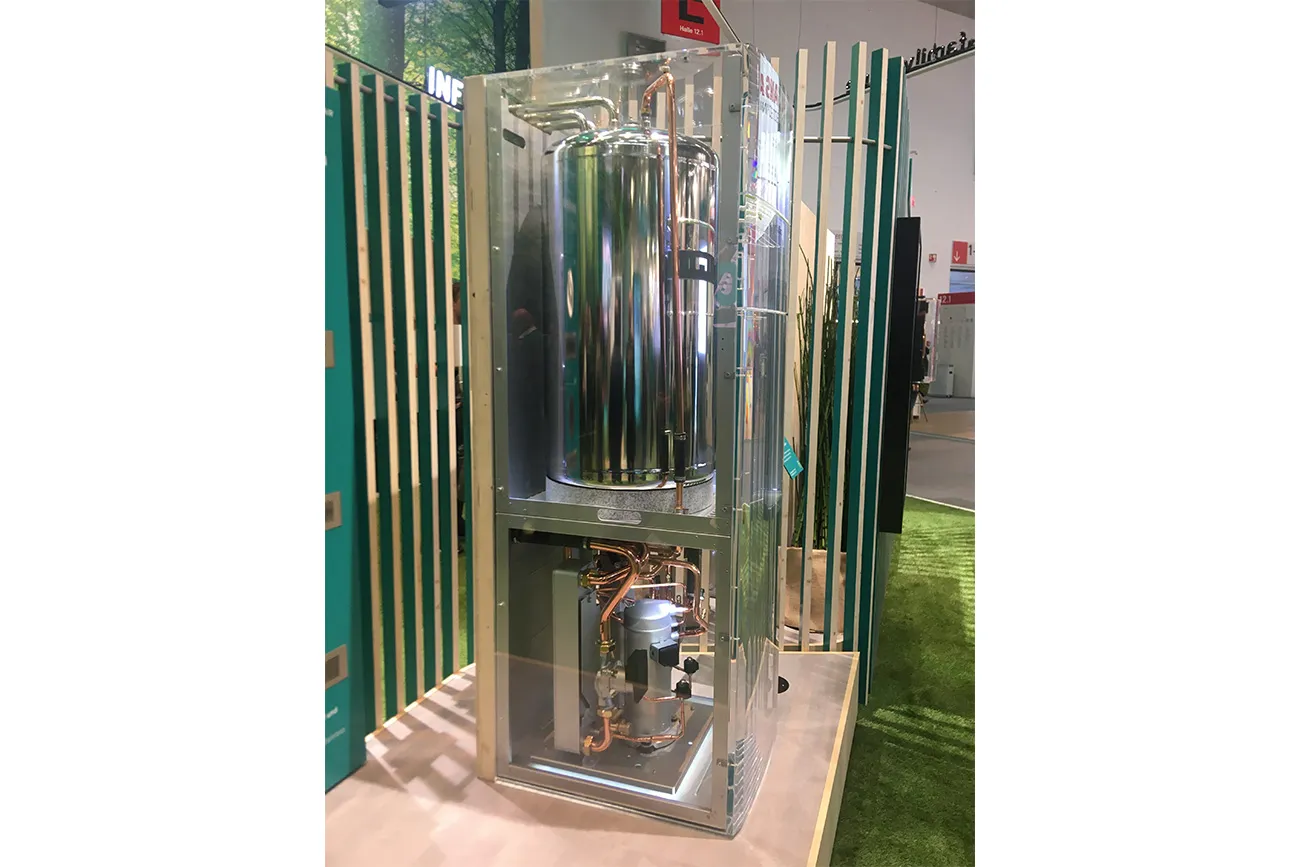
The communal heat pump system
Communal heat pump systems in apartment buildings are currently being promoted in Germany. Luc Dedeyne: “They operate at low temperatures. As they cannot produce domestic hot water, a booster heat pump is installed as well, which is a good solution. We are also seeing many manufacturers start producing dwelling substations, which are connected to the heat network and draw heat from it for space heating and domestic hot water. Manufacturers of space heating systems are also increasingly offering PV panels, charging stations and the like.”
What does the future hold for heat networks? Luc Dedeyne: “They are part of the solution, as are pellets. By the time the heat network has been rolled out in Belgium, it will be a hundred years from now. Many streets are still being rebuilt without anyone even considering a heat network.”
Hydrogen
Last but not least, Luc Dedeyne says hydrogen must also be taken into account: “New boilers are already capable of replacing at least 20% of the gas volume with hydrogen. Some manufacturers are already producing boilers that run entirely on hydrogen. The challenge, however, is securing a supply of hydrogen. Research shows that gas networks can be used for hydrogen, provided a number of couplings are replaced. The pipes themselves will not be a limiting factor.”
A mix of solutions
The conclusion? Luc Dedeyne: “The future will inevitably involve a mix of heat pumps, heat networks and pellet boilers. Under the Ecodesign regulations, in a few years’ time new-build heating systems will even be required to achieve higher efficiency. Condensing boilers will no longer be able to meet that requirement.”
Question about this story? Ask your question
Keep following this
Get an email when a new story is published. No account needed.
- ThemeFossil-free heating and cooling
- SubjectHVAC