Back-to-school special: ventilation in schools
Text Maxime BervoetsImage Swegon
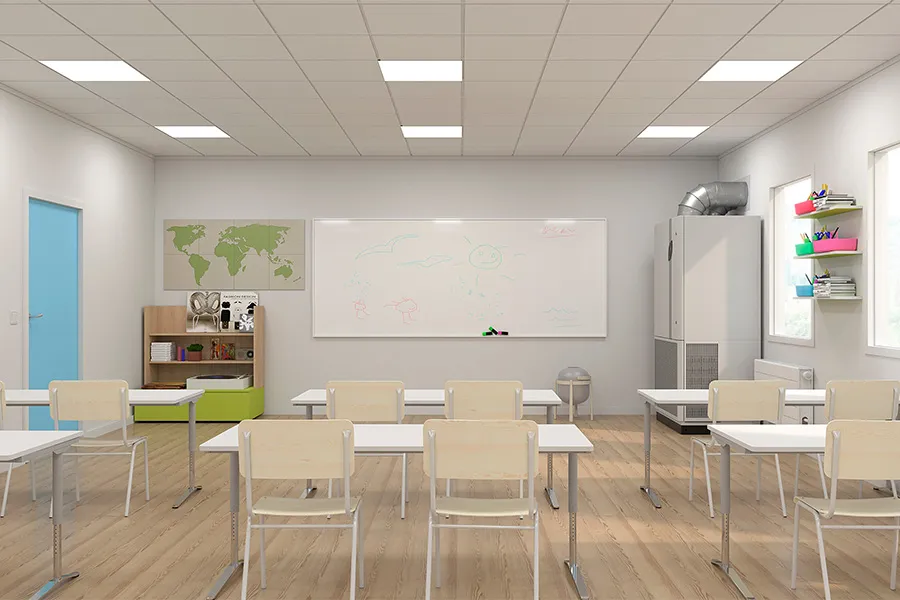
When school rooms are in use, there is a high demand for ventilation. When they are not in use, little ventilation is needed. Making use of these variations in occupancy can save a great deal of energy. For example, installing mechanical ventilation with a heat exchanger can recover around 90% of the heating and cooling energy in the building. What is more, choosing the right “system solutions” for controlling mechanical ventilation can further optimise energy costs.
Ventilating classrooms is also a simple way to improve pupils’ performance (increased alertness and concentration, and better memory) and health (fewer headaches and respiratory problems).
What are the options for ventilating schools?
1. Decentralised system
In a decentralised system, each ventilation unit is installed individually in a classroom and is therefore not connected to a central system by ductwork.
A decentralised system offers great flexibility in terms of installation, is easier to implement and is therefore considerably less expensive.
A COMPACT Air or CLASS UNIT PX unit can be installed directly in the classroom, on a wall or ceiling. The unit supplies fresh air to the room and extracts stale air, while its integrated heat exchanger ensures that energy in the indoor air is not wasted.
Key strengths:
Good energy recovery
Simple installation and commissioning
Maintains good air circulation in the room, ensuring air quality

2. Centralised system
With centralised ventilation, both heating and cooling take place at a central location, with air supplied to the classrooms through a network of ducts.
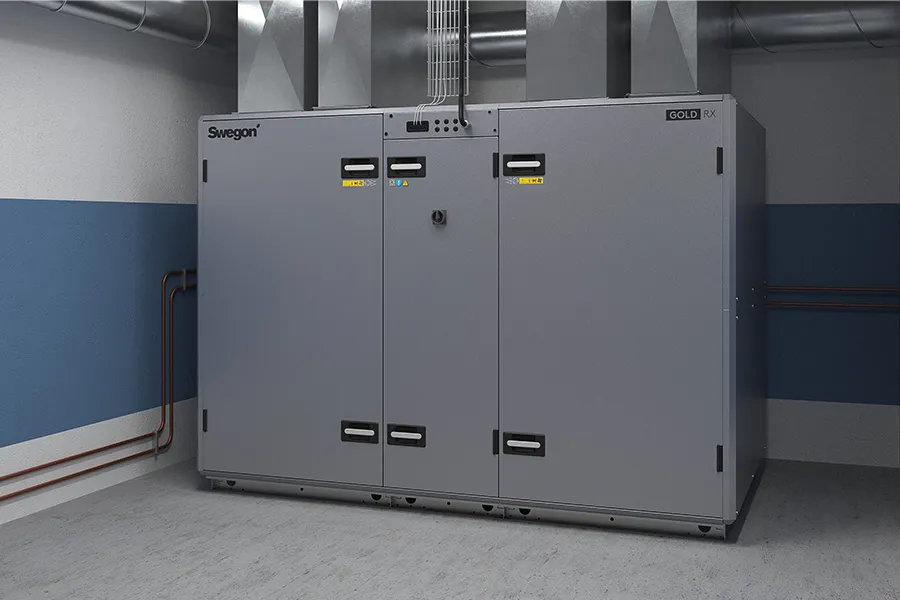
A centralised system can save a great deal of energy. The climate system is rationalised and maintenance costs are lower. A centralised system consists of one or more double-flow air handling units, installed directly on the roof or in plant rooms.
With this system, the units’ integrated controls can, for example, ensure that ventilation does not run at full capacity outside lesson times. Swegon’s GOLD and GLOBAL air handling unit ranges offer several options for implementing a centralised system tailored to each school.
Key strengths:
Maintenance in one location
High level of energy recovery
Centralised control
Designed to suit the building
Ensures air quality, with the option to manage heating and cooling too
3. Demand-controlled ventilation
As demand-controlled ventilation operates from a centralised system, environmental sensors help it optimise not only classroom comfort but also comfort throughout the building. This type of ventilation minimises the building’s energy consumption and provides a complete overview of the building’s status through a single interface.
SWEGON’s WISE system is the complete solution for demand-controlled indoor climate. Significant energy savings and maximum comfort can be achieved, particularly when it is paired with a GOLD air handling unit. The unit is also extremely easy to install and commission thanks to its wireless technology, which requires no communication cables.
Key strengths:
Unrivalled energy recovery
Complete indoor climate control, ensuring air quality and thermal comfort in every room for optimal learning conditions
Wireless technology for greater flexibility and rapid installation
Een zakelijke vraag aan Swegon? Get in touch
Companies in this story

Keep following this
Get an email when a new story is published. No account needed.
- ThemeHealthy air and summer comfort
- SubjectHVAC
- CompanySwegon