











10 tips for keeping your home cool without air conditioning
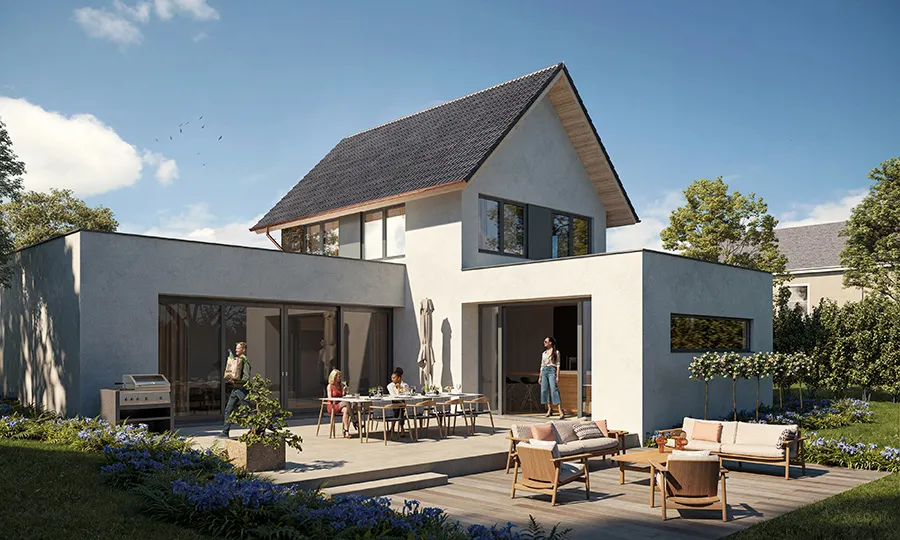
An energy-efficient renovation in line with the ambitions of RenovatiePact 2050, also known as a ‘BENOvation’, focuses above all on insulation, replacing windows and doors, airtightness and energy-efficient heating. And rightly so. But with heatwaves and extreme temperatures becoming the rule rather than the exception, protecting your home from overheating has become just as important. Trying to cool it with a portable air conditioner is disastrous for your energy bill and the environment. Does that mean you have to sweat it out this summer? Of course not. There are other ways to beat the heat.
1. Keep everything tightly shut during the day
The first step costs nothing: let as little heat in as possible. Many people make the mistake of opening the doors during the hottest hours of the day. But that lets warm air into the house, when it should be kept outside. So close all windows and doors as soon as the sun shines on your home in the morning, and keep them firmly shut throughout the day. Only open them in the evening, when it is cooler outside than in, to let cool air in. Ideally, open windows on opposite sides of the house so the cooler evening air can ‘flush’ your home.
Thinking about a home automation system? You can integrate this type of cooling into it. Is it cooler outside than indoors? The system can notify you, or open a window automatically.
2. Make sure your home cools down enough at night
During the coolest hours, between 2 and 6 am, it is important to ventilate your home thoroughly. The quickest way is to create a draught. To do this, open at least two windows, preferably several on different floors. Open the internal doors too. This allows the cool night air to flow through your home, helping to drive out the heat and cool the walls and floor.
3. Install external solar shading
Another effective way to prevent overheating is to install external solar shading on the largest south-facing window, or on the window overlooking the patio. External shading is much more effective at keeping out the heat than internal shading, because it blocks infrared radiation and heat before they enter the home. Compared with solar-control glass, external blinds have the advantage that you can still enjoy the sun’s free heat and natural light in winter and the shoulder seasons.
Traditional external shading can be operated with a switch, but this is less effective. It is usually only closed manually once it is too late, especially if you are out on a sunny day. A sun sensor is one option. You can also integrate the shading into a smart home system. Is too much sun getting in and heating up your home? The system can automatically raise or lower the shading depending on the sunlight, or send you a notification so you can operate the blinds remotely via your smartphone or tablet.
4. Consider solar-control glass
If 50% of a sun-facing façade consists of ordinary, non-solar-control double glazing, the indoor temperature can quickly rise to 35 to 40 °C when the outside temperature is 25 °C. Solar-control glazing can help prevent this. One cavity-facing surface of the outer pane has an invisible coating that blocks twice as much solar heat as ordinary double glazing. Solar-control glass is particularly useful for east- and west-facing windows. In summer, they receive twice as much solar heat as south-facing windows.
For existing windows, rooflights, conservatories and roof domes, solar-control window film can be useful. It is applied to the inside of the glass and can lower indoor temperatures by 5 to 7°C.
5. Plant deciduous trees or shrubs
Deciduous trees or tall shrubs planted near south-facing windows also have a cooling effect. They let sunlight through in winter, while providing shade in summer. If you cannot plant a tree, consider building a trellis in a strategic spot and training a wisteria or grapevine to grow over it.
6. Change the colour of your flat roof
In strong sunshine, a flat roof can quickly reach 70 °C. To prevent overheating, you can cover the whole roof with small plants. This keeps the temperature below 30 °C, a difference of no less than 40 degrees.
You can also reduce high temperatures beneath a flat roof by insulating it properly and then covering it with white pebbles.
7. Insulate the walls and loft
A home with well-insulated walls and a well-insulated loft will always stay cooler in hot weather than a poorly insulated home.
You can insulate external walls on the inside, outside or in the cavity. You can also insulate your loft from the inside or insulate the outside of the pitched roof. Find out about the insulation values to aim for and how to achieve them at www.mijnBENOvatie.be
8. Extending your home? Use heavy materials
Heavy materials such as brick and concrete can absorb heat during the summer and release it gradually in the evening, once the outside temperature has dropped. This stops your home heating up too quickly during the day and keeps indoor temperatures under control.
9. Use as little energy as possible, barbecue or have a salad
It is best to switch off appliances such as your computer, printer or TV completely whenever possible. They generate heat even in standby mode. Choose LED lights, an energy-efficient fridge and a dishwasher, as these give off less heat. You will also save energy.
Do not use the oven or hob. They generate heat when in use. Fire up the barbecue, or opt for a cold platter or a refreshing salad. You will enjoy the warm weather all the more.
10. Invest in a good fan or renewable-energy cooling
For a cool bedroom, consider investing in a good fan. A fan does not cool the air, but the airflow makes it feel a few degrees cooler. Make sure it is quiet, including when oscillating, powerful enough and perhaps fitted with a timer or remote control, so you do not have to get out of bed if you start feeling cold. Placing the fan in front of a bowl of cold water and ice cubes will improve its cooling effect.
If conventional methods are not enough to cool your home, a heat pump is a more energy-efficient alternative to a portable air conditioner. An air-to-air heat pump, also known as an air conditioning heat pump, can both heat and actively cool your home. You can cool passively, or naturally, using the underfloor heating or fan coil units of your ground-source heat pump. Passive cooling uses less energy than active cooling, but can lower the temperature by no more than 5°C.
Learn how to renovate better at www.mijnBENOvatie.be
Planning a renovation? Map out your ideal BENOvation journey in 5 steps at www.mijnBENOvatie.be. You can carry it out at your own pace and within your budget. From the roof to the external walls, glass, windows and doors, then the floor and the so-called ‘systems’: heating and domestic hot water, home automation and lighting, electricity generation and water treatment…
For each of these 5 BENOvation steps, www.mijnBENOvatie.be offers a wealth of useful information and practical solutions, financing advice and an overview of all the grants you may be entitled to.
www.mijnBENOvatie.be
https://www.facebook.com/MijnBENOvatie.be
Question about this story? Ask your question
Keep following this
Get an email when a new story is published. No account needed.
- SubjectHVAC







