The future of solar energy and (home) batteries
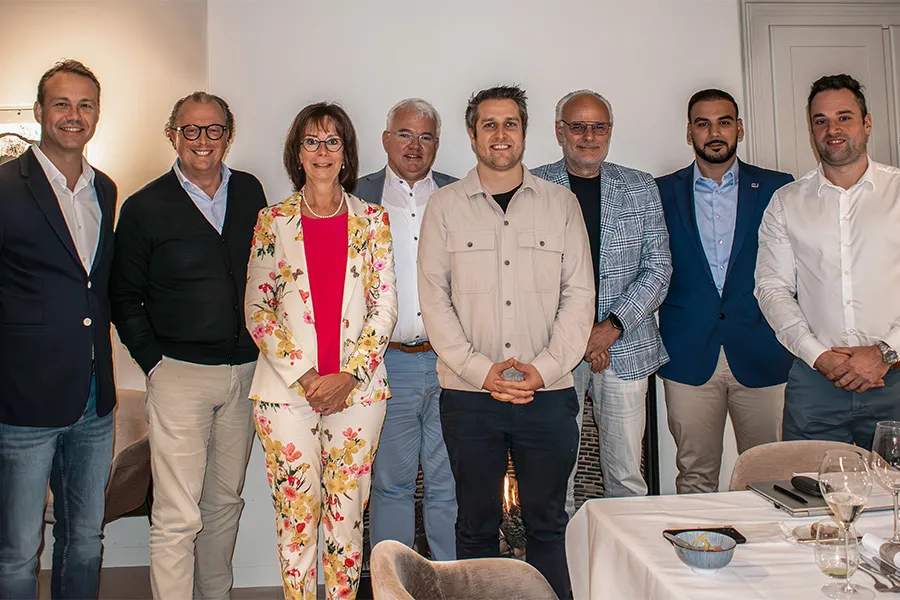
Round-table discussion
Europe’s aim to phase out fossil fuels completely by 2050 means, in practical terms, that the building services sector will need to run on renewable energy, that is, electricity generated from wind, hydropower or the sun. Systems for generating this last form of sustainable electricity, solar energy, are already well established in both the industrial and residential sectors. But what does the future hold? Will solar panels ultimately create a fully decentralised network? Will the Internet of Things (IoT) and artificial intelligence (AI) reshape the solar energy landscape? And what developments can we expect in home batteries and other systems for storing solar energy? In a round-table discussion, Installatie & Bouw asked seven experts for their views on the future of solar energy (storage) systems in Belgium and beyond, based on four propositions. Get ready for an engaging discussion.
Participants:
- Herman Daniëls, CEO of Intellisol
- Yassine Farah, business development manager at SMA Benelux
- Frans-Joseph Joosten, co-chair of PV Vlaanderen and CCO of iLumen
- Steven Leeten, sales manager Multi Energy at Rexel Belgium
- Jef Schelkens, managing director of ClimaWays
- Hilde Vandenberghe, category manager for renewable energy and HVAC at Cebeo
- Christophe Van den Eynde, product manager electrification at Viessmann Belgium
Moderator:
Wouter Polspoel (content agency Palindroom), editor-in-chief of Installatie & Bouw België
PROPOSITION 1: solar panels are essential to the transition to a fully sustainable and decentralised energy network.
Jef Schelkens: “I can see all the other panellists nodding, and I certainly agree, although solar panels are just one part of the overall picture when it comes to generating sustainable energy. We also need systems that can store solar energy, because the sun doesn’t shine every day.”
Hilde Vandenberghe: “And solar energy is itself just one part of the renewable energy mix. There are also systems that generate energy from wind or hydropower. But solar panels really are essential to the energy transition because they are such an accessible solution, readily available to private individuals too. The same cannot be said for wind or hydropower systems. Installing a wind turbine in your garden is less straightforward.”
Frans-Joseph Joosten: “For the domestic market, as well as the industrial sector, solar energy is indeed the most accessible and cheapest source of sustainable energy. Solar panels also easily last 25 years. That has already been proven.”
Christophe Van den Eynde: “The modular nature of solar panels also makes them widely applicable. The digital meter has also meant that solar panels are no longer installed only on south-facing roofs.”
What other solar energy systems have potential? What is the future for technologies such as perovskite solar cells and bifacial solar panels?
Steven Leeten: “We are seeing a trend towards integrated solar panels, or so-called BIPV systems (BIPV stands for Building Integrated Photovoltaics, ed.). These could indeed be perovskite solar cells, applied as a thin layer to a building material, but they could just as well be conventional silicon solar panels. We are also seeing more and more full-size solar panels with perovskite cells.”
Christophe Van den Eynde: “Bifacial solar panels are also gaining ground. Glass on both sides of the panel increases its lifespan and output.”
How do today’s solar panels differ from those of, say, ten years ago?
Frans-Joseph Joosten: “They are far more efficient. Solar panels with an output of 500 Wp are already available today, whereas in the past the maximum was 150.”
Yassine Farah: “Solar cell efficiency has indeed increased considerably in recent years, making photovoltaic systems viable even without a digital meter on north-east- or north-west-facing roofs.”
Hilde Vandenberghe: “Solar panels have also come a long way aesthetically. You no longer see the distinctive little squares that defined the first generation of solar panels.”
PROPOSITION 2: home batteries are essential to the transition to a fully sustainable and centralised energy network.
Steven Leeten: “I think we can all agree on this one too. Although I don’t think it will be a case of home batteries alone: there will also be centralised battery parks that can be brought online whenever needed.”
Hilde Vandenberghe: “This technology is very beneficial for private individuals. Electrification in the building services sector naturally means a higher electricity bill for them. So being able to store self-generated electricity is invaluable. There is a difference between self-consumption and self-sufficiency.”
Christophe Van den Eynde: “That’s absolutely right, which is why home batteries are essential. You will generate more electricity than you can use at the same time. But you can store that surplus and ultimately become self-sufficient. Self-consumption from solar panels is 30%. A home battery increases that to 60%.”
Yassine Farah: “A home battery is certainly a crucial asset for a sustainable and efficient energy network, but the key lies in the energy management system that controls it. A well-developed system increases the self-consumption of the energy generated without compromising user comfort.”
Herman Daniëls: “We also expect battery prices to fall early next year, as the market is gradually moving into oversupply. That will naturally boost sales.”
What other solar energy storage systems are available?
Jef Schelkens: “Thermal storage, which is cheaper, incidentally. A 500-litre buffer tank can easily store 25 kilowatt-hours of energy. Of course, the solar energy is converted into hot water rather than electricity.”
Frans-Joseph Joosten: “We will also increasingly see car batteries being used to power home systems with solar energy. This is possible thanks to recent advances in bidirectional charging technology. Our company iLumen is already installing charging stations that enable this in the field, and more and more car manufacturers are also embracing it.”
Is a home battery only worthwhile when combined with solar panels?
Steven Leeten: “Some say they are useful when dynamic tariffs are high too, but I think home batteries have the most potential when combined with solar panels.”
How safe are home batteries?
Herman Daniëls: “The short answer is that the media are keen to highlight faults in new technologies, but home batteries are very safe today. That is, provided they are kept somewhere free from impact and dust, where the temperature is more or less constant. A cool cellar is ideal.”
PROPOSITION 3: installing solar panels and home batteries will significantly reduce the need for traditional energy networks within the next ten years.
Christophe Van den Eynde: “People with solar panels and a home battery will not be able to go off-grid. That is unrealistic, because, as I said, a home battery does not suddenly provide 100% autonomy. There is also the expected sharp increase in household electricity consumption as people electrify their appliances and, as Hilde mentioned, their cars …”
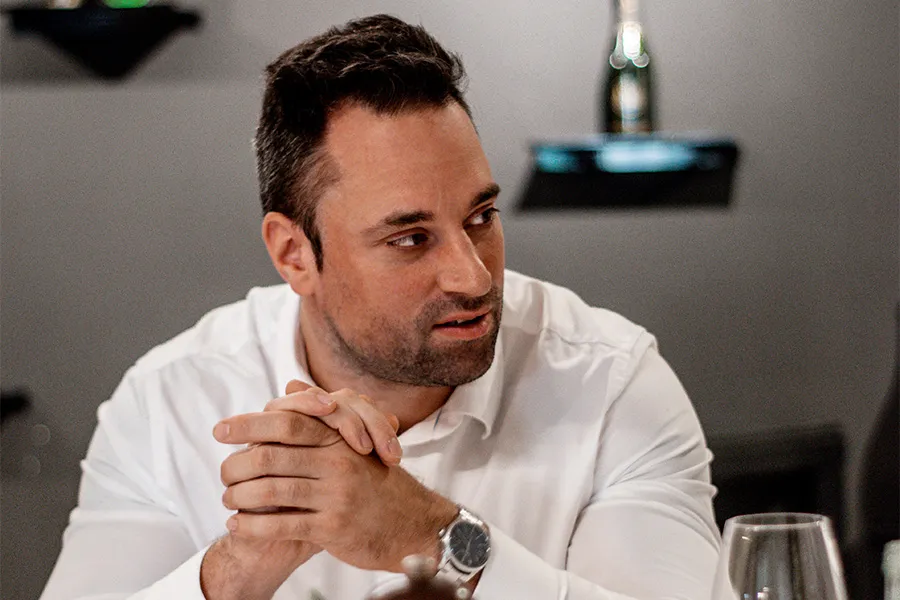
Herman Daniëls: “A study by EnergyVille has also shown that the Flemish electricity grid can certainly cope with a 30% increase in electricity consumption.”
Steven Leeten: “Centralised systems will still be needed to support decentralised systems. In my view, off-grid only makes sense in very remote areas, certainly not in Flanders. Solar panels and home batteries will do more than they do today to ease the burden on the electricity grid. And solar panels can also feed the grid with their surplus generation.”
How does Belgium compare with other European countries in terms of the uptake of solar panels and home batteries?
Yassine Farah: “I think we are really leading the way here, and in Europe perhaps only Germany is ahead of us.”
Hilde Vandenberghe: “I know that the average number of solar panels per person in Belgium is 1.5, which does indeed put us among the top performers.”
What are the environmental costs of producing and recycling solar panels and home batteries?
Herman Daniëls: “Solar panels more than offset the environmental impact of their production and recycling through their performance. The production and recycling of home batteries will still have some environmental impact.”
Steven Leeten: “Research has shown that after three years of use, solar panels have offset the CO2 emissions associated with their production. How many technologies can do better?! The fact that solar panels can last up to 25 years means they are therefore significantly carbon negative. That research also assumed production using fossil fuels, which is becoming less and less common today. In Belgium, we also have a collection and recycling service for solar panels, PV Cycle. To be fair, there is not yet a closed-loop system for solar panels, but overall they are still much easier to recycle today than, for example, a wind turbine, whose composite blades cannot be recycled. Solar energy is also more reliable than wind energy, although hydropower is naturally number one.”
Hilde Vandenberghe: “Bebat is responsible for collecting and recycling home batteries. This environmental organisation also raises awareness about battery use.”
Can smart technologies such as the Internet of Things (IoT) and artificial intelligence (AI) help solar energy systems and home batteries work together efficiently?
Yassine Farah: “Absolutely. These technologies can help all the systems in and around a home work together as efficiently as possible. There is one caveat, though: what about cybersecurity? That is not so easy to guarantee.”
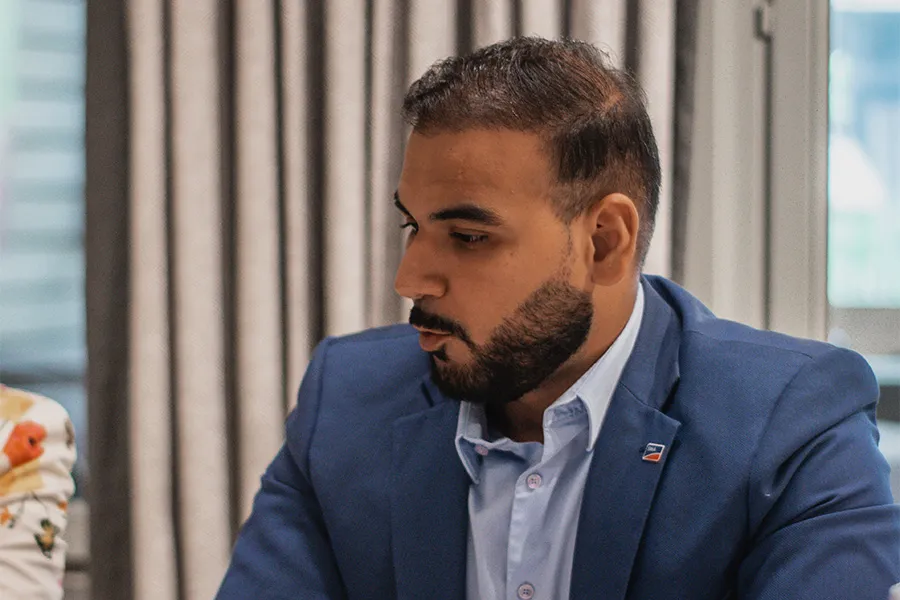
Herman Daniëls: “Just look at the Enphase case in the Netherlands, which everyone in our sector knows by now. This summer, a Dutch ethical hacker could have switched off 4 million solar panels in 150 countries at the press of a button by hacking an American inverter system.”
Steven Leeten: “The safety of solar energy systems and the installations connected to them is, of course, paramount. But if we want to increase self-consumption without any significant loss of comfort, IoT and especially AI are essential. People have all kinds of habits. AI can ensure that installations automatically adapt their consumption to those habits as effectively as possible. For example, batteries can be charged and discharged as closely as possible in line with the user’s habits.”
What are the main legal, technical and economic barriers standing in the way of the breakthrough of home batteries and other energy storage systems?
Herman Daniëls: “Home batteries need to become cheaper, but the market is moving in the right direction in that respect.”
Steven Leeten: “There also needs to be a tax shift. For private consumers in Flanders, just 39% of the electricity bill is made up of the actual price of electricity. The remaining 61% consists of taxes and other levies. The price of electricity needs to come down if we are to reduce emissions.”
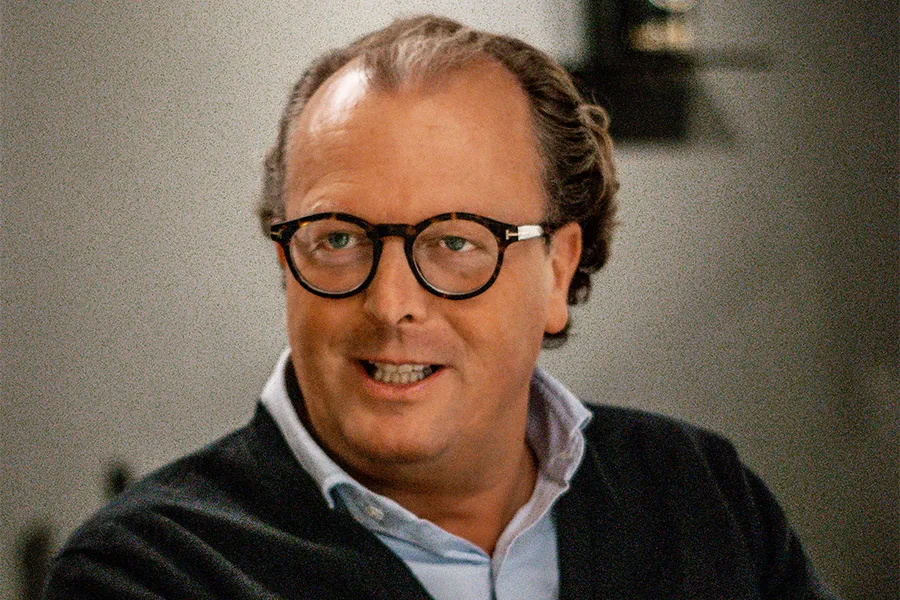
Christophe Van den Eynde: “In Flanders, 80% of energy taxes are levied on electricity. 80%! That has to change if we are to meet our climate targets.”
STATEMENT 4: the cost of home batteries and solar panels will continue to fall, making investment in these technologies increasingly profitable.
Herman Daniëls: “As I’ve already said, I think this is a logical development.”
Frans-Joseph Joosten: “In principle, yes. It is logical that the production cost of a proven technology falls at some point. However, the selling price of solar panels is not determined solely by the actual cost of production. Manufacturers’ overheads will continue to rise, just look at wage indexation. There is also currently a huge stock of solar panels, due to gas and electricity prices falling again after the energy crisis between 2021 and 2023. When that market picks up again, prices will rise.”
Hilde Vandenberghe: “The cost of making a solar panel is currently lower than the price at which it is sold. And yet we have overstock. That means price is not the only factor people consider, nor the only way to drive sales. People’s mindset also needs to change.”
Herman Daniëls: “One important point to bear in mind is that our sector is not the only one currently experiencing a serious downturn. The whole economy is ‘on its knees’, you know. People’s savings have been depleted by Covid and the energy crisis, and they are now replenishing them slowly but steadily. People have put investment goods on hold for a while. The same goes for businesses. Figures from the National Bank of Belgium, published in early July, speak for themselves: household investment has fallen to 70% of its normal level, and business investment to less than 50%.”
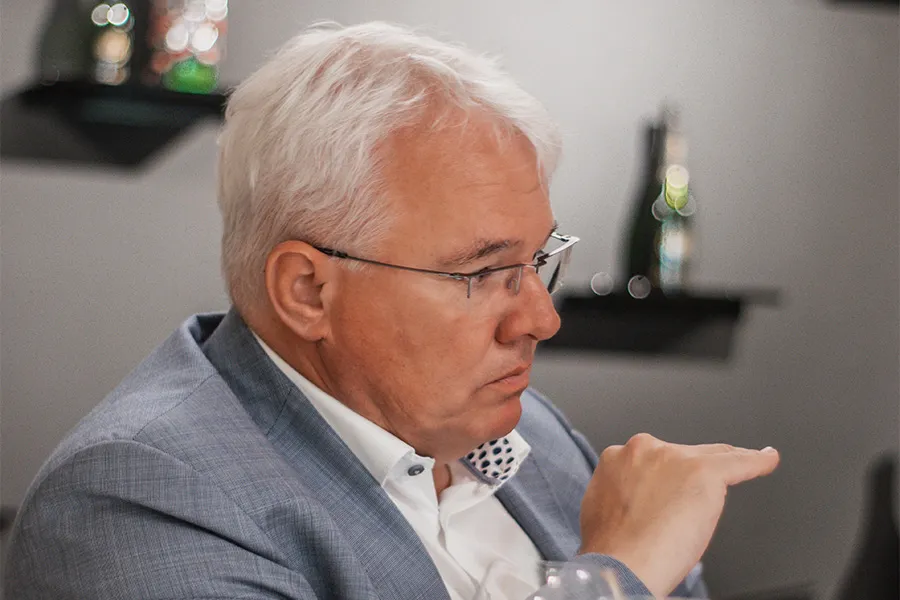
Frans-Joseph Joosten: “Of course, we mustn’t forget that every transition initially meets with resistance. There are plenty of historical examples of that.”
Can the sector or the government motivate consumers to invest in solar energy systems and home batteries in ways other than purely financial incentives?
Jef Schelkens: “Yes. For example, by banning excessively polluting installations. In any case, the government should have a long-term vision for renewable energy, but that is difficult when the government changes every few years and sets different priorities.”
Christophe Van den Eynde: “Belgium also needs a consistent policy to drive the energy transition. The three regions are not entirely on the same page in this respect. In Flanders, for example, there is the capacity tariff, in Brussels there is something similar, and in Wallonia they are planning to roll out a completely different system. Why can’t it be the same everywhere? That also makes things more complicated for us as a manufacturer.”
Finally, what do you think the future holds for solar energy and home batteries?
Frans-Joseph Joosten: “It looks good. Fossil fuels are a finite resource, after all. There are several reasons why the market is stagnating today, but the solar energy and home battery market will certainly continue to grow.”
Hilde Vandenberghe: “The future looks bright. But I would like to stress again that solar energy and home batteries are not the only tools in the energy transition.”
Yassine Farah: “I always say that the future of our sector is looking green (laughs). The foundations are in place; more and more people have renewable energy systems in their homes. It is now up to the industry to develop more technology that enables all these devices to communicate efficiently with one another. But that will happen. In Germany, for example, more and more technical installation manufacturers are attending presentations on the EEBUS communication protocol. The numbers have really increased tenfold. Manufacturers themselves are keen to see, for example, a heat pump communicating smoothly with a solar panel or inverter.”
Steven Leeten: “I think that in a few years’ time, it will be normal for a home to have both solar panels and a home battery.”
Christophe Van den Eynde: “The future looks bright for our sector, but we will need to focus more on explaining and demonstrating the added value of renewable energy technologies, and not just on explaining the technologies themselves.”
Jef Schelkens: “The materials and technologies are there, but I think the main priority will be to pass on the right knowledge to installation companies, so they can put together the best possible combination of devices with consumption in mind.”
Herman Daniëls: “I’m optimistic about the future, with increasing capacity and healthy tension (smiles).”
Thank you for sharing your valuable insights with our readers.
Een zakelijke vraag aan Rexel Belgium? Get in touch
Companies in this story

Keep following this
Get an email when a new story is published. No account needed.
- ThemeEnergy generation and smart use
- SubjectElektroTech
- CompanyRexel Belgium
- CompanyClimaWays BVBA
- CompanyCebeo
- CompanyViessmann
- CompanyBebat vzw