The end of the backwards-running meter: impact and solutions
‘In this sector, you have to keep adapting’
The news landed like a bombshell: on Thursday 14 January 2021, the Constitutional Court ruled that the transitional arrangements for the end of the backwards-running meter had to be scrapped. Anyone installing a digital meter can no longer rely on the principle of the backwards-running meter. A major blow for many households with solar panels on their roof, but the sector is not sitting back and doing nothing.
The decision prompted a wave of angry reactions. “A level of outrage rarely seen before,” Flemish Ombudsman Bart Weekers told De Tijd. In the space of a week, the Flemish Ombudsman Service received more than 300 complaints. Even so, the ruling came as no surprise to many industry insiders. “We saw this coming for several months,” says Jurgen Van de Sompele of solar specialist Solarclarity. “Those who rushed to have a PV system installed in the last few months in particular feel, quite rightly, that they have been cheated.”
As the saying goes, ‘things are never as bad as they seem’. Soon after the Constitutional Court’s ruling, Flemish Minister for Energy Zuhal Demir (N-VA) announced that compensation would be provided for those affected. The exact amount of the grant depends, among other things, on the system’s peak capacity, the average cost of solar panels in the year they were installed, any government support already received and the benefit already gained from the backwards-running meter.
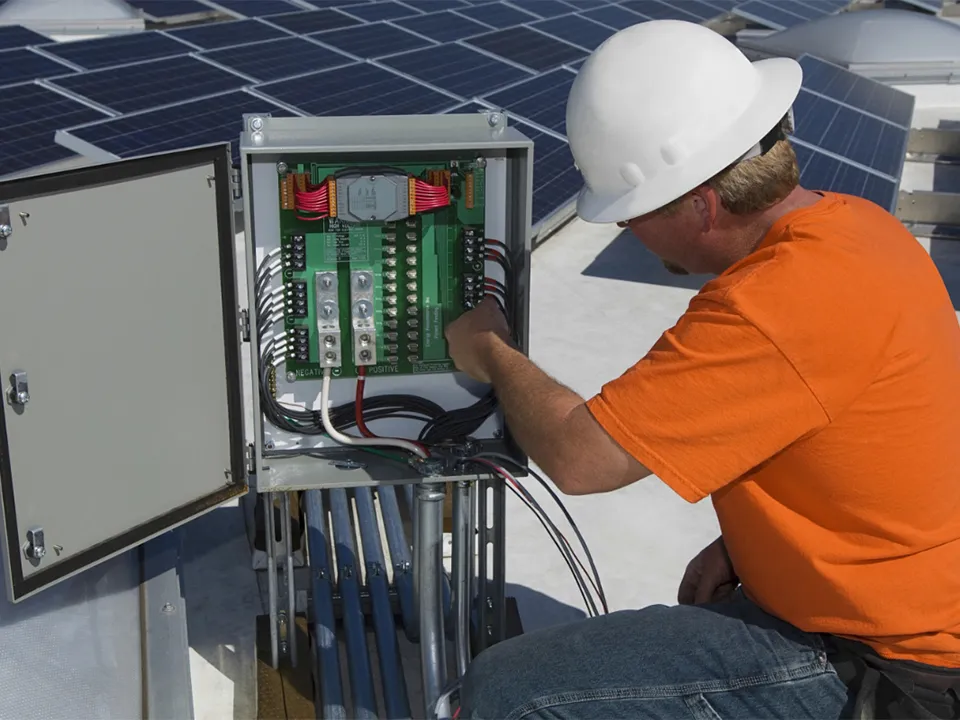
‘The rules of the game are changing’
The financial loss may be limited, but the reputational damage to the government and, unfortunately, the sector should not be underestimated either. Trust and investment certainty are key, and it does not help when a government cannot keep its promises. “It is understandable that this impression will persist. People see the rules changing mid-game. We are therefore concerned about public support for new investment in renewable energy and for the energy transition,” says Dirk Van Evercooren, Managing Director of ODE, in an opinion piece. “Governments must therefore urgently clarify the direction in which we are heading and actively support households and businesses through the energy transition. It is also important that we do not impose digital meters on prosumers without explaining them. Only those who see the benefits of a digital meter will welcome and use it.”
Installers and other companies in the PV sector also found their phones ringing off the hook, as angry members of the public wanted to air their grievances. This does not mean, however, that the sector will fail to recover from the uncertainty and criticism. Installation companies’ order books are filling up nicely in 2021 too. In new-build projects, PV systems remain a prerequisite for achieving a favourable E-rating.
Orientation and inverter sizing
The way we think about solar panels is changing, with all decisions now much more focused on self-consumption. This has a major impact: a south-facing orientation is no longer indisputably the best choice. An east- or west-facing orientation spreads production more evenly throughout the day, creating more opportunities to increase self-consumption.
Anyone installing solar panels now should also give careful thought to inverter sizing. “Choosing a smaller inverter with the same panel capacity means output is capped in summer, but production increases at other times. Think of autumn and spring, and mornings and evenings in general. Despite a lower annual yield, this can lead to higher returns,” adds Wannes Demarcke, Policy Officer at PV-Vlaanderen.
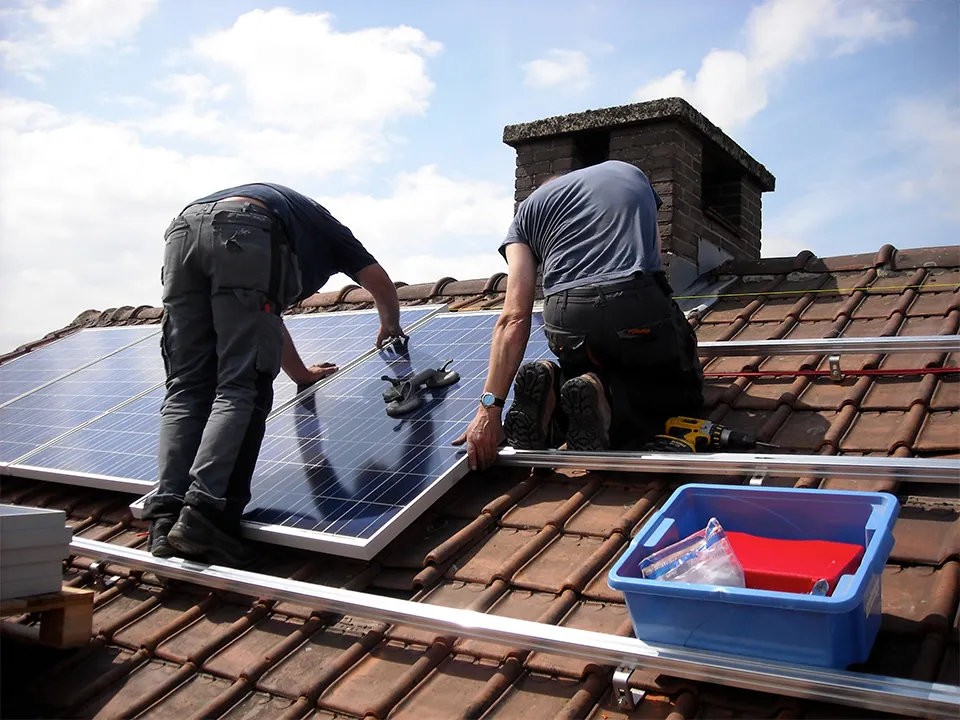
“I’ve been working in the solar panel industry for 13 years, and I’ve learnt that you have to keep adapting in this sector,” Van de Sompele says with a laugh. “The key to a solution lies in increasing self-consumption. We’ve developed a tool for our customers that immediately shows how an increase in the self-consumption rate directly affects potential savings.” He is also optimistic about the future: “Solar panels have never been as cheap as they are today. The fact that the prosumer tariff is being abolished is also an important benefit that many people overlook. And new opportunities are emerging: once battery systems become more affordable and cost-effective, it will be possible to increase self-consumption to at least 65 per cent.”
‘Fill your roof’
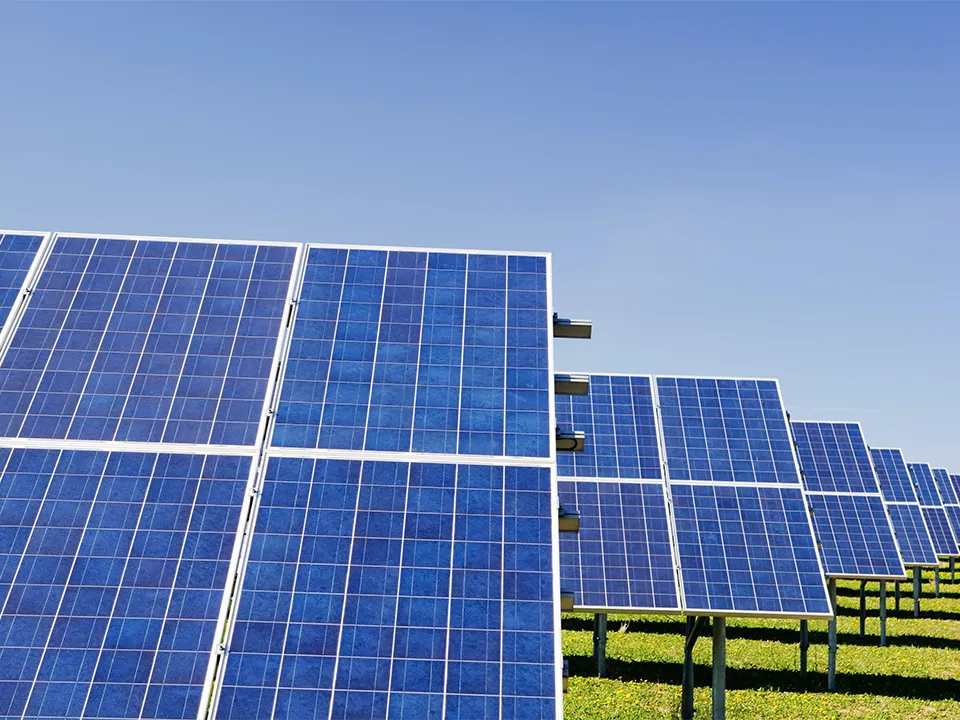
One possible side effect of the decision is that people may choose not to install too many solar panels, and certainly no more than their current annual consumption. This is intended to maximise both the proportion of electricity consumed directly and the rate of return. ODE recommends exactly the opposite. Demarcke says: “We want to encourage people to cover as much of their roof as possible. Electricity consumption will rise in the future, for example after buying an electric car. At the same time, energy storage will become cheaper. With so many fixed costs, it is also much cheaper to cover a roof in one go: each additional panel you install costs less per kWh than the one before it. You can estimate how much extra self-consumption each panel will deliver over the next twenty years and, together with the feed-in tariff, assess whether it is worth the investment. We therefore want to encourage people to think in absolute figures rather than percentages, and to consider the energy transition too.”
Dirk Van Evercooren is convinced that the new system is straightforward. “What you produce with your solar panels and consume immediately is free. You pay for electricity drawn from the grid as before. Any surplus is fed into the grid and is now compensated for. Most energy suppliers will pay you a feed-in tariff.” Owners of heat pumps are the only ones who need more support, Van Evercooren continues: “Smart control of the heat pump and/or hot water heat pump can partly offset the negative impact of the backwards-running meter being phased out. However, additional measures are needed to limit the impact on households with heat pumps.”
A pragmatic solution
The government is also likely to turn to more pragmatic ‘solutions’. The initial plan was to give priority to rolling out digital meters to solar panel owners. To avoid Fluvius installers turning up to find no one at home, the Flemish Government has already pressed pause. No new digital meters will be installed at the homes of solar panel owners until early April, and Fluvius may not visit them until as late as mid-2029. As a reminder, the original deadline was the end of 2022.
Question about this story? Ask your question
Keep following this
Get an email when a new story is published. No account needed.
- ThemeEnergy generation and smart use
- SubjectElektroTech