New technology offers major benefits
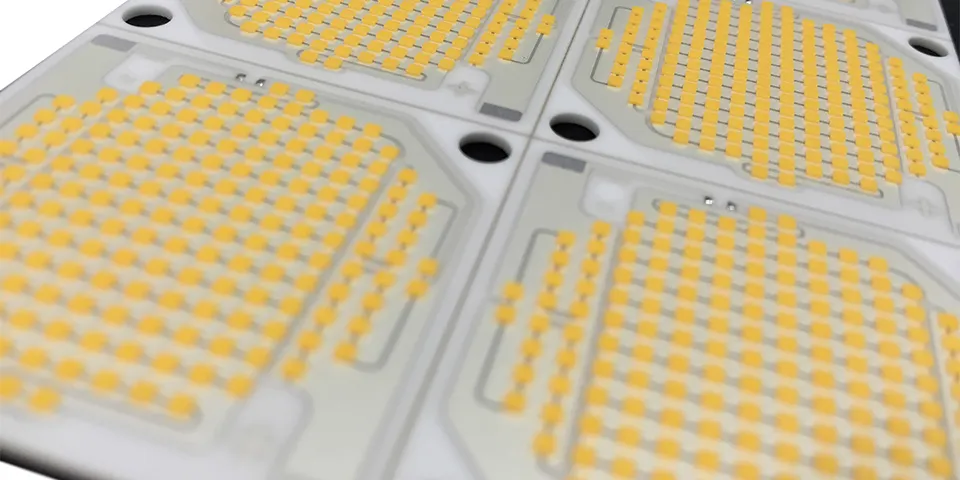
CSP LED modules from a number of brands have been available at Telerex for around a year and a half. Telerex is convinced that the technology offers many benefits across a wide range of applications. However, too few consumers and manufacturers know what CSP is.
Telerex is a technical importer and distributor of electronic and electromechanical components for the OEM and LED markets in the Benelux. The company continually scans the market for technological innovations it can bring to market. This is how Telerex came across CSP technology, a new way of assembling LEDs that could well be ‘the next best thing’. It joined forces with Dutch company BHC, a technology specialist in the production of LED modules, to make the products readily available.
Stripping LEDs down
CSP stands for Chip Scale Packaging, a technical term for what essentially means stripping an LED module down into several separate components. The result is a light source with a much smaller footprint than conventional mid-power or high-power LED packages. Koen Vangorp, Telerex’s sales & marketing director: “CSP technology offers a number of advantages over current practice. I see three key markets where CSP has, or could have, an impact, depending, of course, on which benefits are selected.”
From residential to industrial
More light output from a smaller surface area is music to the ears of spotlight manufacturers. It means they can create tight, narrow beams of light for a very precise lighting effect. This opens up possibilities for projects in museums, shops (fashion and food) and showrooms.
A major leap to a completely different setting: industrial luminaires, or so-called high-bay fixtures. These luminaires are mounted at great heights and therefore need to deliver an enormous lumen output. Vangorp: “One of the benefits of CSP technology is reduced thermal resistance. In other words, using CSP makes the heart of the LED significantly cooler in a luminaire. Tests have already shown that, under similar conditions, the temperature drops by up to 10 degrees. We all know that a lower temperature extends the life of LEDs. In this case, the luminaire’s service life can easily increase by 50%. Colour shift over the lifetime of the LEDs is also less pronounced than with current LED modules.”
Human Centric Lighting
Two principles are widely used in what may well be the biggest trend in the lighting sector, Human Centric Lighting: Dim to Warm and Tunable White. “Today, however, it is still manufacturers who ‘choose’ which colour temperatures are available. We very often see solutions with 3500K as the upper limit and 2500K as the lower limit. Sometimes end customers want a warmer light colour, similar to candlelight, which means it needs to be adjustable down to 1800K,” Vangorp explains. “With CSP, we effectively put the ‘decision’ in the hands of the lighting designer, who selects the ideal combination based on the end customer’s requirements.”
Question about this story? Ask your question
Keep following this
Get an email when a new story is published. No account needed.
- ThemeSmart building integration
- SubjectLighting