











Towards climate-friendly heating: pragmatic realism or radical policy choices?
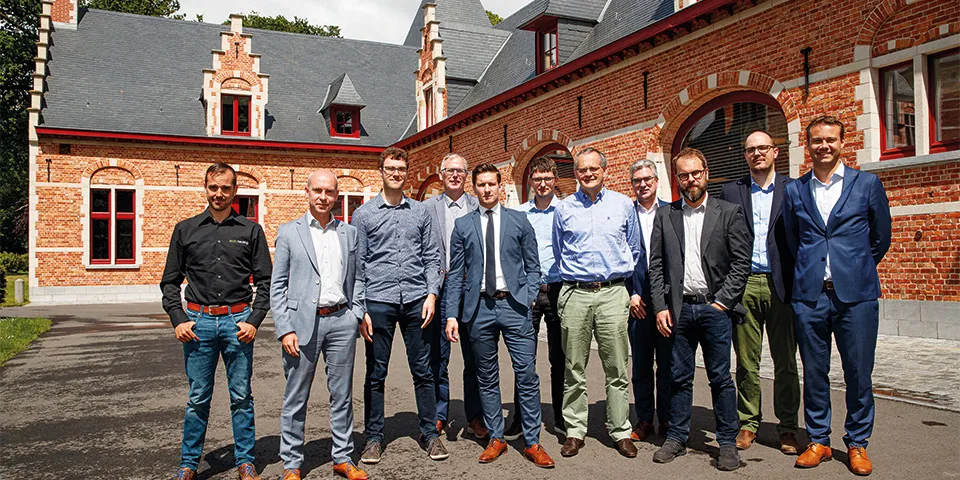
Should heating with fossil fuels be banned? Or is there a need for greater realism in the debate, and should we make better use of existing technology and infrastructure? Opinions differed sharply on what needs to be done at the round-table discussion organised by Installatie & Bouw in collaboration with Architectura.be. There was, however, one point of consensus: no one questions the need to meet the climate targets.
The gas and heating oil sectors regularly come under fire in the energy transition debate. Guido Saenen (Informazout): “We do, however, support the targets for reducing CO2 emissions. That is why we published a memorandum this year setting out how those targets can be achieved. We have come a long way, but there is still plenty of low-hanging fruit in the market: the renovation rate is too low.” Saenen does not believe that heating oil is on borrowed time. “Hybrid systems using liquid fuels as back-up can contribute to the energy transition, and low-carbon liquid fuels can gradually replace conventional fuels.”

Tom Cobbaert (Eco Heating): “I find it incomprehensible that gas or heating oil is still sometimes used in new-build projects.”
Benjamin Clarysse (Bond Beter Leefmilieu) takes a very different view: “If the EU is talking about ‘climate neutrality’ by 2050, all fossil fuels must be phased out once and for all. We will not get there if we focus solely on efficiency gains. The heating oil and gas sectors are selling an illusion. For example, there is much talk of the potential of renewable methane, even though an ICCT (International Council on Clean Transportation) study shows that renewable methane could replace at most 12 per cent of forecast European gas consumption in 2050. Belgium’s potential would be just 5 per cent.”
No magic bullet
Steven Van Caekenberghe (gas federation Gas.be) calls for a healthy dose of realism in the debate. “There is no magic bullet. It will take a combination of solutions, with (green) gas continuing to play a role. The cost of fully electrifying heating is many times greater than the cost of heating today. Belgium’s electricity supply would have to almost double to meet that demand, while green electricity currently accounts for around 12%. Everyone understands that this is not feasible. By presenting full electrification as the solution to meeting the climate targets, people are being misled, and renovation rates are slowing. We should therefore make use of the options that are currently available and affordable. We must not focus exclusively on the happy few who can afford a heat pump.”
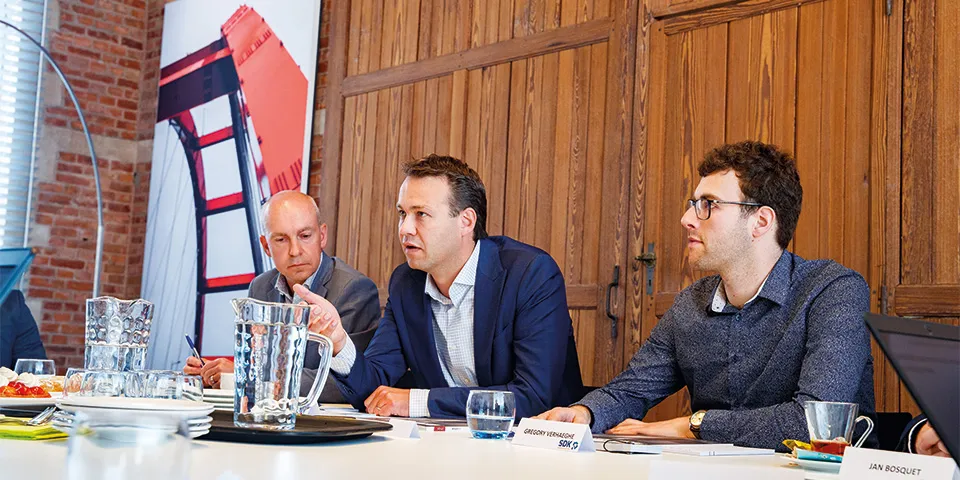
Jef Schelkens (ClimaWays): “What are people willing to pay for a sustainable system? Sometimes you need a very committed customer.”
Tom Cobbaert (Eco Heating) points out that heat pumps are no longer just for the happy few: “We have installed geothermal heat pumps in, among other places, assisted-living facilities, social housing projects and apartment buildings.”
A major player such as Buderus also believes in heat pumps and is investing heavily in them. Jan Bosquet (Buderus): “Heat pumps need more opportunities in the market, ideally by adjusting electricity prices to bring them more into line with prices in neighbouring countries. In addition, extensive renovation of the housing stock is essential.”
Engineering firms are avoiding fossil fuels wherever possible. Thomas Bockelandt (boydens engineering): “We only use them when there is no alternative, because we fully support a phase-out timetable. Even in hybrid systems, we are unlikely to choose fossil fuels, except as genuine back-up.” Gregory Verhaeghe (Studieburo De Klerck) adds: “In large projects such as hospitals, we always use a mix of systems. For example, a heat pump can cover the base load, while a system that may be slightly less sustainable but more affordable can meet peak demand.”
The shift towards sustainability is not happening fast enough, says Tom Cobbaert (Eco Heating). “I find it incomprehensible that gas or heating oil is still sometimes used in new-build projects. Ten years ago, construction companies were worried they would no longer meet the required E-level with a gas or heating oil boiler, yet we still see new homes with a gas boiler and a low E-level. Installing enough PV panels is sufficient to achieve a good score.”
Benjamin Clarysse (Bond Beter Leefmilieu) believes the government should make investment in sustainable heating more attractive through tax incentives. “Turn the housing bonus into a climate bonus, rewarding people who carry out major renovations to their homes.”
Phasing out
The Coalition for Sustainable Heating, led by ODE Vlaanderen, called in April this year for heating oil boilers to be phased out by 2021, with only sustainable alternatives sold and installed from 2030. Jan Bosquet (Buderus) is sceptical: “A new boiler is often installed not as part of a new-build or renovation project, but simply to replace a worn-out appliance. Those homes are not yet ready for a heat pump. If heating oil were banned in a few years’ time, we would be left with an insoluble problem.”
Clarysse points out, however, that the call is only for a ban on new boilers. “There are barely 4,000 of them a year in Flanders. The problem can be addressed by better insulating those homes and, where necessary, using a hybrid system. One important prerequisite is to improve the ratio between electricity prices and the prices of natural gas and heating oil.”
Guido Saenen (Informazout) is not opposed to lower electricity prices, but rejects the idea of imposing higher taxes on gas and heating oil. “Don’t shift the problem from one sector to another,” he says. Clarysse, however, believes that more polluting technologies need to be taxed more heavily. “Policy should steer people in the right direction. Taxing energy based on CO2 emissions could give heat pumps the much-needed boost.” Steven Van Caekenbeghe (Gas.be): “We are not opposed to a CO2 levy, but the entire chain must be taken into account, not just the last 20 metres. Electricity also has a certain level of CO2 emissions.”

Gregory Verhaeghe (Studieburo De Klerck): “In buildings we monitor, we find that heating with gas is sometimes cheaper than heating with electricity.”
A middle ground
According to Jef Schelkens (ClimaWays), there is a middle ground: “The price of gas could indeed go up. But I am not arguing for electricity to be made dirt cheap. Letting people consume energy at any level of efficiency is not the answer. If energy prices rise across the board, people will make much more conscious choices. It would be better to use the taxes currently collected on electricity to fund sustainable investment.”
The high price of electricity is also a major problem for engineering firms. “The large price gap between gas and electricity is a major barrier to the use of technologies such as heat pumps. In buildings we monitor, we find that heating with gas is sometimes cheaper than heating with electricity. In that case, we should really be advising our clients to switch off their heat pumps. Surely that cannot be the intention?” says Gregory Verhaeghe (Studieburo De Klerck).
Installer
Installers play an important role in the energy transition, says Tom Cobbaert (Eco Heating). “It is not always easy to find an installer who can fit a heat pump or hybrid system, for example. We are constantly training people to do this.”
How much do they know? Thomas Bockelandt (boydens engineering): “Smaller, traditional installation companies in particular sometimes struggle to keep up with all the developments in HVAC. This is less of a problem on larger projects, where there is a broad design team. It is an important consideration in the residential market, because when a boiler needs replacing, the installer is often the customer’s first and only point of contact.”
There is frequent criticism of so-called ‘cowboys’ in the sector, but Jef Schelkens (ClimaWays) comes to the installers’ defence. “Most of them are quite willing to adapt, but they also have to follow the market. What are people willing to pay for a sustainable system? Sometimes you need a very committed customer.”
Een zakelijke vraag aan Gas.be? Get in touch
Companies in this story




Keep following this
Get an email when a new story is published. No account needed.
- SubjectNews
- CompanyGas.be
- CompanyInformazout
- CompanyClimaWays BVBA
- CompanyBuderus







