











‘There is a serious shortage of genuine lighting specialists’

Good lighting starts with a clear plan. But is enough thought given to that plan? Expertise is sometimes lacking, according to the panellists who took part in the round-table discussion on lighting organised by intsite.be and architectura.be. “There is too much reliance on free lighting plans,” they said.
One recurring problem, according to Catherine Lootens (KU Leuven and Groen Licht Vlaanderen), is that lighting is considered too late in the building process. “People are often aware that the lighting needs attention. But by the end of the project, there is no budget left and nobody has any clear ideas. Sometimes we see the installer acting as the specifier and being given almost free rein. This should be considered from the outset.”
Hanna Meskens (M-INT): “We always try to start from a general, integrated lighting plan and a clear vision. Even so, we often cannot take this far enough. In small projects, you are constrained by a tight budget. Lighting control can achieve a great deal, for instance, but we usually do not get that far.”
Responsibility and professional pride
Moreover, not all lighting plans are created equal, says Kristof Vlaemynck (Studiebureau Boydens): “Too many people call themselves lighting specialists when they are, in fact, simply lighting salespeople. There is an urgent need for people with proper training and a clear vision of light. I see a lot of free lighting studies appearing, with little sense of responsibility or professional pride attached to them. As a consultancy, when we prepare a lighting study, we must be able to guarantee that what we promise will become reality.”
Catherine Lootens (KU Leuven and Groen Licht Vlaanderen) nods in agreement: “When it comes to outdoor lighting in cities, we have a number of genuine ‘authorities’, but expertise in indoor lighting is lacking.”
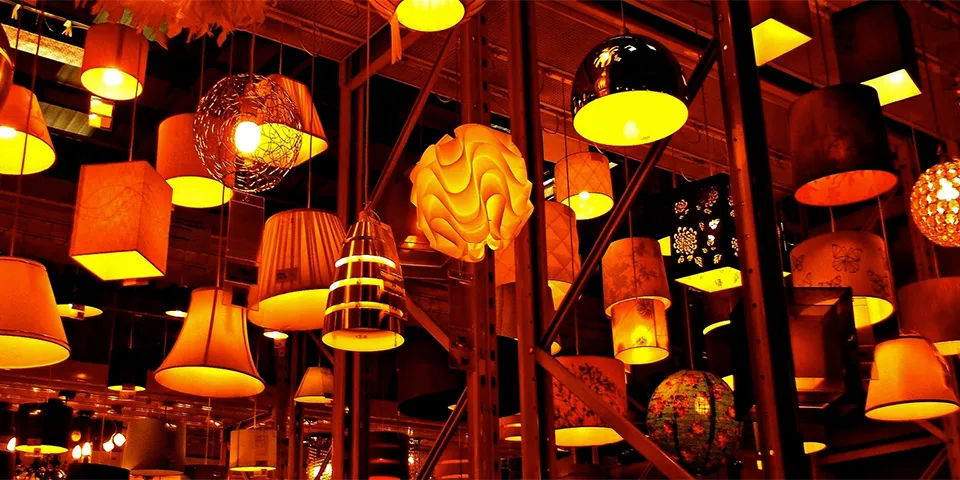
Should lighting manufacturers focus on design, or place greater emphasis on the functionality of their products? (Image: Pxhere)
Sales and advice kept separate
At wholesalers, selling lighting products and providing advice are increasingly seen as two separate fields, says Harold Demaeght (Light Consult): “There used to be more margin in it, but now people realise that providing expert advice takes time. If people are not sure what they need, they would do well to seek professional lighting advice.”
“There is currently no school where the subject is taught properly. Lighting specialisation is treated as a poor relation,” adds Filip Staelens (Orbit Lighting). “On top of that, the average Belgian would rather spend money on a garden plan than a lighting plan. That is why there is too much reliance on free lighting plans.”
Yves Marginet (XAL/Wever & Ducré): “Specifications often still include outdated details, and the descriptions are simply wrong. It is immediately clear that the person who drew up the specification does not understand the subject. Quite a few lighting studies are essentially just repetitive, routine work.”
Design or functionality
Lighting manufacturers also have an important advisory role. Should they focus on design, or place greater emphasis on the functionality of their products? It is a difficult question. “Design appeals to people’s imagination,” says Filip Staelens (Orbit Lighting). For Kristof Vlaemynck (Studiebureau Boydens), the answer depends on the manufacturer’s target audience: “Are they targeting residential applications, high-end offices or the industrial sector? Few brands can serve the full range of sectors.”
Communicating functionality is not easy either. Filip Staelens (Orbit Lighting): “LED technology has made things much more complex. There is an efficiency or colour-consistency upgrade every few months, for example. That is why traditional catalogues are outdated. We are moving towards digital media that can be updated in real time.” Technical data sheets are essential, says Harold Demaeght (Light Consult): “They immediately make clear what kind of product it is, so customers do not waste time requesting additional information.”
Jan Van Riel (Trilux): “Light has two architectural components. The first is: ‘What does the light do in that space?’ The second is: ‘What does the luminaire look like?’ Both questions matter, and we as manufacturers need to answer them.” Yves Marginet (XAL/Wever & Ducré): “It is our job to make clear to customers what results they can expect when they implement this type of lighting in their project.”
Question about this story? Ask your question
Keep following this
Get an email when a new story is published. No account needed.
- ThemeSmart building integration
- SubjectNews







