











The Pen | Karl Willemen, Managing Director, Resus
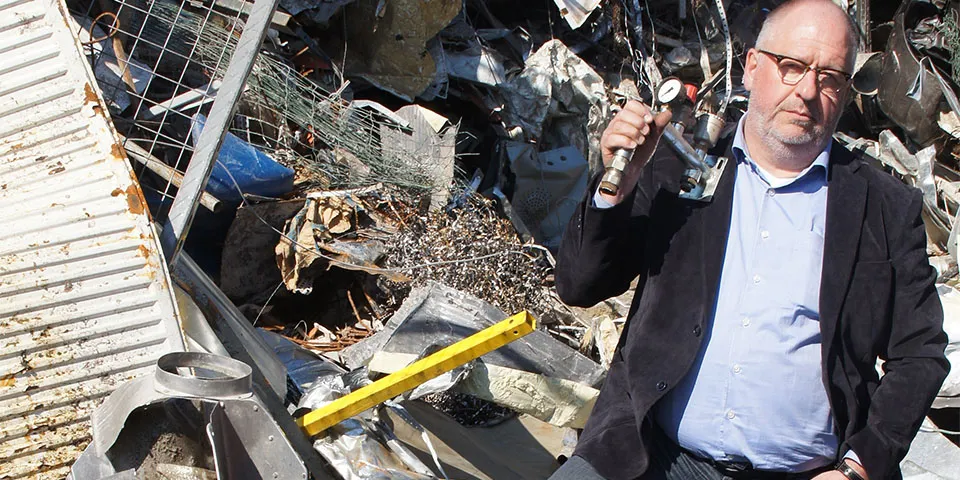
Despite technological progress, modern heating systems are no more reliable or less prone to faults. Nor do they last longer than those installed, say, 20 years ago. The often-heard counter-argument, delivered with a wink, that “the economy has to keep turning”, is no joke to the customer.
Life-cycle engineering is no Disney concept
Life-cycle engineering (LCE) is a sustainability-focused engineering methodology that takes into account the wide-ranging technical, environmental and economic effects of decisions throughout a product’s life cycle. The aim of LCE is to find the best possible compromise that meets society’s needs while minimising environmental impact. It is related to life-cycle assessment (LCA) and life-cycle costing (LCC), and seeks to achieve an optimal balance. For heating systems, this means considering the price of the installation, the cost and service life of its components, and, above all, how they can work together as a functional whole in a sustainable way and with as little maintenance as possible.
More than half a century ago, the open expansion tank was found to be the cause of a corrosion problem: oxygen could continually enter the heating system through it and form corrosive sludge with the steel. This led to the introduction of the sealed expansion vessel, making the concept of ‘dead water’ a reality.
It has since become clear that the sealed expansion vessel is often the cause of far more serious corrosion problems, due to loss of pre-charge pressure and the lack of checks for it. After a while, so much pressure has been lost that oxygen enters through automatic air vents, seals, O-rings and so on at every high point in the system, causing the entire installation to corrode.
The WTCB will soon publish a Technical Information Sheet on this subject. It shows that negative pressure is the second most important cause of corrosion problems, after oxygen diffusion through rubber flexible hoses and (non-oxygen-tight) plastic pipes. It is absurd, then, that the average service life of a sealed expansion vessel is often far shorter than the hoped-for service life of the entire installation, when that very vessel is supposed to keep the whole system corrosion-free.
Fortunately, the sector is placing increasing emphasis on water quality, although this is a very unfortunate term. After all, having OK blood test results does not mean you are healthy. Water quality is only one part of the picture. What really matters is the quality of the complete installation as a functional whole. The system water is just one component of that. That is why it is good to see inexpensive, smart monitoring devices coming onto the market, so that corrosion, sludge formation and faults that threaten service life can be detected in good time. They are comparable to a smoke alarm: you do not need one for normal use, but it is very useful if something goes wrong. At least then you can take action in time.
Perhaps this will allow us to practise genuine LCE in our sector, reducing the negative consequences of unnecessary consumption and ensuring a good quality of life for future generations by reducing waste and making product development, engineering and installation processes more efficient and sustainable when considered as a whole. That would be a good thing.
Question about this story? Ask your question
Keep following this
Get an email when a new story is published. No account needed.
- SubjectNews







