











The new Y-series of the hybrid VRF system with R32 provides the basis for a strategic direction
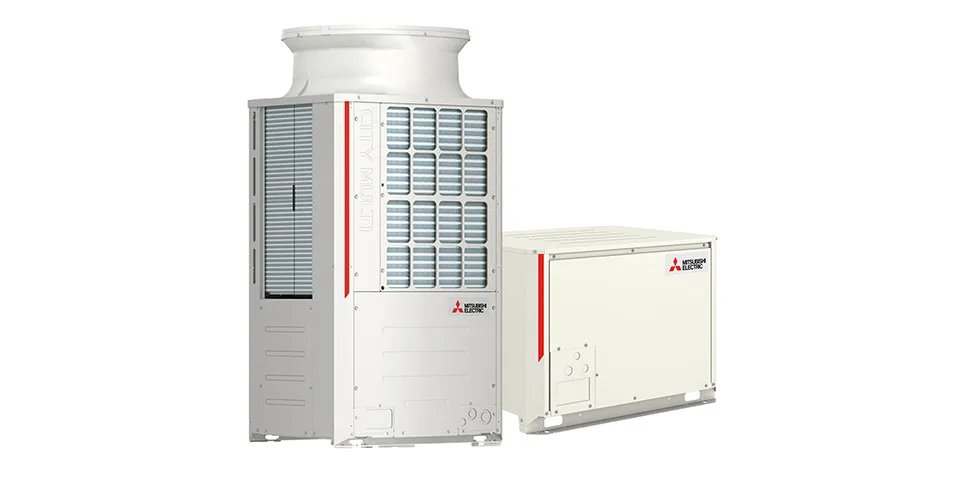
Mitsubishi Electric is expanding its successful Hybrid VRF system (HVRF) with the Y-series, which is suitable for heating or cooling. The efficient R32 refrigerant is used. Until now, the hybrid VRF system has only been available as the R2-series for simultaneous heating and cooling, using R410A or R32 refrigerants. With the new Y-series, Mitsubishi Electric is responding to the many requests from the market, which is currently still dominated by products that provide either heating or cooling.
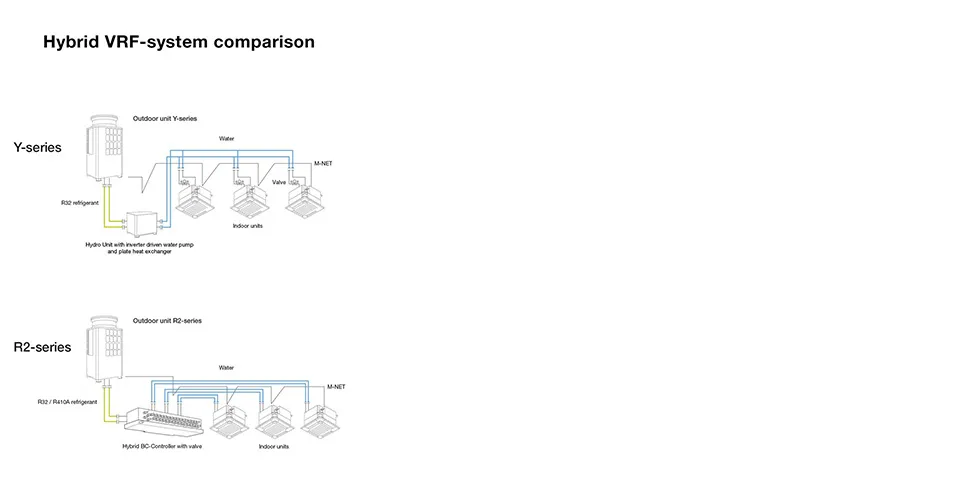
The hybrid VRF system combines the advantages of a direct-expansion system and a water-based system. Refrigerant circulates only between the Hybrid BC Controller (R2-series) or hydro unit (Y-series) and the outdoor unit. Water is used as the energy carrier between the Hybrid BC Controller/hydro unit and all indoor units. This means that significantly less refrigerant is required than in standard VRF systems.
In the hydro unit (Y-series), a standard integrated pump circulates water through the building. The proven M-Net bus is used to control the entire system. It provides data communication between the units and the control system, as well as any central building control technology.
The compressor, with its full inverter design, delivers exactly the power required for each capacity demand. The indoor units are equipped with continuously adjustable valves, which supply precisely the amount of water needed to achieve the desired temperature with ease. This combination results in efficient operation and therefore lower running costs.
Compared with R410A, the R32 refrigerant used has a 67% lower GWP (Global Warming Potential). R32 also increases the efficiency of the entire system. Depending on the system, no buffer tank is even required. This helps keep investment and maintenance costs down.
: Mitsubishi Electric is expanding its successful hybrid Hybrid VRF system (HVRF) with the Y-series, using R32 refrigerant, which is suitable for heating or cooling.
At the same time, the heat or cooling capacity required for each individual room can be calculated precisely using the valves on the indoor units. Data from the indoor units, continuously adjustable valves and outdoor units is sent via the M-Net bus to the central remote controller. Individual cost allocation can be handled via the AE200 or the cloud-based RMI Tool.
The cooling capacities of the outdoor units range from 22,4 to 56 kW across seven different models, while their heating capacities range from 25 to 63 kW. Each model is available in two efficiency variants. The indoor units offer a broad range of options, allowing the new Y-series of the hybrid VRF system to be adapted to project-specific requirements. These include, for example, various types of ceiling-suspended units, a floor-mounted unit, standard cassette units and Euro-raster cassette units, as well as a wall-mounted unit. All indoor units are available in a wide range of capacities. Cooling capacity starts at just 1,1 kW. This makes the indoor units suitable for small rooms and low cooling or heating loads, such as those found in well-insulated buildings.
The new Y-series of the hybrid VRF system is complemented by a range of system controllers and room-by-room controls, as well as optional accessories.
The hybrid VRF system is clearly presented on the website voorsprong.mitsubishi-les.com/hybrid-vrf/, including all its benefits and technical details, tailored to the relevant target audience.
Een zakelijke vraag aan Mitsubishi Electric Belgium? Get in touch
Companies in this story

Keep following this
Get an email when a new story is published. No account needed.
- SubjectNews
- CompanyMitsubishi Electric Belgium







