











“Technological innovation needs a human touch”

Many construction companies are struggling with staff shortages and have no choice but to seek innovations that will help them work more efficiently. Digitalisation and automation can play an important role. Yet there is still a great deal of reluctance, and investment in digitalisation is being put off. Construction company Vandenbussche and software company Robaws show that those who invest in technology reap the rewards.
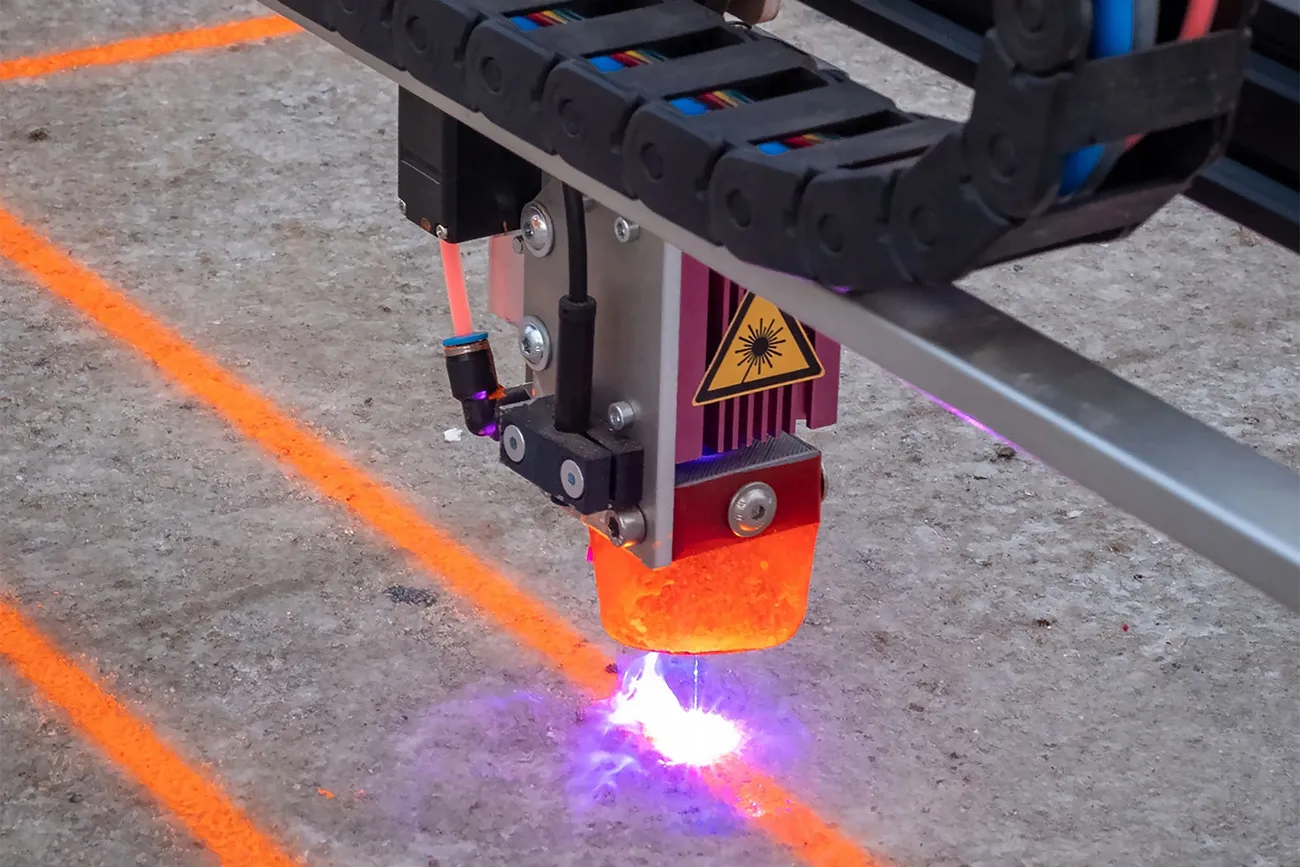
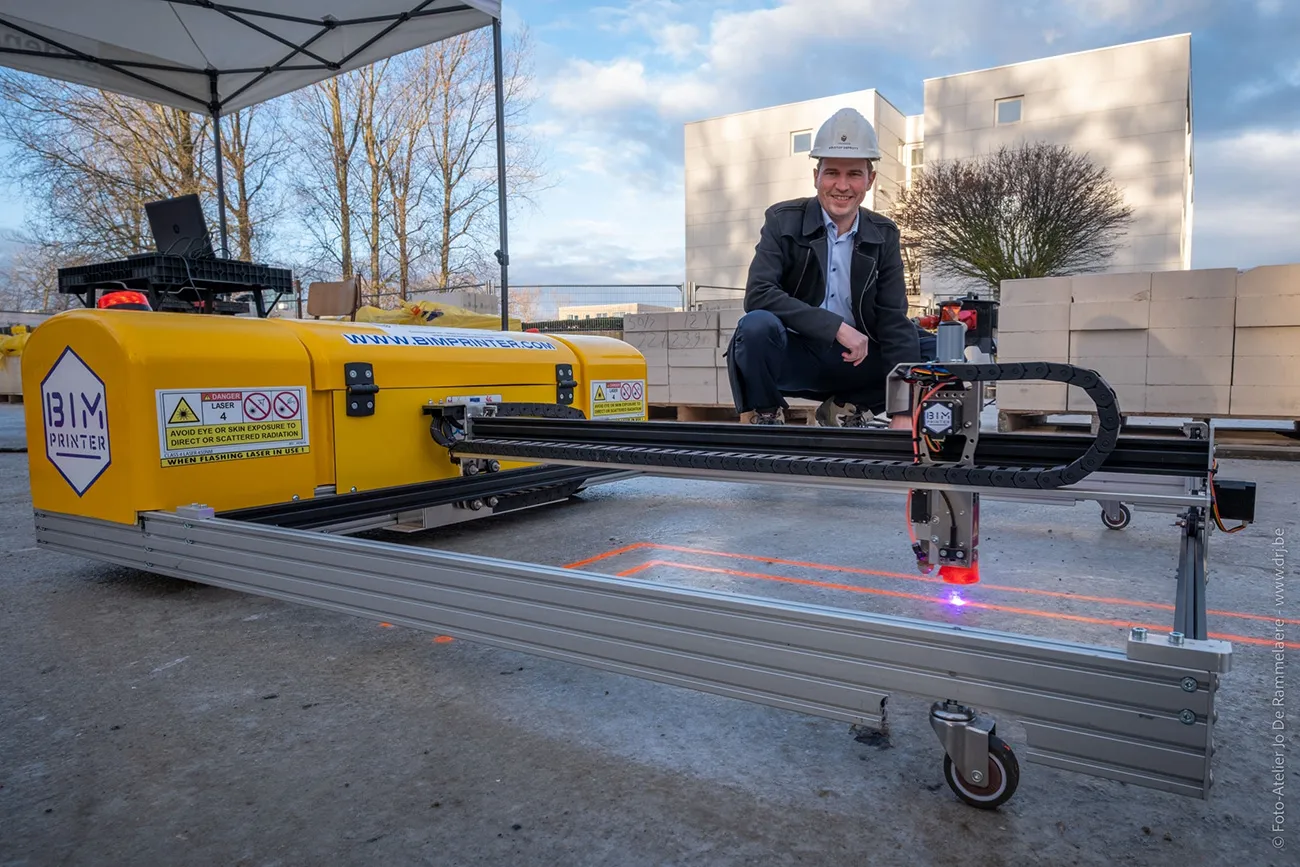
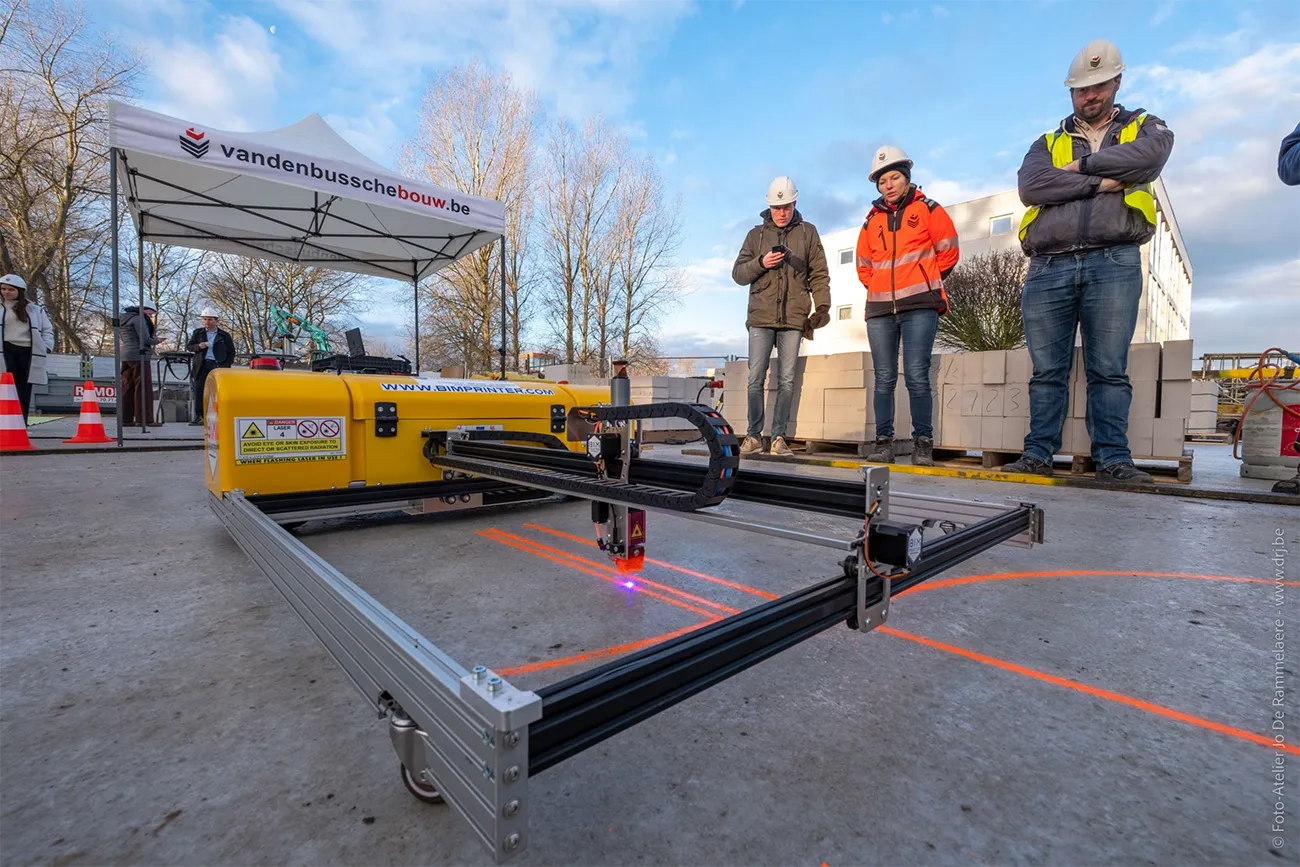
In December last year, construction company Vandenbussche made history: a mobile topographic robot, or BIM printer, was used on a construction site in Flanders for the first time. The robot can autonomously draw digital plans on a floor at full scale and with millimetre accuracy. “This robot not only makes the site safer, it also helps us work faster and more efficiently. At a time when the labour market is tight, that is a real benefit,” says Kristof Defruyt,
CEO of Vandenbussche.
Recent figures from industry federation Embuild show that demand for workers in the construction sector remains high. Over the past five years, the number of employees has fallen by more than 14,000. “The high rate of people leaving the sector is making the labour shortage, which has persisted for years, increasingly acute. And despite efforts to make the professions more attractive, we still cannot find enough people to get all the work done,” says Kristof Defruyt. “Standing still means going backwards, so we are using technology to improve our efficiency and have invested heavily in new equipment in recent years.”
An all-in-one back-office platform
Investing in a high-performance fleet of machinery is one aspect, but construction companies can also improve efficiency in their administration. “It starts with streamlining the process: from quotations and quotation costing to scheduling and communicating with employees,” says Michaël Van Robaeys, managing director of software company Robaws. “That is why we developed a quotation configurator, a scheduling tool that records hours worked, a digital work order and post-calculation, all in one solution. This provides a wealth of information. For example, it gives you a simple way to see how profitable a project is.”
It also reduces the scope for human error and makes customer invoicing more accurate. “That way, you avoid unnecessary disputes,” Michaël Van Robaeys continues. “Providing customer-focused service depends heavily on a strong administrative backbone. So do not put off investing in digitalisation. By getting your internal operations and processes in order, you can remain competitive. These insights will also give you greater peace of mind.”
A joined-up approach
These investments therefore offer benefits in several areas. “But making effective use of technology takes more than simply buying new products. Construction companies need to bring processes, technology and employees together, because all are essential if we are to enter the modern era successfully. More than ever, we will need skilled staff who are familiar with the technology and innovations coming our way,” concludes Kristof Defruyt.
Question about this story? Ask your question
Keep following this
Get an email when a new story is published. No account needed.
- SubjectNews







