











Renovation market needs to catch up for successful energy transition
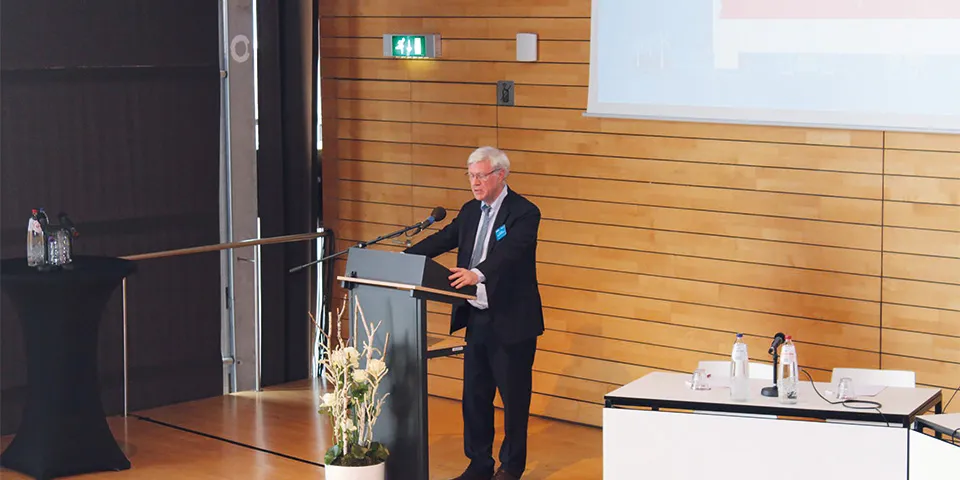
At the end of March, the Vlaamse Confederatie Bouw held its 11th Energy Conference. The many presentations and workshops focused on the energy transition: how can we make the building stock energy-efficient and ensure a reliable energy supply?
In 2019, conferences and talks on the energy transition invariably invite comparisons with the young people taking to the streets. Marc Dillen, Director-General of the VCB, also referred to them: “Contractors and engineers will solve the climate problem. To the young climate protesters, I say: ‘become a civil engineer’. That is the only way the problem can be solved.”
Jef Lembrechts, Chairman of the Vlaamse Confederatie Bouw, said the VCB was already making considerable efforts to tackle the issue. “In some areas, we are even doing better than expected. When we held our first Energy Conference 11 years ago, only 2% of new-build homes met the BEN standard. Today, half of all new homes achieve an E-level below 30.”
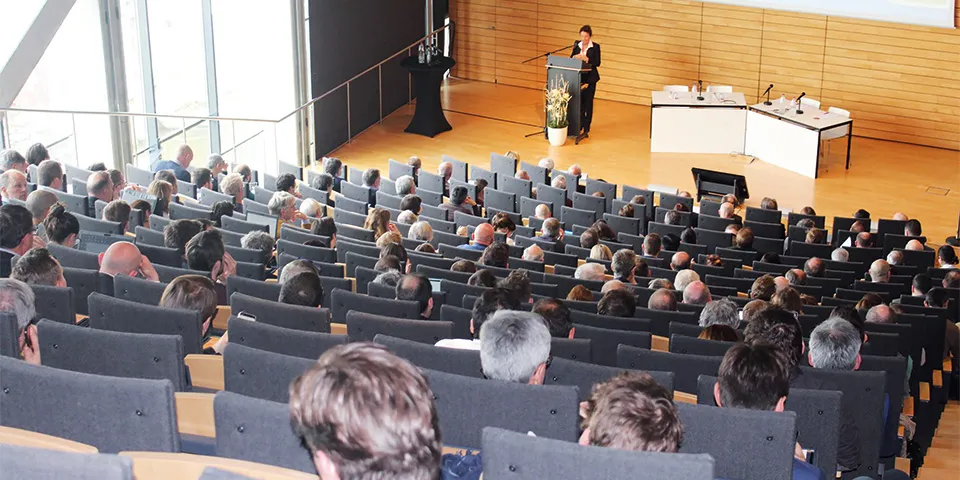
Minister Lydia Peeters: ‘We need to switch not only from fossil fuels to renewable energy sources, but also to different systems.’
3 million major renovations
However, the VCB recognises that the picture is somewhat different in the renovation market. Lembrechts: “To achieve a maximum annual consumption of 100 kW/m² by 2050, we need to maintain a rate of 2.7% of homes undergoing major renovations each year. But we are currently at just 0.6%. There is still a great deal to be done.” Marc Dillen adds: “We still need to carry out at least 3 million major renovations, but the number of home renovations is actually falling at present. We are now seeing around 16,000 permits a year, but that needs to be 70,000 if all homes are to be energy-efficient by 2050.”
The number of individual energy grants fell in 2018. That need not necessarily be bad news, says Luc Peeters, Director-General of the Vlaams Energieagentschap. “It is mainly grants for roof and glazing insulation that are on a downward trend. But we launched a renovation programme for roofs and windows back in 2007: there are now fewer and fewer homes without roof insulation or with only single glazing.” Peeters also sees encouraging signs. “We are seeing an increase in external wall insulation, although the absolute numbers remain low. The whole-house renovation bonus is also gradually gaining momentum, and the number of EPB declarations for demolition and new-build projects is growing. We certainly need to step up our efforts, and things are not going quite as hoped, but we can rule out the most pessimistic scenarios.”
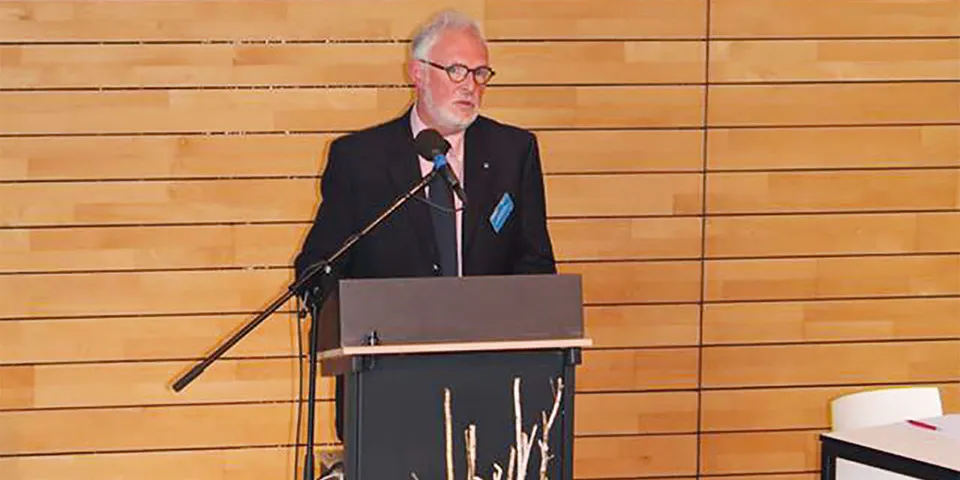
Jef Lembrechts, Chairman of the VCB: ‘When we held our first Energy Conference 11 years ago, only 2% of new-build homes met the BEN standard. Today, half of all new homes achieve an E-level below 30.’
LEC
Flemish Minister for Energy Lydia Peeters (Open VLD) advocates a broad definition of the term ‘energy transition’. “We need to switch not only from fossil fuels to renewable energy sources, but also to different systems: instead of large power stations running non-stop, we need numerous small, decentralised generation units.” That is why Flanders wants to focus more on so-called LECs: Local Energy Communities.
“An LEC is the energy system of the future,” says Ronny Belmans, CEO of EnergyVille. “The era of large dinosaurs delivering electricity to people’s homes via a distribution network is over. In the past, demand drove generation; now generation drives demand.” For example, a school with solar panels on its roof could also supply electricity to neighbouring homes during the quieter summer months. Belmans expects further major changes in the energy market: “I predict the end of the kWh as the unit on energy bills. Instead, we are moving towards ‘energy as a service’: a kind of contract that ensures you can live comfortably at home, without a meter being involved.”
Question about this story? Ask your question
Keep following this
Get an email when a new story is published. No account needed.
- SubjectNews







