











Plopsaland cuts CO2 emissions by almost 500 tonnes a year thanks to CHP
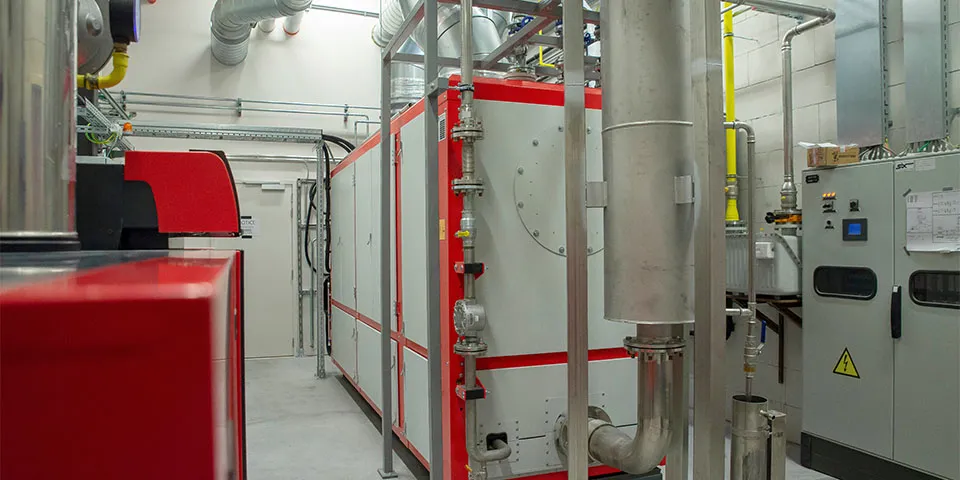
Plopsaland De Panne decided around three years ago to take a major step towards the European climate targets for 2030 and 2050 by installing a combined heat and power (CHP) system. The installation saves 2,400 MWh of energy a year and cuts CO2 emissions by 474 tonnes, the equivalent of 120 Belgian households.
Around six years ago, Plopsa Group joined forces with heating specialist Remeha. The aim was to work together to improve energy efficiency and reduce energy consumption at its amusement parks. Remeha solutions now provide heating for all the group’s facilities, from restaurants and the theatre to the Plopsaqua water park in De Panne.
Just under 7,000 operating hours a year
One of the measures taken to make the amusement park in De Panne more environmentally friendly and sustainable was to integrate a CHP system into the existing boiler room. The gas-fired CHP system not only generates electricity for the park, it also makes use of the heat produced in the process. This is used mainly to heat the swimming pool at Plopsaqua. The system runs for just under 7,000 hours a year, meaning the investment of around €500,000 to €600,000 will pay for itself in 3.5 years. The preparatory work was not without its challenges, however. Plopsa Group had to apply for a separate environmental permit for the CHP system.
The CHP system not only generates electricity for the park, but also heat, which is used mainly to heat the swimming pool at Plopsaqua.
“Correctly sizing the CHP system and integrating it into the existing system were crucial to achieving the highest possible efficiency and the high number of operating hours. A pre-feasibility study was carried out to establish this,” says Jean Smets, new technology manager at Remeha, which has extensive experience with CHP, particularly in Germany. “Almost 7,000 hours a year is a lot when you consider that a year has around 8,760 hours. In De Panne, we therefore settled on a unit with an electrical output of 200 kW and a thermal output of around 250 kW, with heat supply to Plopsaqua playing a major role.”
Plopsa Group can back up the energy savings achieved by the CHP system at its park in De Panne with figures. In one year, it saves more than 2,400 MWh of electricity and heating, or around 20% of Plopsaland De Panne’s total energy consumption. It also cuts CO2 emissions by 474 tonnes, equivalent to the combined annual emissions of around 120 Belgian households.
Plopsa for Nature
Alongside the CHP system, Plopsa Group has also reinforced its sustainability ambitions under the ‘Plopsa for Nature’ banner with other investments. The Pirate Boat, for example, runs on solar energy, and water consumption has been reduced with an on-site water treatment plant. The treated water is reused in the park for fire mains, topping up ponds and sanitation. Plopsa Group is also committed to responsible business practices through a deposit scheme for cans and plastic bottles to encourage recycling, straws, plates and cups made from recycled cardboard, and charging points for electric cars.
Een zakelijke vraag aan Remeha België? Get in touch
Companies in this story

Keep following this
Get an email when a new story is published. No account needed.
- SubjectNews
- CompanyRemeha België







