











Openness is crucial in building automation
Text Valérie CouplezImage Beckhoff Automation
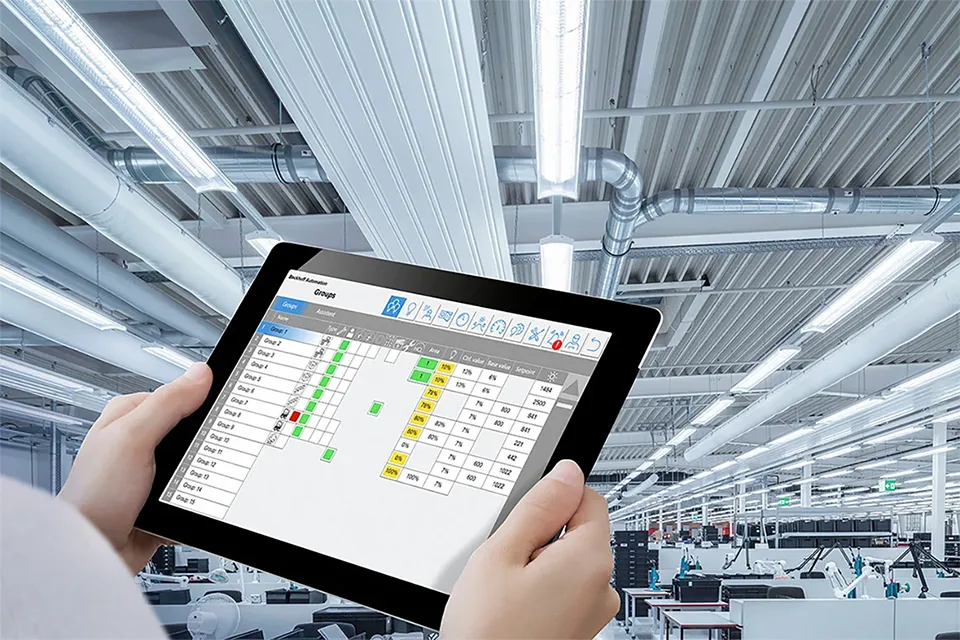
On 1 January 2026, Flanders woke up to a new era. From now on, non-residential buildings, both existing and new, with an installation with a thermal output of more than 290 kW must be equipped with a building automation and control system (BACS). For most installers, this still seems a long way off. But in 2030, the threshold drops to 70 kW, bringing small and medium-sized offices, supermarkets, primary schools, care facilities with twenty rooms or more, and so on, within scope. So it is high time installers got to grips with building management systems. Take the one from Beckhoff Automation, for example, which can bring all the technologies in a building together on a single platform thanks to its openness.
The BACS regulations form part of the broader European drive for carbon neutrality by 2050. Transport is often the first to be blamed, but buildings are also responsible for a substantial share of our energy consumption and, consequently, our CO2 emissions. This is particularly true given Europe’s ageing building stock. “There is still a great deal to be done to make buildings more energy-efficient. We do not have exact figures, but we can see that the timetable set by Europe is accelerating progress. Our system integrators are currently receiving many enquiries, but we will need to step up the pace further to bring all buildings into compliance by 2030,” says Philip Neyens, support engineer at Beckhoff Automation.
Why automate?
And yet building automation should be a no-brainer. “Since the coronavirus pandemic, occupancy in office buildings has changed completely, but we have seen little change in how the building systems are used. Just drive along the motorway in the evening … You will see plenty of brightly lit, empty offices. What a waste. Something as simple as smart lighting control based on occupancy can already knock a good few percentage points off your energy bill. It takes effort, yes, but you can achieve a relatively short return on investment. Controlling your building systems naturally makes you more efficient,” says Ronny Noynaert, account manager and business developer for Building Automation at Beckhoff.


What must a BACS do?
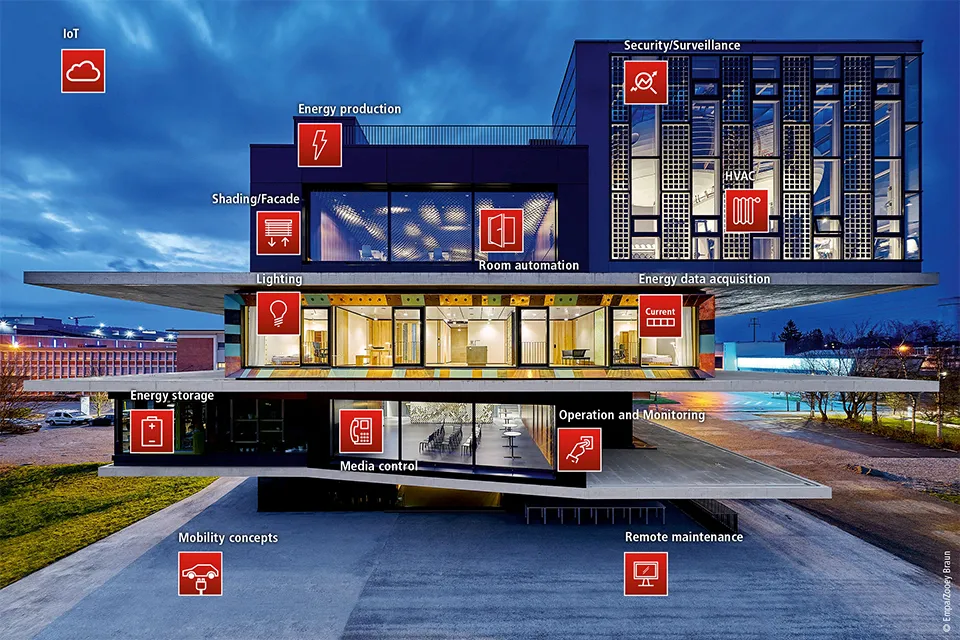
Exactly how far a building manager wants to take this is up to them. However, the legislation does set out some requirements. To qualify as a BACS, a solution must meet at least the following requirements, according to VEKA: monitor and record energy consumption; enable communication between systems and users; analyse energy consumption and adjust it where necessary; monitor and optimise the energy efficiency of technical installations; integrate renewable energy and energy storage; monitor indoor environmental quality; and, from 2028, control lighting.
Open system
Beckhoff’s position in building automation comes as no surprise. Noynaert says: “Industrial customers often know us already. They like being able to use the same technology in their offices and production halls.” Having both hardware and software available from a single supplier is a clear advantage. But the technology itself also offers many inherent benefits, including its open nature. “Open systems are still in the minority today,” Neyens continues with a wink. “For us, though, it is a matter of course. Choosing an open system allows the different technologies to communicate directly with one another, even when they come from different worlds. In buildings, you have DALI, SMI, BACnet, Modbus, M-bus … In industry, we speak of EtherCAT, Profinet, CAN/CANopen … In the show and stage world, it is Artnet, Streaming ACN, PJ-Link … We bring everything together in one solution. Ultimately, that is where the greatest energy savings can be made: through integrated, self-learning, autonomous systems. Only then can we talk about smart buildings.”
The sky is the limit
“Thanks to our open approach, you can essentially programme whatever you want. We have, for example, solutions for communicating with a Philips Hue bridge via API calls, VELBUS via the CAN protocol, and specific RS485 protocols … This means we can add significant value not only in new-build projects, but also in renovations and even existing buildings, simply by establishing communication with the older systems,” Neyens concludes.
Een zakelijke vraag aan Beckhoff Automation? Get in touch
Companies in this story

Keep following this
Get an email when a new story is published. No account needed.
- ThemeSmart building integration
- SubjectNews
- CompanyBeckhoff Automation







