











Openness and industry as advantages in building automation
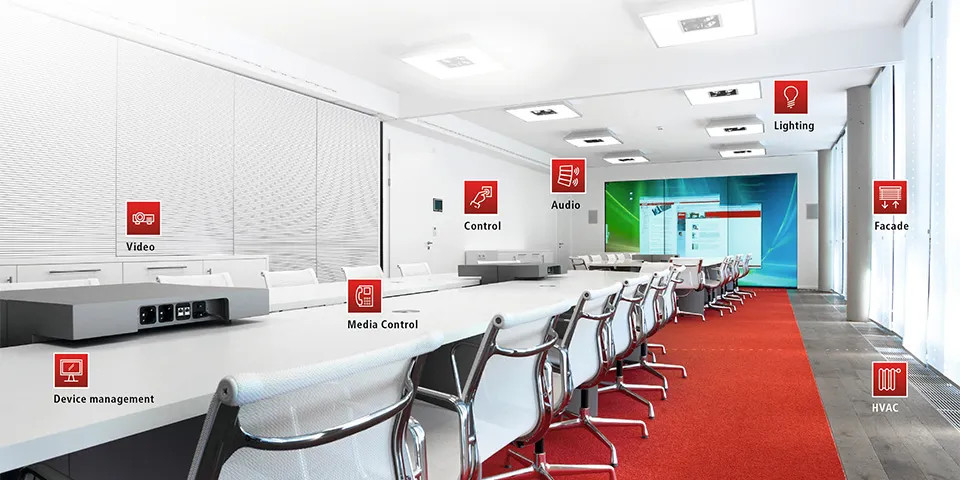
Beckhoff Automation has been successfully active in building automation for some time. The automation specialist’s strengths? The openness of the products it supplies and its links with industry.
Beckhoff Automation has made the openness of its products its hallmark. Together with the standard libraries available, this gives customers plenty of options to explore for themselves. “They can use these standard libraries when they suit their application, but they can also programme everything themselves to retain full control over functionality and independence. A combination of standard libraries and custom software is also possible,” says Philip Neyens, Support Engineer at Beckhoff Automation.
Combining this openness with the industrial hardware supplied by Beckhoff enables users to coordinate all the applications in a building, such as HVAC, heating, solar shading and lighting. Beckhoff’s industrial background also means that its hardware remains available over the long term. Should a component be discontinued, there will almost always be a compatible successor.
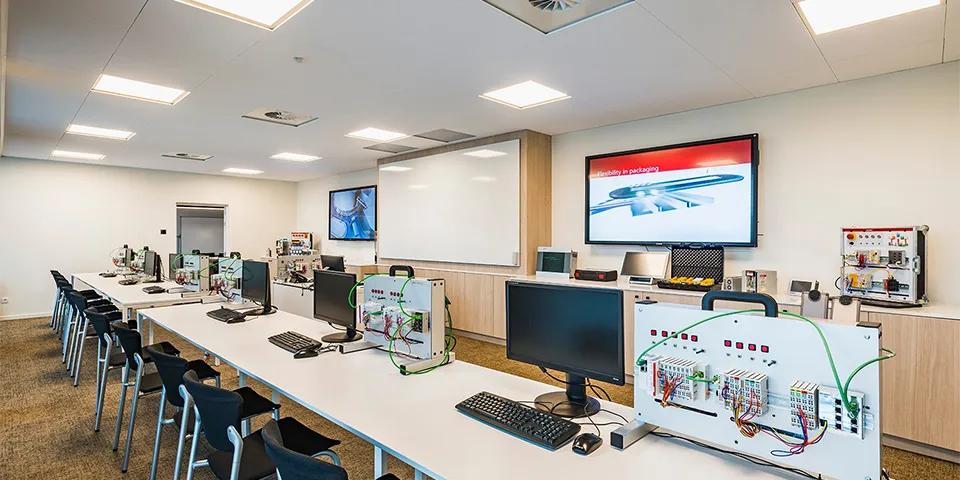
The company has been successful in building automation. (Image: Sourbron Fotografie)
Extensive communication options
A second major advantage is the wide range of communication options. Beckhoff combines a host of typical building automation fieldbuses (including DALI, DMX, LON, M-Bus, MP-Bus, EnOcean, BACnet IP and MS/TP, KNX and SMI) with universal fieldbuses (such as TCP/IP, serial, Modbus TCP and Modbus RT), as well as industrial fieldbuses such as EtherCAT, Profibus and Profinet. “Even IoT communication over secure channels, such as MQTT, is possible,” adds Neyens. “These extensive communication options make it perfectly possible, for example, to connect to installations that only have limited or specific communication channels.”
Access control using RFID readers and a database
One example of these extensive communication options is an access control project at a training centre. “Here, we provided encrypted communication with RFID readers,” says Neyens. “The protocol and encryption needed to communicate with the RFID readers over a serial connection were not yet available, but TwinCAT’s openness allowed us to develop them ourselves. We used the existing library for serial communication, together with some code we wrote ourselves. This enabled us to transmit data from the RFID reader securely, in encrypted form, to the controller.”
Beckhoff applications also make it easy to log data in databases. In this project, the data received from the RFID reader was used to check in a database whether a badge had access to the restricted area. Neyens: “The system also recorded every request to enter a room in the database, allowing the user to check who had been in a particular room.”
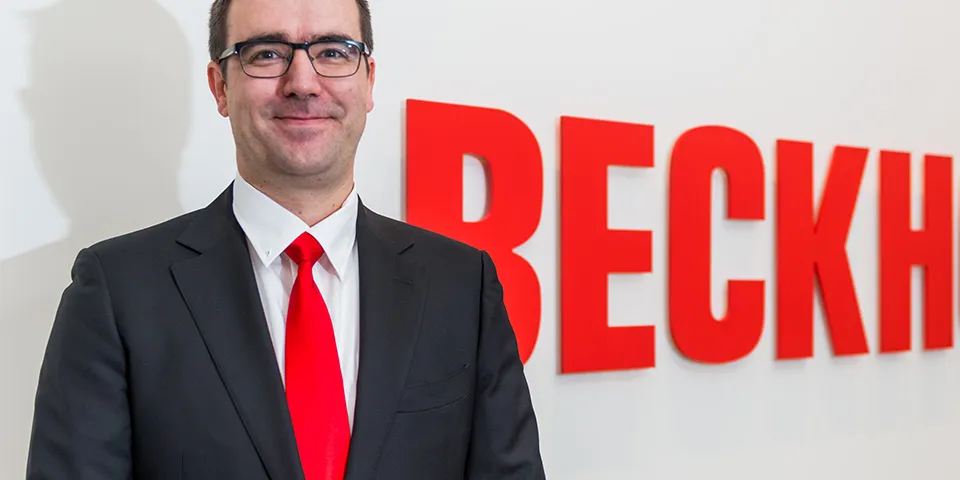
Philip Neyens, Support Engineer at Beckhoff Automation. (Image: Kris Rogiers)
SMI for solar shading
In another project, Beckhoff had to connect an existing BMS to SMI to control the solar shading. “This could not be done directly, but the customer wanted to retain the benefits of bus systems, such as having as many diagnostic and control options as possible. SMI also enabled the customer to save on cabling, as this setup required just one power cable and one data bus cable. Our products make it easy to create a gateway via BACnet/IP and connect the BMS to SMI.
Scalability
One final advantage worth highlighting is the scalability of the controllers. “This, along with the reusability of the PLC code across all the different controllers, makes it very easy to migrate and select the right hardware setup to suit the project and budget,” Neyens concludes.
Een zakelijke vraag aan Beckhoff Automation? Get in touch
Companies in this story

Keep following this
Get an email when a new story is published. No account needed.
- SubjectNews
- CompanyBeckhoff Automation







