











Open systems deliver energy savings and greater comfort
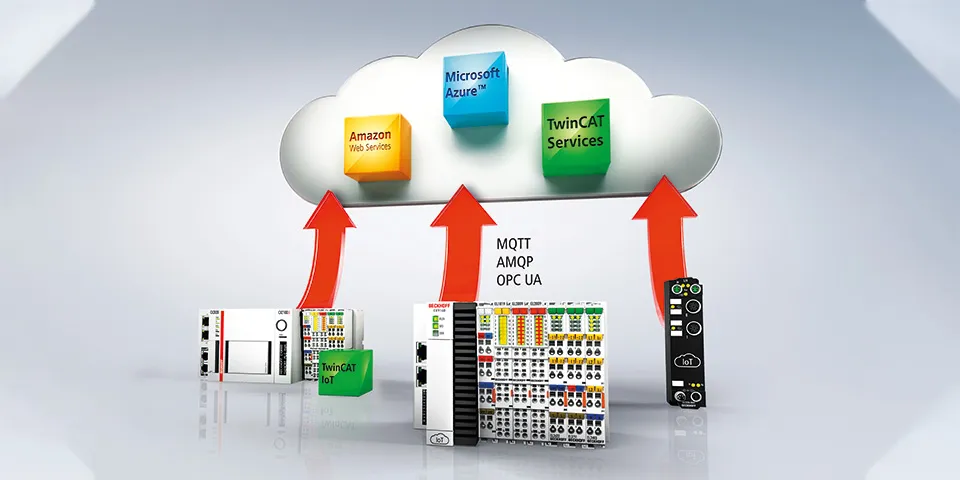
The road to smart buildings is paved with a strong belief in collaboration and open systems. It is from this perspective that CimPro, which specialises in analysing climate data in buildings, and Beckhoff, which specialises in building automation, found common ground.
CimPro supplies technology that enables buildings to be managed remotely and their data analysed. This should lead to savings in energy and CO2 emissions, as well as greater comfort for building occupants. The company’s solution is used mainly by systems integrators. At the heart of the process is SkySpark energy management software, which can deliver savings of up to 30 per cent.

At the heart of CimPro’s process is SkySpark, energy and climate optimisation software that can deliver efficiency improvements of up to 30 per cent.
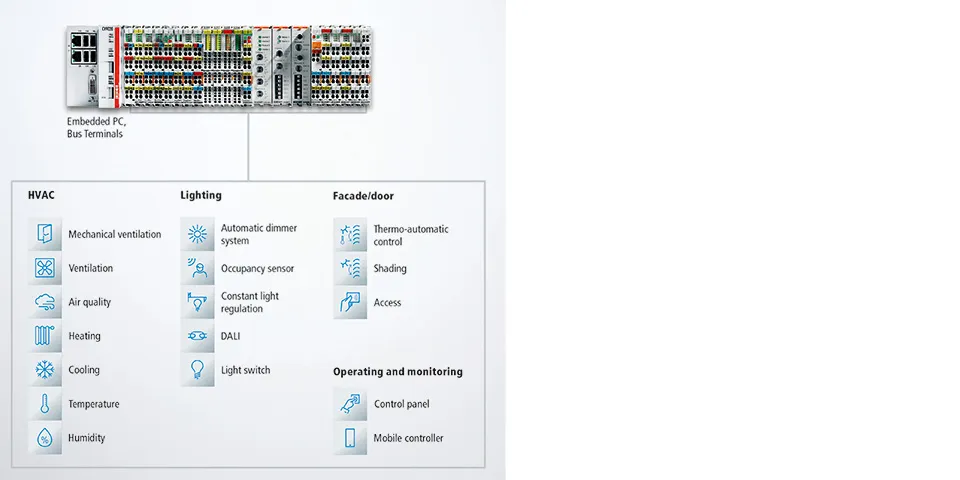
However, to carry out a thorough analysis, CimPro needs partners who are willing to think and work together. Marcel Laes, CEO of CimPro: “The data we analyse has to come from existing systems. Companies also have to be willing to make that data available, and that is not always the case. Beckhoff is a partner that is happy to work with us, because the company genuinely believes in open systems,” says Laes. Johnny Vangeel, Business Manager at Beckhoff, agrees. “At Beckhoff Automation, we offer an open system in terms of its capabilities, programming and communications. Our customers expect us to bring intelligence into the building and provide fully integrated control. Data analysis itself is not our speciality. We can make the data available to a solution from a company such as CimPro, which has the expertise to investigate it and make improvements.”
System integration
Laes: “The data we retrieve from Beckhoff PLCs highlight a number of potential problems. For example, we often find buildings being cooled and heated at the same time because the systems were installed by different companies and were not programmed together. Another example: solar panels are installed on the roof years after a building is constructed, but the installation is not always integrated with the existing systems. As a result, customers might heat water in the morning, only to feed solar-generated electricity back into the grid a few hours later. An oversized combined heat and power unit is another typical example.”
Johnny Vangeel (Beckhoff): ‘Our customers expect us to bring intelligence into the building and provide control, not to analyse the data.’
The road to smart buildings is still long, says Marcel Laes. “Buildings today have ten times as many sensors as they did ten years ago. Integrating all those sensors on a single platform is no easy task. But it is essential if a building is to become truly intelligent, and that can only be achieved by working together and connecting different components.” According to Johnny Vangeel, building specifications are still too often drawn up in a way that causes problems. “Specifications are still too often drawn up separately for, say, HVAC controllers, lighting and access control.”
Automation from the design stage
Both interviewees say progress in Belgium is also considerably slower than, for example, in the Netherlands. “Belgians are somewhat more conservative,” says Laes. Vangeel adds: “Those responsible for automation only get involved right at the end of the process. Someone at the engineering consultancy should be considering the building’s automation from the design stage.”
CimPro and Beckhoff are both members of the Smart Building working group at technology federation Agoria. Vangeel: “The idea is to sit down with people from the property sector. We want to explain the added value of these kinds of systems.”
Een zakelijke vraag aan Beckhoff Automation? Get in touch
Companies in this story

Keep following this
Get an email when a new story is published. No account needed.
- ThemeSmart building integration
- SubjectNews
- CompanyBeckhoff Automation







