











New tool links BIM with system calculations
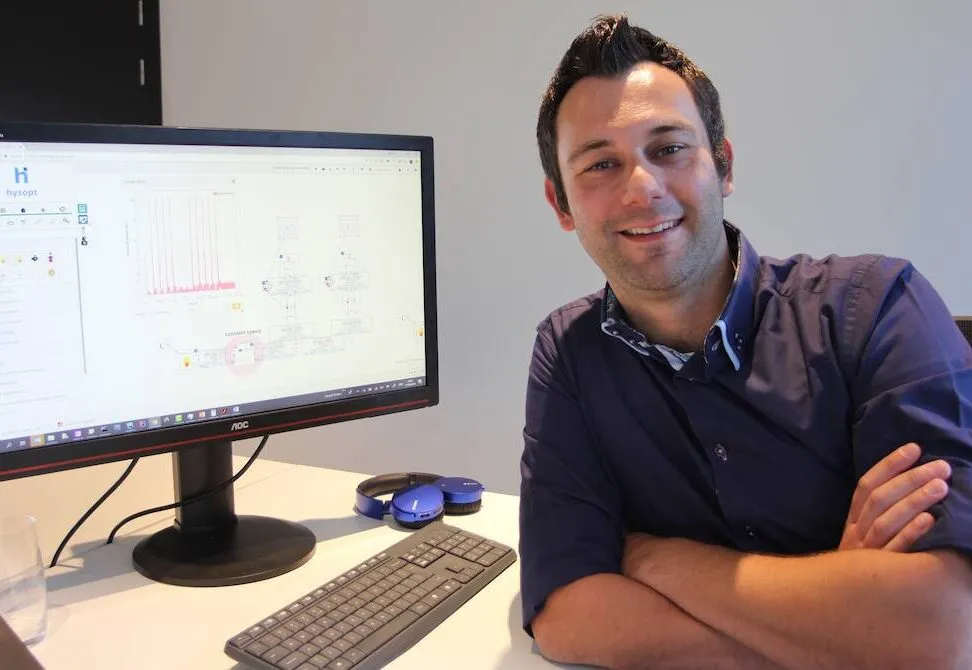
Hysopt has built a strong reputation with its own specialised software for validating and optimising HVAC systems. But the company has found that calculation and drawing models are still too often treated as separate worlds, leading to wasted time and the risk of errors. That is why Hysopt has started developing the ‘Hysopt BIM Feeder’, which links the two models. ‘Our aim is to bring drawing and calculation closer together.’ Hysopt is receiving a grant from VLAIO, the Flemish Agency for Innovation and Entrepreneurship, to support its development work.
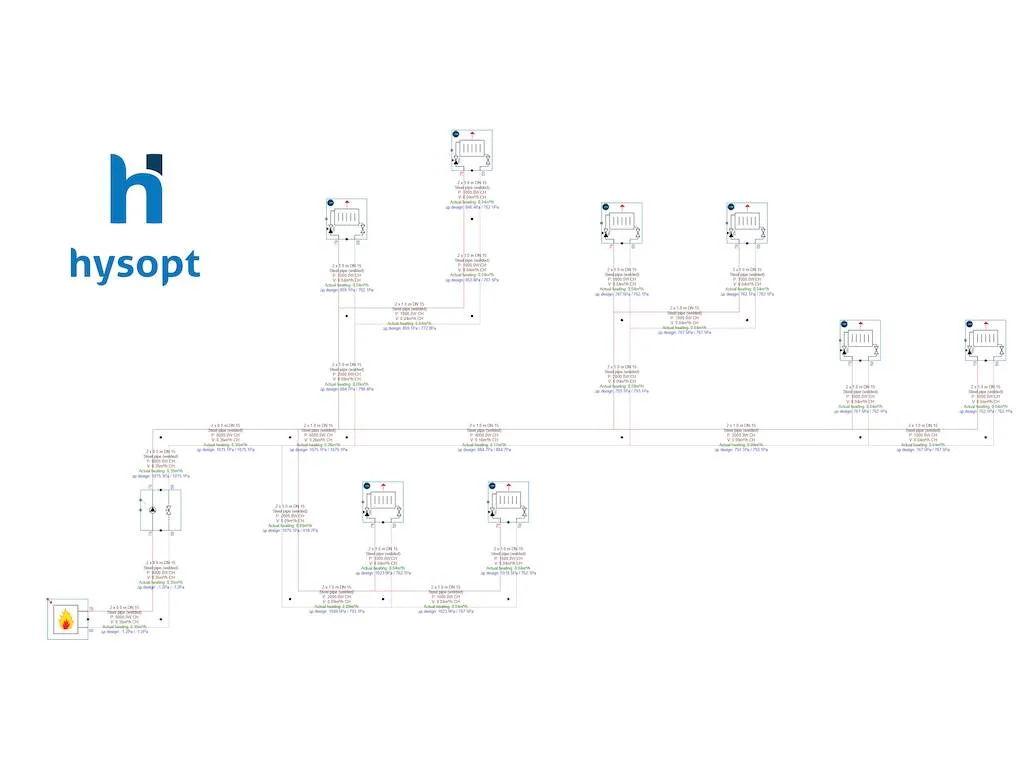
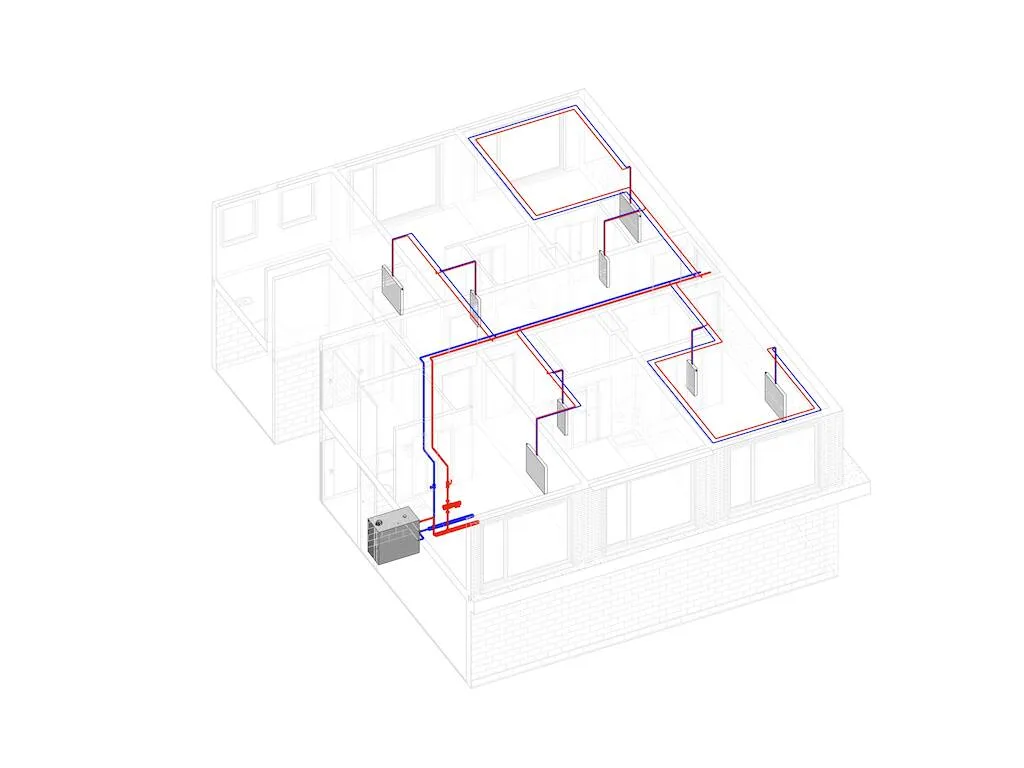
Hysopt is a spin-off from the University of Antwerp that develops software for designing and calculating HVAC systems. The company is currently working on a solution to a common problem in the installation sector. Large projects involving complex systems typically require two models: a calculation model and a BIM model. Kristof Smits, CTO at Hysopt, explains: “These are two separate models with no interaction between them. We sometimes put it in caricatured terms: BIM models are beautiful drawings of systems that do not work, while the Hysopt model may contain less attractive drawings, but they show working, optimised systems. Users have to do the work twice: draw the systems twice and enter all the relevant information in both models, such as drawing the pipework and placing all the components in the right order. This not only wastes time, it also increases the risk of errors,” says Smits. ❯
A continuous iterative process
Further difficulties arise when changes are made to the model as the project progresses. “The heating system is worked out conceptually in the calculation model. The BIM modeller builds on that model and adds details. Information from the drawing model should actually be fed back into the calculation model to refine the calculations. Drawing and calculation should therefore be a continuous iterative process, but in practice too little information is transferred from one model to the other. As a result, the information is not properly synchronised, which leads to errors. We have even heard of companies printing the drawing and calculation models on an A3 sheet of paper and then trying to judge with the naked eye whether a particular component appears in both models.” Hysopt is not the first to try to integrate calculation functionality into BIM: several plug-ins already allow calculations to be performed within the BIM environment itself. “Our approach is quite different, however,” says Smits. “We deliberately do not calculate on the basis of the BIM model, because it does not contain enough information about how the system is assembled; it lacks ‘system semantics’. What’s more, the user interface of these packages is generally not suited to displaying and analysing calculation results. HVAC engineers, incidentally, are generally not very familiar with BIM environments.”
Bringing the two worlds closer together
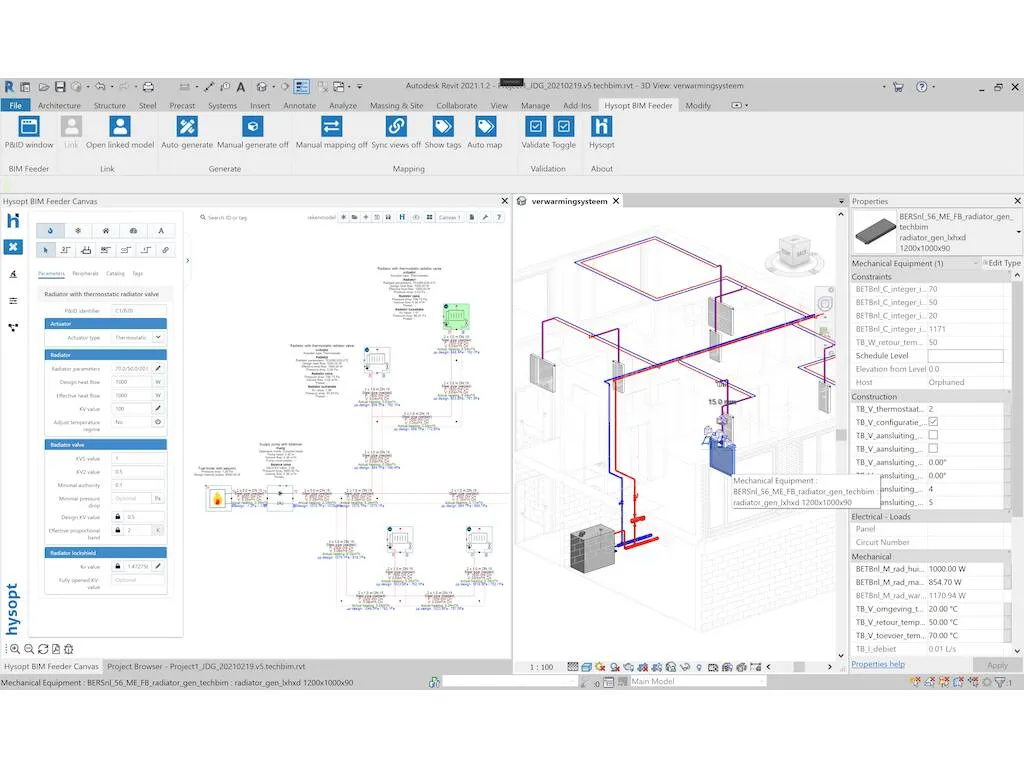
That is why Hysopt has taken a different approach: “Our BIM Feeder brings the two worlds as close together as possible, allowing both the BIM modeller and the HVAC engineer to continue working in the environment they are familiar with. Users can generate components and other data from Hysopt in the BIM model. Data added to the drawing model by the BIM modeller is then fed back into the Hysopt model. The two environments are automatically mapped to each other and remain fully synchronised at all times. Validation checks can be used to verify whether the models are still equivalent and make corrections where necessary.” “Both models have a purpose and should therefore be able to coexist,” Smits continues. “The BIM model shows what the system looks like and how it should be installed; the calculation model shows how the system behaves. Both provide valuable information. By linking the two models, HVAC engineers and BIM modellers have all the tools they need to work together, following their own defined workflows, on a consistent and validated calculation and drawing model.” Hysopt expects to start making the BIM Feeder available from 2022. “We are working with several companies on its development and sharing our work with this feedback panel. Interested parties are welcome to join,” Smits concludes.
Een zakelijke vraag aan Hysopt? Get in touch
Companies in this story

Keep following this
Get an email when a new story is published. No account needed.
- SubjectNews
- CompanyHysopt







