











New investment brings our university another step closer to climate neutrality
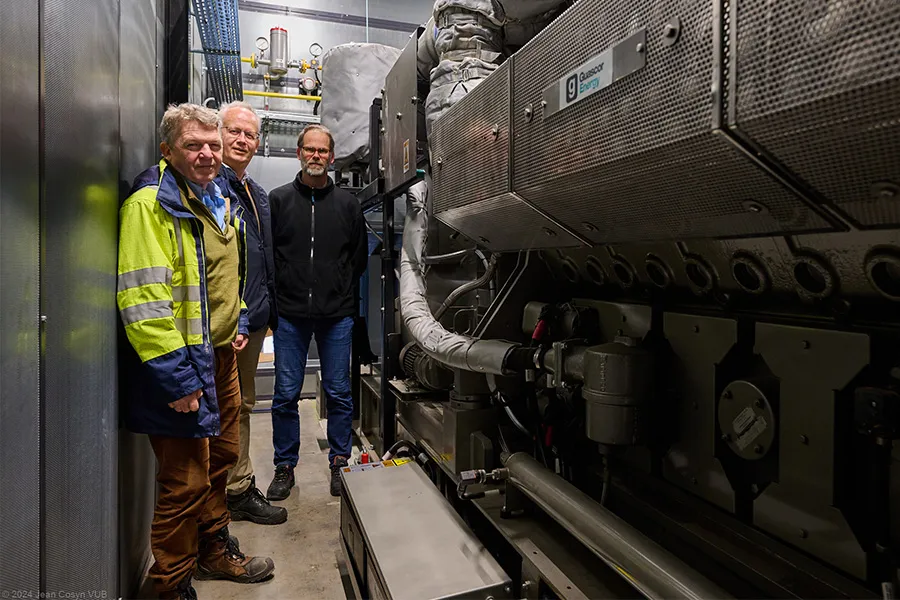
The Vrije Universiteit Brussel (VUB) has recently invested in an innovative combined heat and power (CHP) system on its Etterbeek campus. The 2 million euro investment will significantly reduce CO2 emissions and bring our university another step closer to climate neutrality, the aim of the VUB Climate Action Plan.
The Vrije Universiteit Brussel (VUB) has recently invested in an innovative combined heat and power (CHP) system on its Etterbeek campus. The 2 million euro investment will significantly reduce CO2 emissions and bring our university another step closer to climate neutrality, the aim of the VUB Climate Action Plan.
With the CHP system on its Etterbeek campus, commissioned on 18 December, our university has reached a new milestone in its sustainability efforts. The system, which can certainly be described as a technological marvel, reduces the VUB’s CO2 emissions by around 1,000 tonnes a year.
Our university has a clear goal: climate neutrality by 2050 at the latest. Our Climate Action Plan, an ambitious roadmap focused on tackling environmental and climate challenges, plays a crucial role in achieving this goal. The plan will help the VUB meet important interim targets by 2030, in line with global efforts to limit global warming to 1.5 degrees. Installing the CHP system is a key part of this process. It enables the VUB to generate around 50% of the electricity required on its Etterbeek campus.
CHP is a particularly efficient method of generating energy. The system produces electricity and heat simultaneously from the same energy source. This particular CHP system generates around 44% electricity and 56% heat, with most of the heat used to warm buildings during the winter months. Compared with modern gas-fired power stations, which often lose the heat generated through cooling towers, this CHP system offers a significantly higher overall efficiency.
The total investment of around 2 million euro is expected to pay for itself in just two years, provided energy prices remain as they are. The CHP system, a Siemens machine (SGE-86EM V12) with an electrical output of 1.6 MW, is expected to run for around 5,000 hours a year, generating approximately 6,500 MWh of electricity. The waste heat is then used to heat the campus buildings.
The CHP system on the Etterbeek campus is not the first at our university. The VUB site in Jette, which includes the hospital and the Health Campus, already has two operational CHP units, each with an electrical output of 1.0 MW.
Engineering consultancy Sweco began the project with a dynamic sizing study, then handled the technical aspects of the public tender and provided advice and carried out the necessary checks during implementation. The engine supplier is Dordtech of Dordrecht, while the main contractor and operator of the CHP system for a period of ten years is Werkhuizen E. Van Wingen of Evergem.
Given the complexity of the project as a whole, a VUB team with a broad range of skills was assembled. As project manager, Rik Geenen provided the necessary technical expertise. Sven De Bruyn was responsible for integrating the CHP system into the boiler room. ATS (Luminus) handled the electrical work, including installing and connecting the high-voltage cabin and liaising with grid operator Sibelga. Equans was brought in to connect the natural gas supply and the central heating water network, while I oversaw the entire project as the VUB’s energy coordinator.
The hydraulics of the CHP system and the university’s five natural gas boilers, as well as the three district heating networks and the approximately 20 refurbished substations they serve, are being brought into harmony through Johnson Controls’ building management system, with technical support from Studieburo Herelixka. In the coming years, our university also aims to make use of low-temperature waste heat from its CHP systems.
Een zakelijke vraag aan EQUANS? Get in touch
Companies in this story

Keep following this
Get an email when a new story is published. No account needed.
- SubjectNews
- CompanyEQUANS







