











More than just a new name: ATTB becomes Climafed
Text Climadfed en Wouter PolspoelImage Climafed
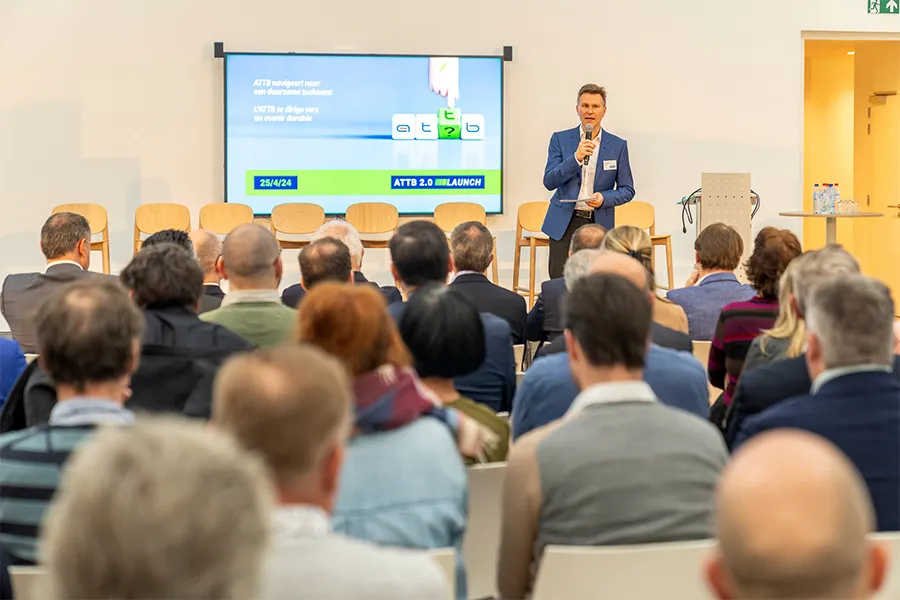
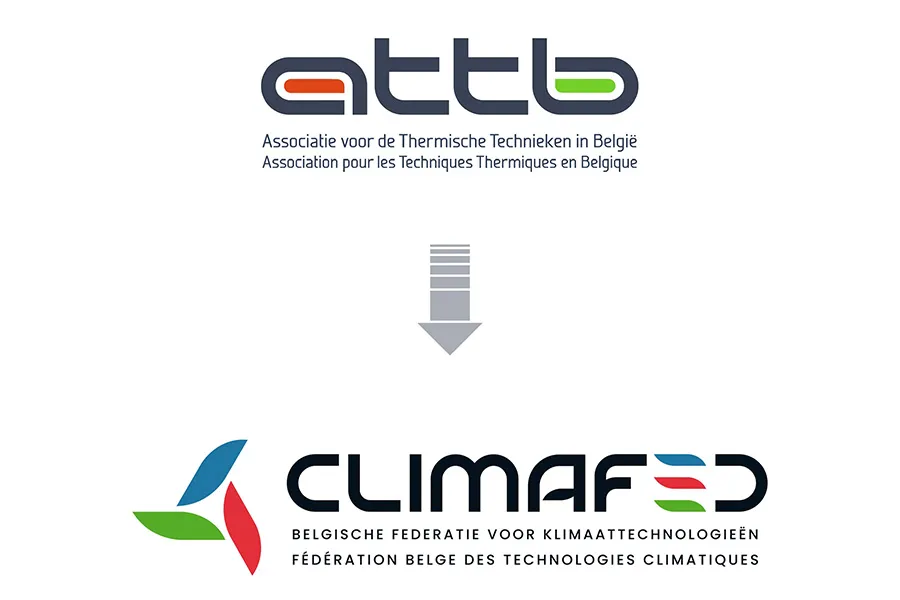
The Association for Thermal Techniques in Belgium, or ATTB for short, is now called Climafed, Belgian Federation for Climate Technologies. The new name, accompanied by a new visual identity and website and a completely new organisational structure, is intended to put greater emphasis on the federation’s mission, which will now be a stronger focus: contributing to a sustainable and resilient future, an important goal in the face of the threat of climate change.
ATTB was founded in 1973 as an association of heating boiler manufacturers. Over time, producers and importers of renewable heating systems also joined, along with companies offering related products and services. What began as an initiative focused on gathering market data thus grew into the leading information and advocacy platform for the entire sector.

The launch of the new name, Climafed: Belgian Federation for Climate Technologies, together with a new visual identity, including a new logo, a new website and a completely revised organisational structure, is therefore much more than a cosmetic update. The new name is intended to further emphasise the organisation’s crucial position and mission in the Belgian heating market: to play a leading role in promoting energy-efficient solutions and the transition to renewable sources, in order to stop global warming or at least slow it down.
Climate challenges and European policy
Climate technologies play a crucial role in the latter, since 50% of Europe’s energy consumption is used for heating and cooling. Making that energy carbon-neutral is essential to keeping global warming below 2 °C, the target of the international Paris Climate Agreement, with the hope of doing half a degree better still.
European policy documents such as the European Green Deal aim to make the EU carbon-neutral by 2050. This became legally binding when the Climate Law was approved by the European Parliament and the European Council in 2021. One concrete consequence of the law is that EU member states will have to be able to heat and cool their buildings entirely without fossil fuels from 2050.
Although progress is being made in this area, there is still much to do. Since 1990, the reference year used by Europe, combined emissions from residential and non-residential buildings have fallen by almost 29%, from 25,068 kilotonnes of CO2 equivalent in 1990 to 17,992 in 2022. However, there is a significant difference between the two sectors. While emissions from the residential sector have fallen by 37.1%, emissions from heating buildings in the tertiary sector have risen by 14.5%. In addition, fuel consumption, particularly the use of gas, is continuing to rise across Belgium’s building stock. Between 1990 and 2022, fuel consumption increased by 17.4% in the residential sector and by almost 30% in the tertiary sector.
Transformation and redefinition
Christophe Leroy, Chair of Climafed, explains how the federation’s new organisational structure is intended to help Belgium move towards a fossil-free building stock by 2050: “To provide even better support for our members and stakeholders, our federation now represents not only producers and importers of energy-efficient heating and hot water solutions, but also those offering energy-efficient cooling and ventilation solutions. This enables us to propose multifunctional solutions to specific challenges, with the aim of reducing CO2 at the lowest possible cost to society.”
Climafed has also designed its new website, www.climafed.be, so that its structure is more closely tailored to specific application areas: residential new-build & IER (major energy renovation), residential replacements & renovations, and collective and non-residential projects. The solutions presented, including heat pumps, boilers, heating and cooling networks, CHP systems, metering equipment and solutions for solar energy, ventilation, hydraulics and service & support, are largely organised around these three specific application areas to enable a more targeted approach. “This change is more than just an adjustment to the website; it is at the heart of how Climafed organises its operations and presents itself to the outside world,” Christophe Leroy emphasises.
“In the so-called position papers now available on Climafed’s redesigned website, the different sectors in which Climafed’s members operate set out their shared positions,” adds colleague Patrick O, Climafed’s public affairs manager, with another important update. “The website will be regularly updated with new position papers, as well as product-specific news and sector-specific use cases.”
Question about this story? Ask your question
Keep following this
Get an email when a new story is published. No account needed.
- SubjectNews







