











Knowledge platform calls for fossil fuels to be eliminated from buildings
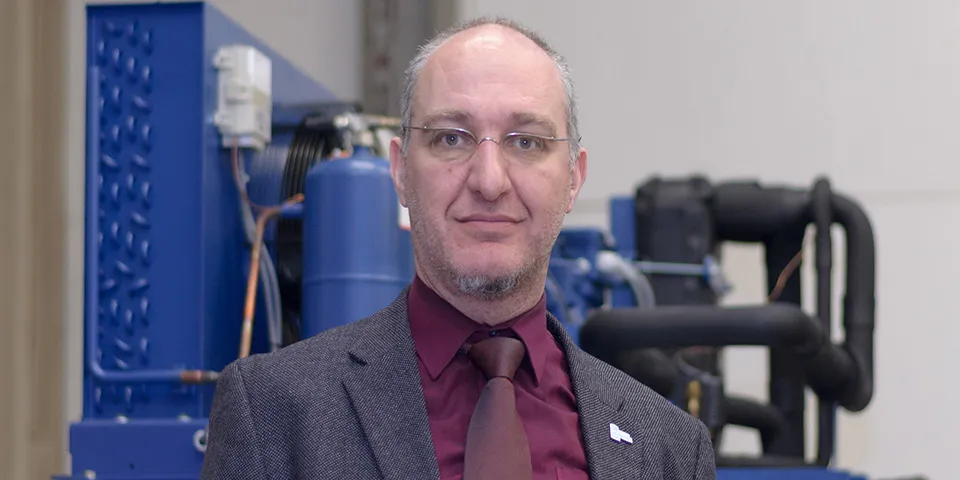
The big challenge? “We must ensure that we no longer heat our buildings with fossil fuels. Every euro we invest in energy renovations not only drastically reduces our CO2 footprint, but also creates jobs and improves indoor air quality, as well as the productivity of employees in offices and children in schools, for example,” sums up Professor Michel De Paepe, chair of Pixii, Kennisplatform Energieneutraal Bouwen. In their position paper, they are calling on policymakers to present businesses and citizens with a long-term plan after the elections.
In Flanders, buildings are responsible for almost a third of CO2 emissions. These come mainly from burning the fossil fuels used to heat our homes and produce hot water. In addition, 15% of Flemish people live in energy poverty because prices have risen enormously. Pixii, Kennisplatform Energieneutraal Bouwen, together with many of its members, is calling for a transition to a fossil-free building stock as soon as possible. “The major challenge is to transform the existing building stock into a fossil-free one by 2050. As always, the golden rule is to reduce energy demand first. To achieve this, the renovation rate needs to increase by a factor of 10,” says Professor Michel De Paepe. The knowledge platform has therefore drawn up a position paper for politicians. No fewer than 43 forward-thinking companies and other partners are joining the call.
Pixii sees solutions in measures such as expanding the Woningpas to include a renovation master plan. “But above all, if we are to give people and the economy time to develop a fossil-free building stock, a clear long-term plan and clear communication are essential, starting this year. This must be a priority for our new government,” stresses Professor Michel De Paepe, who also helped draft the policy recommendations of Sign For My Future, presented last week. “The solutions are there. We must now all work together to speed up the transition, because we have delayed for too long.”
Climate or social justice
What comes first: climate or social justice? Pixii sees no contradiction between the two: “Of course, the climate transition must be socially just: comfortable and affordable housing is a basic right. But we do not believe this is a reason to be less ambitious about the decarbonisation of our building stock, which is urgently needed. On the contrary. If the government, for example, provides enough social housing that is also energy-neutral, it will kill two birds with one stone. It will reduce CO2 emissions and lift people out of energy poverty. But we can no longer ignore the fact that a great many homes are in extremely poor condition. Flanders is full of homes dating from the interwar period, intended to last for around 30 years. Now, 100 years later, they are still standing. And they are in such a poor state that it costs society more to renovate them to make them future-proof than to demolish them and build new ones.”
Question about this story? Ask your question
Keep following this
Get an email when a new story is published. No account needed.
- SubjectNews







