











Installation work involves specific occupational risks
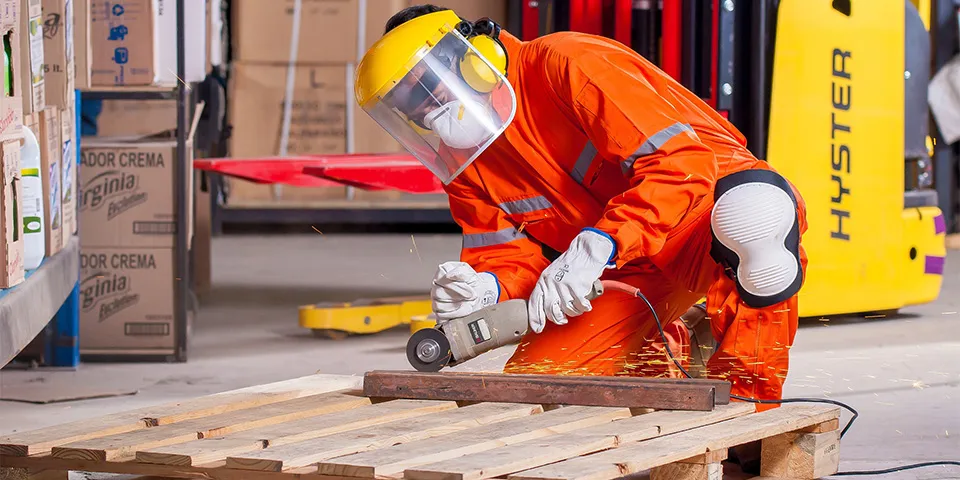
Every day is different for people working in installation engineering. Only one thing remains unchanged: safety comes first.
That is why the Working Conditions Act sets out requirements for a safe and healthy workplace. However, it is up to employers and employees to translate the specific standards into practical principles for working safely.
Higher risks in the work
- Employees regularly come into contact with asbestos-containing materials, for example during renovations of homes or offices. Hazardous fibres, such as asbestos, can be inhaled without being noticed and remain in the lungs. Exposure to asbestos, for example, can therefore cause serious damage to health, even years later.
- Employees work with building materials containing quartz, such as concrete, calcium silicate bricks, bricks and tiles. Working with respirable crystalline silica carries risks that can lead to silicosis (dust disease) or even lung cancer.
- Working on live electrical systems is hazardous. Strict safety requirements apply to this work.
- Many employees regularly work at height, for example to install an air-conditioning system or replace lighting on a façade.
- Employees regularly work in crawl spaces.
- Physical strain. Many tasks involve physical strain, including the muscular effort required to pull, push, lift or move objects, as well as working posture and repetitive movements. This can lead to excessive strain on muscles and joints and/or health problems.
Working safely
Installers often have to work in difficult conditions or awkward positions. This calls for flexible workwear that allows tasks to be carried out without hindrance. Clothing and footwear or work boots should fit well, be comfortable to wear and be made from high-quality materials. For installation work, gloves need to offer good grip, freedom of movement and a high degree of fingertip sensitivity. The work must be carried out with precision and care.
Working with asbestos and silica dust, working on live electrical systems, working at height or in confined spaces require specific safety categories. Personal protective equipment must be selected accordingly.
Last-Minute Risk Assessment (LMRA)
Every employee must be able to identify hazards in their own workplace. Before starting work, employees should carry out a Last-Minute Risk Assessment (LMRA). The aim is to identify risks and hazards in the workplace and eliminate them. The LMRA consists of three steps:
1. Assess the risk. Do not start work if all risks have not been eliminated or reduced to an acceptable level.
2. Determine the control measures. Identify the measures needed to eliminate or reduce the risks.
3. Take action to ensure the work is carried out safely. Implement the measures, ask for help if necessary and discuss them with colleagues beforehand.
Installers must be committed to working safely and assess the risks for themselves. The employer must provide the resources needed to do so safely.
Question about this story? Ask your question
Keep following this
Get an email when a new story is published. No account needed.
- SubjectNews







