











Indoor air quality deteriorated dramatically during lockdowns
Since the pandemic, Belgians have been spending more time at home, with all the advantages and disadvantages that entails.
Research by smart home company Netatmo shows that consumers breathed in more polluted air at home during lockdowns. Breathing polluted air can lead to fatigue and difficulty concentrating.
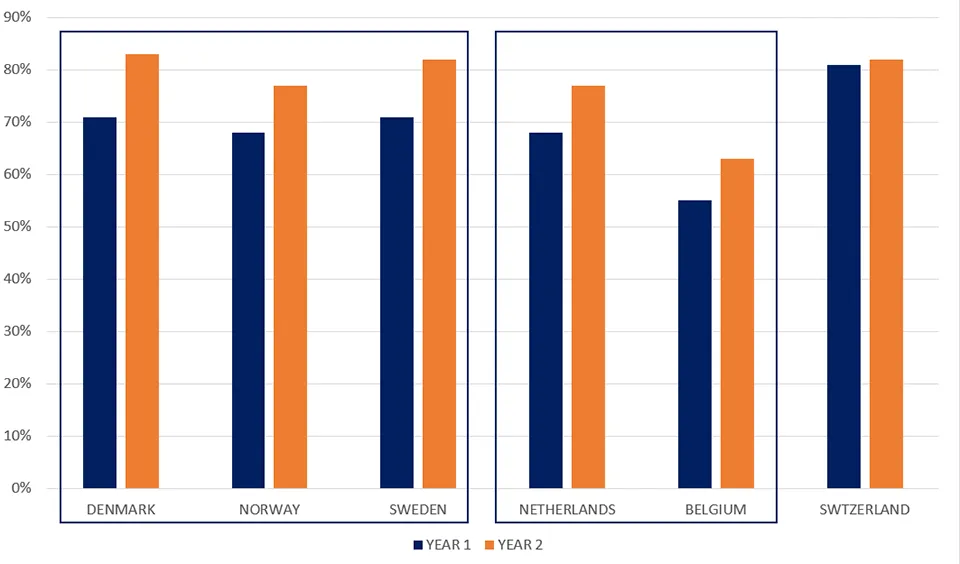
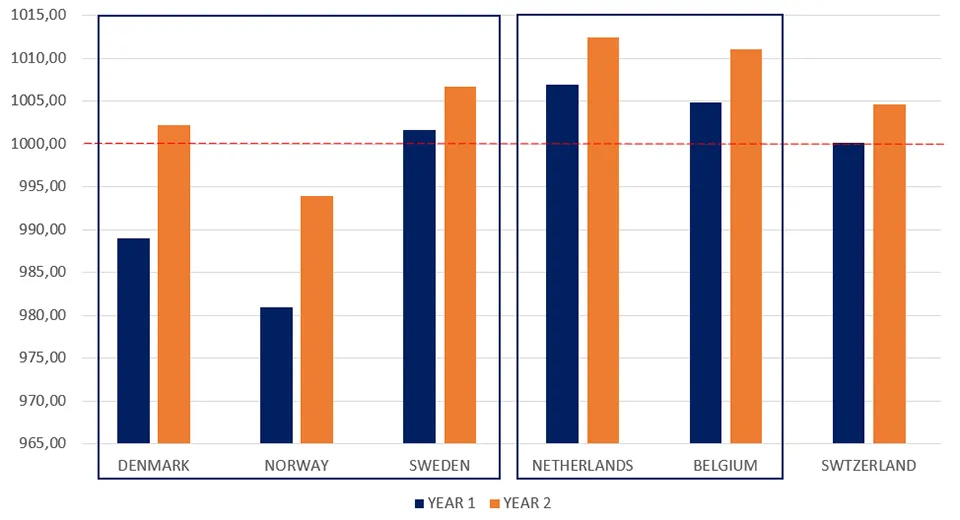
Netatmo monitored air quality between March 2019 and February 2021 using at least 1,500 Netatmo Weather Stations. The anonymous data showed clear peaks during mandatory lockdowns. Indoor pollution increased over the two-year period, particularly during the first wave of COVID-19. This may have been due both to a lack of ventilation and to people spending more time at home. Pollution levels remained roughly the same in the second year. This may indicate that people were ventilating their homes better. However, air quality was still unhealthy. For almost the entire year, the recommended level of 1,000 ppm of CO2 was exceeded.
When is air ‘healthy’?
Air quality can be assessed by measuring the concentration of CO2. CO2 occurs naturally in the air. As CO2 levels rise when people are present, they are a good indicator of the level of pollution in an enclosed space. Levels rise mainly as a result of burning oil and gas, and a lack of ventilation.
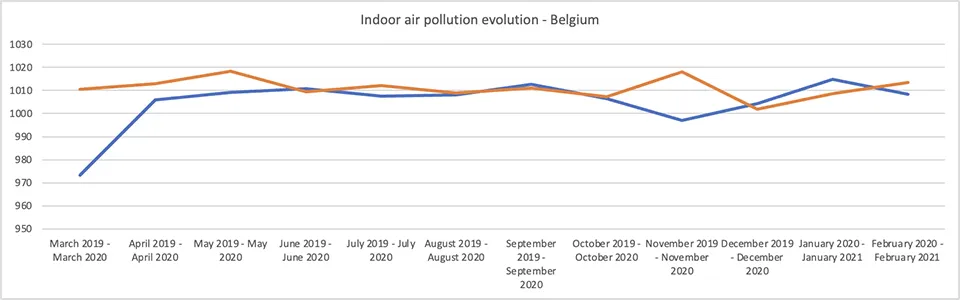
CO2 levels are expressed in ppm (parts per million). Levels of up to 700 ppm indicate a comfortable environment. From 1,000 ppm upwards, CO2 levels are considered high. This indicates insufficient circulation of (fresh) air and can have negative effects on people (source: DHS Wisconsin).
Lockdowns increase indoor air pollution
During the first lockdown, from March to the end of April 2020, 55 per cent of Belgian households exceeded the 1,000 ppm CO2 threshold at least once a week. During the second lockdown, from October 2020 to February 2021, this rose to 63 per cent. On average, indoor CO2 levels in Belgian homes exceeded the recommended level of 1,000 ppm for almost the entire year. This indicates that most homes in Belgium are inadequately ventilated.
Netatmo collected data in several countries, including Belgium, the Netherlands, Switzerland, Denmark, Norway and Sweden. Indoor air quality deteriorated significantly in every country. Belgium and the Netherlands had the worst results.
Question about this story? Ask your question
Keep following this
Get an email when a new story is published. No account needed.
- ThemeHealthy air and summer comfort
- SubjectNews







