











How wholesalers are responding to more flexible energy use and the impending requirement for building automation
Text Wouter PolspoelImage Cebeo en Ai
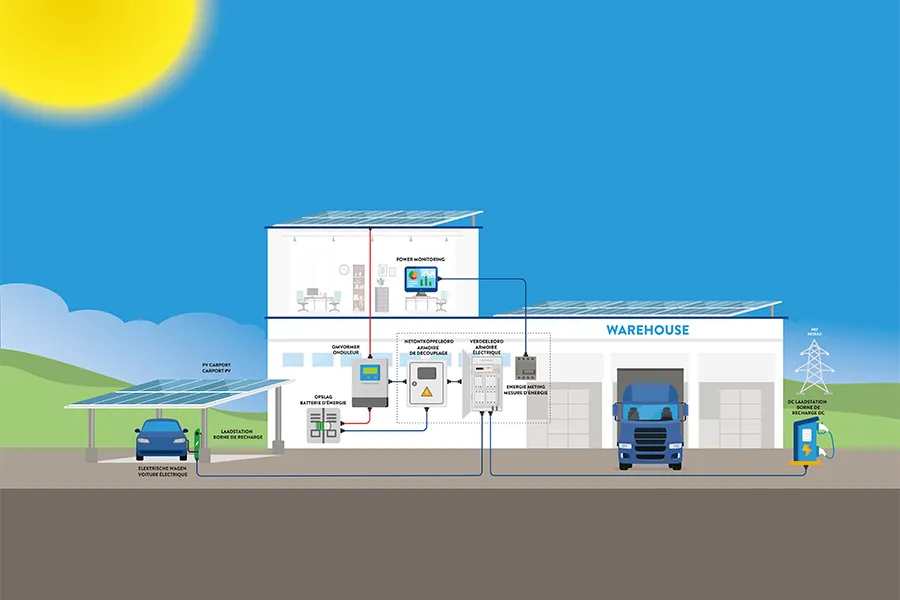
As a wholesaler of electrical materials and HVAC solutions, Cebeo keeps a close eye on developments in the installation sector to ensure its range remains relevant. Two themes stand out today: the desire among many people and businesses to use self-generated electricity more flexibly, and the impending European requirement for large non-residential buildings to be equipped with building automation and control systems. Michaël Van Audenhove and Nico Moeyaert, Cebeo’s HVAC domain expert and Renewables domain expert respectively, explain what this means.
Michaël Van Audenhove and Nico Moeyaert begin by looking at the shift towards more flexible energy use, and explain what this means in practice for Cebeo in the context of HVAC installations and renewable energy. “For us, flexible energy use in this context means that a building can store energy when conditions are favourable and use it later, without compromising comfort,” says Michaël Van Audenhove. “It is also important to respond to changing energy prices and building occupancy.”
“Essentially, it means increasing self-consumption, smoothing consumption peaks and responding intelligently to volatile electricity prices,” adds his colleague. “Building automation plays a key role in this. Using self-generated electricity more flexibly significantly reduces energy bills and also helps to stabilise the electricity grid. Cebeo no longer sees renewable energy and HVAC as separate fields.”
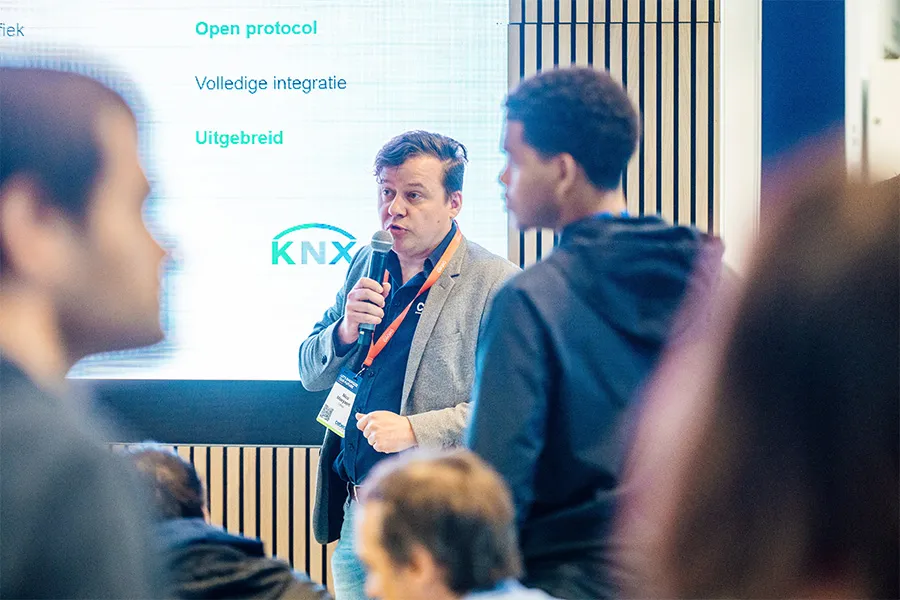
Smart buildings
According to the domain experts, smart controls and building automation systems are key to flexible energy use. “They enable systems to respond intelligently to grid signals, dynamic tariffs or their own solar generation. Traditional storage solutions, such as a thermal store or a battery, also have a role to play,” explains Michaël Van Audenhove. “Add demand-side management strategies such as load shifting and peak shaving, and you create a building that uses energy more intelligently and helps stabilise the grid.”
“This also makes energy trading possible, particularly in the non-residential sector, where larger energy storage systems are used. It is crucial, however, to charge and discharge the system at the right time, so appropriate control is essential,” adds Nico Moeyaert.
Asked where they see the greatest opportunities to integrate HVAC systems and renewable energy to increase flexibility, the two experts first point to the heat pump. Michaël Van Audenhove explains: “If you connect a heat pump to a PV system and a battery or thermal store, you can store electricity or heat respectively when it is sunny or energy prices are favourable. Heat can also be stored in the building’s thermal mass. Cooling equipment and ventilation systems can of course also be connected to renewable energy, as can EV charging infrastructure.”
“Our own headquarters has around 30 charging points for electric cars. When lunch is being cooked and the kitchen needs a lot of electricity, the cars are charged more slowly to spread the load,” says Nico Moeyaert, giving a practical example.
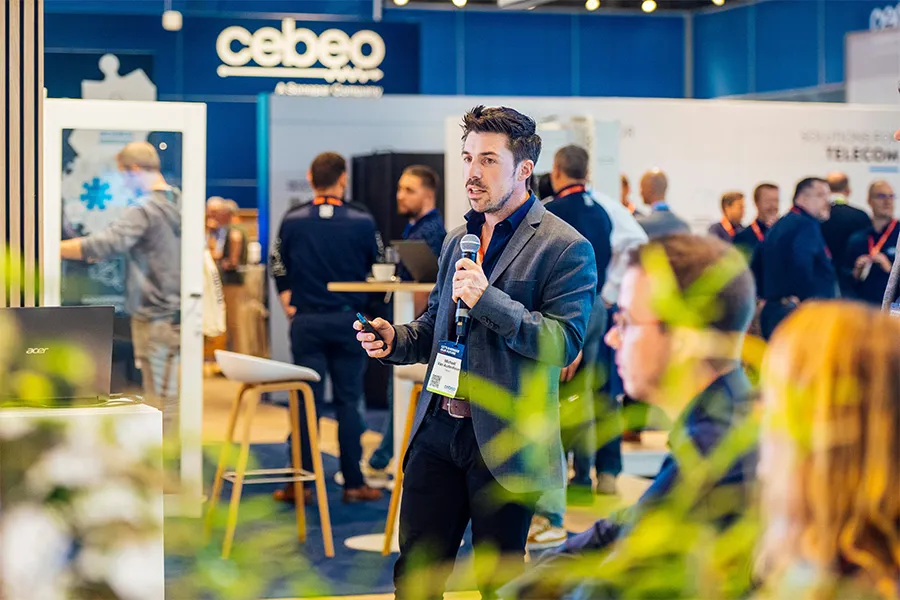
Mandatory building automation
A second development set to have a tangible impact on the installation sector is the European requirement for large non-residential buildings to have building automation and control in place from 31 December 2025. Initially, this applies to buildings with a heating or cooling system with a nominal thermal output of more than 290 kW. It is sufficient for either one of the two systems to exceed that threshold. Over the coming years, the threshold will gradually be lowered. The requirement also applies to non-residential premises with air conditioning, or a combination of air conditioning and ventilation, with a total nominal output greater than 290 kW. Michaël Van Audenhove and Nico Moeyaert explain how Cebeo is preparing its customers. “It is best to start with an assessment: what systems are in place, and what is needed? We then work with the manufacturer to guide the installer from component selection through to implementation,” says Michaël Van Audenhove.
Nico Moeyaert adds: “Building automation in non-residential projects is almost always bespoke, while plug-and-play solutions are often used in residential buildings. Our key advantage over other wholesalers is that we have the right solutions and expertise in-house for every area: HVAC, renewable energy and controls.”
Cebeo sees the requirement as an opportunity. “Smart controls reduce energy consumption, smooth out peaks and make better use of PV systems. That means lower energy bills,” says Michaël Van Audenhove. “And by continuously monitoring systems, problems can be detected and resolved sooner, extending the service life of installations. An automated building also increases in value.”

Clear dashboards
Building automation and control systems must also enable energy consumption to be monitored and analysed. What solutions does Cebeo offer to ensure data are not merely recorded, but also made useful for facility managers and technical teams? “Solutions that make the figures easy to understand and show where action is needed,” says Nico Moeyaert. “There is little point in measuring if the data are not turned into insights and action points. Facility managers want clear dashboards that show not only energy flows, but also anomalies and improvement measures.”
The requirement also stipulates that systems from different manufacturers must be able to communicate with one another. Michaël Van Audenhove says: “That is why Cebeo offers integrated energy monitoring systems that enable HVAC installations, PV systems and charging infrastructure from different manufacturers to communicate with one another. We are also working towards a portfolio in which solutions from different manufacturers are compatible with one another. We often discuss this with our colleagues.”
“With older installations that cannot be integrated into an overall energy concept, a major renovation may be needed,” adds Nico Moeyaert.
What does the future hold?
Finally, the two experts outline the developments they expect to see over the coming years in the convergence of HVAC, renewable energy and building automation. “Monitoring will enable building managers to make their own optimisations across these three areas, but AI will drive a shift towards systems that optimise themselves autonomously,” says Michaël Van Audenhove. “We can already see this trend today. In other words, systems will make their own decisions based on available renewable energy, energy prices, weather data and predicted occupancy levels in building spaces. Thermal and electrical storage will also become commonplace, and the heat pump will remain important. Thirdly, regulations will become stricter: buildings will have to move further towards zero emissions, making building automation the norm. From 2028, lighting will also have to be controlled intelligently. This is not yet part of the impending building automation requirement. Cebeo positions itself as a partner in this broader picture of the future, providing the complete package: from products to expertise, and from design to aftercare.”
Nico Moeyaert adds two further expectations for the future, the fifth and sixth: “As building automation becomes more widespread, cybersecurity will also grow in importance. I also expect the car to play a crucial role in a building’s energy system by feeding energy back into the building, the so-called vehicle-to-grid, or V2G, principle.”
To conclude, the domain experts jointly emphasise two further important points: “Product quality and correct configuration are crucial for building automation: without good sensors, there is no reliable data. And building automation is not an end in itself, but the start of a journey towards truly sustainable buildings. Just as Wi-Fi is now a given in a building, building automation will be too. This will require ongoing collaboration between manufacturers, installers and us as wholesalers. But installers can rest assured: Cebeo keeps abreast of the market and ensures its range stays up to date.”
Een zakelijke vraag aan Cebeo? Get in touch
Companies in this story
Keep following this
Get an email when a new story is published. No account needed.
- ThemeSmart building integration
- SubjectNews
- CompanyCebeo







