











How much energy is your home losing, and where? Find out with a thermal imaging survey
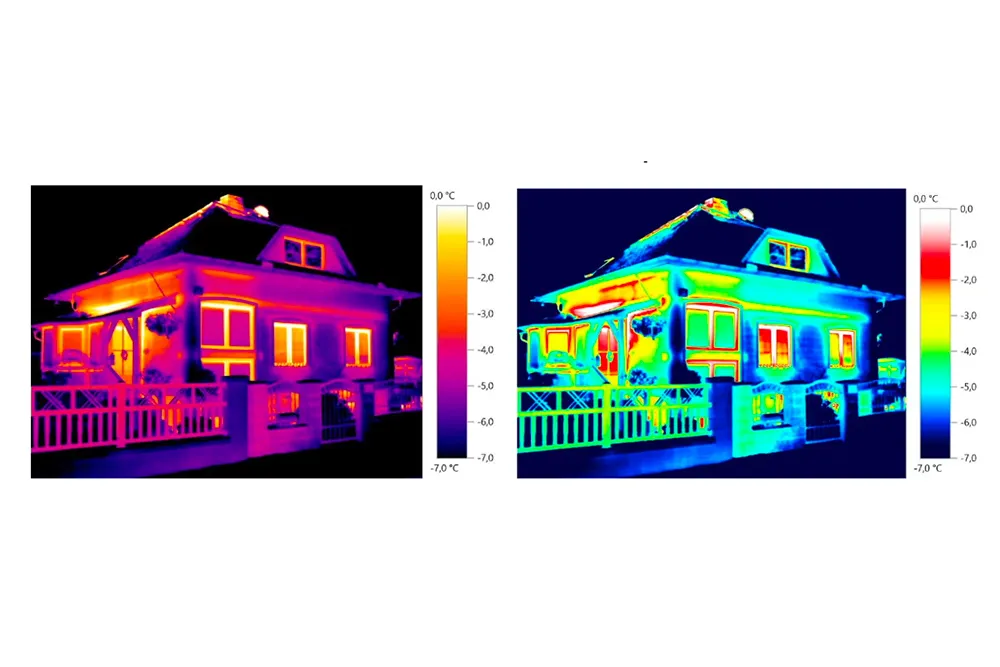
Making energy losses visible
The City of Brussels recently published a thermal imaging survey of all the roofs in the city. Carried out by consultancy ACTION AIR, the survey shows how much heat is lost through the roof of each building, and therefore where insulation could be improved. Many municipalities and local service providers in Flanders and Wallonia also now offer thermal imaging surveys to identify where your home loses the most heat. But how should you interpret the images? In this article, Testo, the specialist in innovative measuring equipment, offers some tips to help make things clearer.
First, a few figures: on average, 30% of a home’s energy is lost through the roof, 20% through the walls, 15% through the windows & doors and 10% through the floor. A well-insulated home, with recently installed external joinery and no thermal bridges, parts of a building’s external envelope where the insulation layer is interrupted or the thermal resistance is lower for another reason, leading to excessive heat loss, can deliver significant energy savings.
A thermal imaging survey shows where your home is losing the most heat, so you can take steps to reduce the loss if necessary. Here are some things to look out for.
Timing
A thermal imaging survey needs to be carried out at the right time. The winter months are ideal because there is a large difference between indoor and outdoor temperatures: the greater the difference, the easier it is to see heat loss. Thermography is a useful and efficient way of visualising it.
Colour palette
Broadly speaking, there are two different colour palettes: “iron”, which uses mainly yellowish shades, and “rainbow”, with a predominantly red colour spectrum. The palette you see depends solely on the tool being used, as both show the same information.
Temperature scale
Alongside the colour palette, you can see which temperature each colour represents. The temperature scale shown should range from a few degrees above to a few degrees below the home’s surface temperature, as this makes energy losses easiest to see. This surface temperature is the reference temperature measured on the outside of the home, which you can read in the centre of the screen. If the temperature scale is too wide, the scan will appear fairly uniform in colour; if it is too narrow, the result will be exaggerated.
Energy losses
Areas of the home that appear yellow or red, depending on the colour palette used, may indicate avoidable energy loss, for example through air leaks. Each pixel in the thermal image represents a measured temperature. Examining these temperatures in more detail can help identify the warmest point in each part of the building envelope. For further advice on adding insulation or replacing external joinery, it is best to consult a recognised contractor.
A thermal camera of the right quality
A good thermal camera for surveying homes should have a detector with a resolution of 320 x 240 pixels (comparable to the pixels in a digital camera) and thermal sensitivity greater than 60 mK (the camera’s ability to measure temperature differences).
Myth
A thermal imaging camera measures the surface temperatures of objects using its infrared sensor. Any object warmer than absolute zero (-273,5 °C) emits infrared waves that the camera can detect. What a camera cannot do is see through walls or glazing, as is sometimes depicted in films.
Cost
A standard survey costs approximately 250 to 400 euros. This price includes an infrared scan, a report with infrared images and advice. If your municipality offers this service, the cost may be lower.
Een zakelijke vraag aan Testo NV/SA? Get in touch
Companies in this story

Keep following this
Get an email when a new story is published. No account needed.
- SubjectNews
- CompanyTesto NV/SA







