











Horizontal or vertical detection
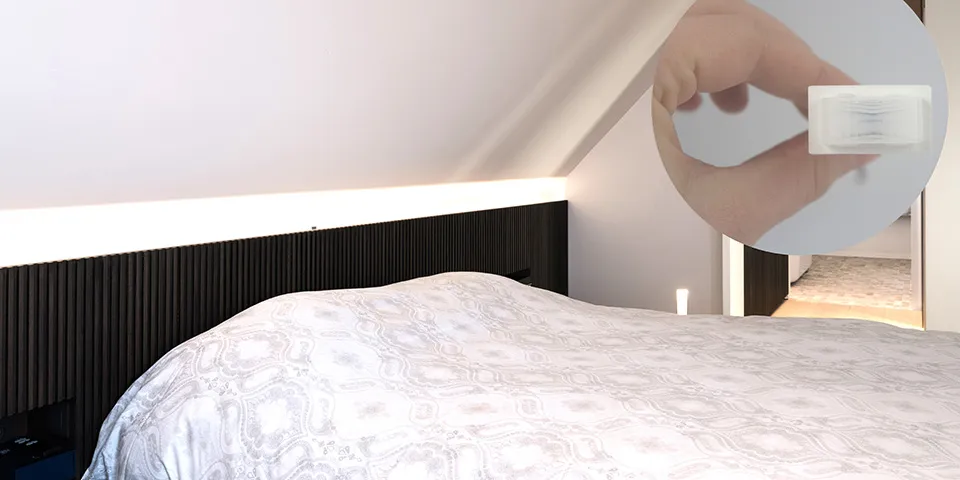
We all sometimes forget to switch off the lights when we leave a room. If this happens often and for long periods, energy consumption can gradually add up, with all the resulting consequences for the energy bill. Motion detectors come to the rescue, responding to movement, or the absence of it.
Motion detectors are useful allies when it comes to using lighting as sustainably as possible. These small detectors ensure that the lights switch off automatically rather than staying on unnecessarily. When they detect movement, they relay this information to a central system, which immediately takes the appropriate action. They also signal when there is no movement.
Automatic switching on and off
In a home, hallways are thoroughfares. You pass through them to get from one room to another, such as the toilet or bedroom, or to go outside. A hallway serves no other purpose. “The lights in a hallway usually only need to be on briefly,” says Duotecno. “Motion detectors are an almost indispensable aid here. The lights switch on automatically when movement is detected and switch off again automatically. The light level can also be set. If there is enough natural light, in broad daylight,
then the lights do not need to be on and will not switch on. When it is dark, they will, of course.” As well as hallways, motion detectors can also be used in garages, storage rooms, toilets, and more.
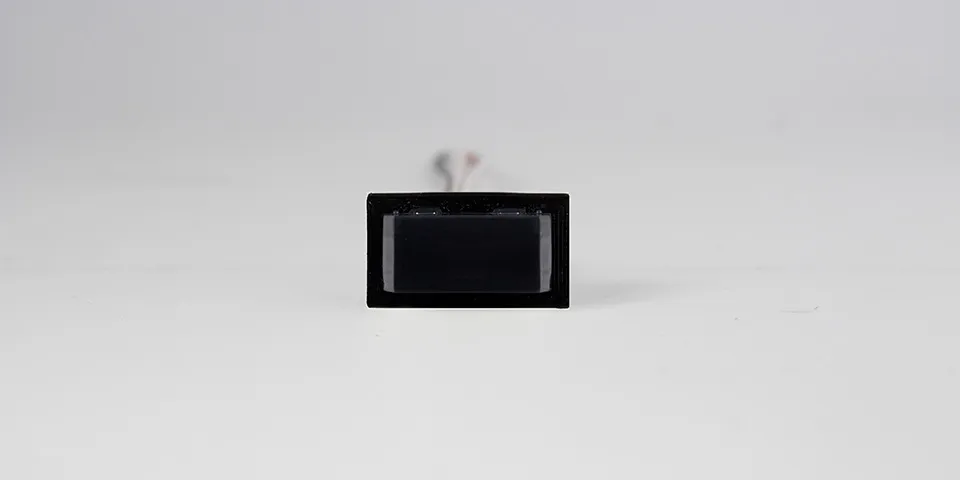
Compact in size, Duotecno’s line detector can be used horizontally or vertically.
A line detector?
A line detector is a motion detector. It scans for movement along a horizontal or vertical line, with a range of 5 metres. “How do you use our line detectors?” asks Duotecno. “In the first example, we are talking about a vertical line. The detector is installed vertically, for example at the top or bottom of a staircase. This stops the hallway lights from switching on constantly, and means they only come on when someone actually walks past the detector, in this practical example when someone is going upstairs. A curtain detector is a good comparison. It only detects movement when someone walks past, not when they enter a room. Our second example involves a horizontal line. The detector is installed horizontally so that movement by pets does not cause the lights to switch on constantly. It also prevents the lights in, for example, the bathroom from coming on when someone moves in the bedroom.”
Question about this story? Ask your question
Keep following this
Get an email when a new story is published. No account needed.
- SubjectNews







