











High-quality buffer vessels made to measure
Text and images M-M-T
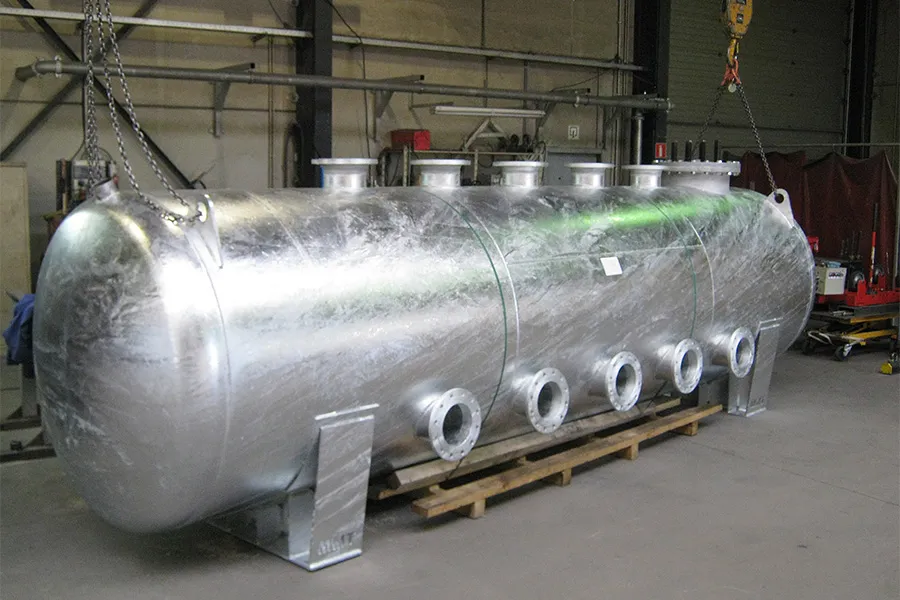
M-M-T is an established name in prefabricated plant rooms and skid building (a skid is a frame on which equipment is mounted, ed.), but the manufacturer is also known for its prefabricated HVAC components, such as manifolds, low-loss headers and buffer vessels. The production of bespoke buffer vessels in particular requires a meticulous process. Managing director Francis Colpaert takes us through this skilled process.
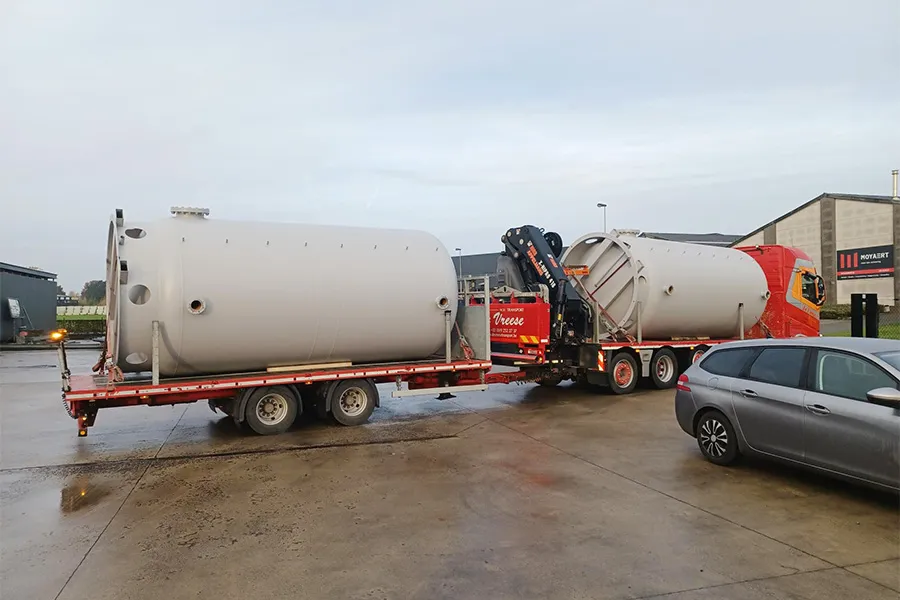
Whatever the method used to produce hot water, buffer vessels are an essential part of your technical installation. For high-quality workmanship, you can turn to M-M-T in Tielt. “Good craftsmanship is our priority,” begins M-M-T managing director Francis Colpaert. “Most of our buffer vessels are manufactured in accordance with PED 2014/68/EU art. 4(3). Design starts with a hydraulic schematic, a specification or a dimensioned sketch from the customer. We prepare a quotation based on the required capacity, available space, access clearance, maximum operating pressure and the dimensions of the connections. The buffer vessel can be fitted internally with the necessary baffles and/or distribution pipes, as well as inspection hatches.”
“Once an order has been placed, we produce a technical drawing, in PDF format or as a STEP or DWG file, for the customer’s approval. This allows them to check whether the buffer vessel will fit in the plant room. We always allow for the necessary revisions before starting production. This ensures the customer is not faced with any unpleasant surprises during installation. If everything is in order, we move on to the manufacturing process.”
Extensive stock ensures prompt delivery
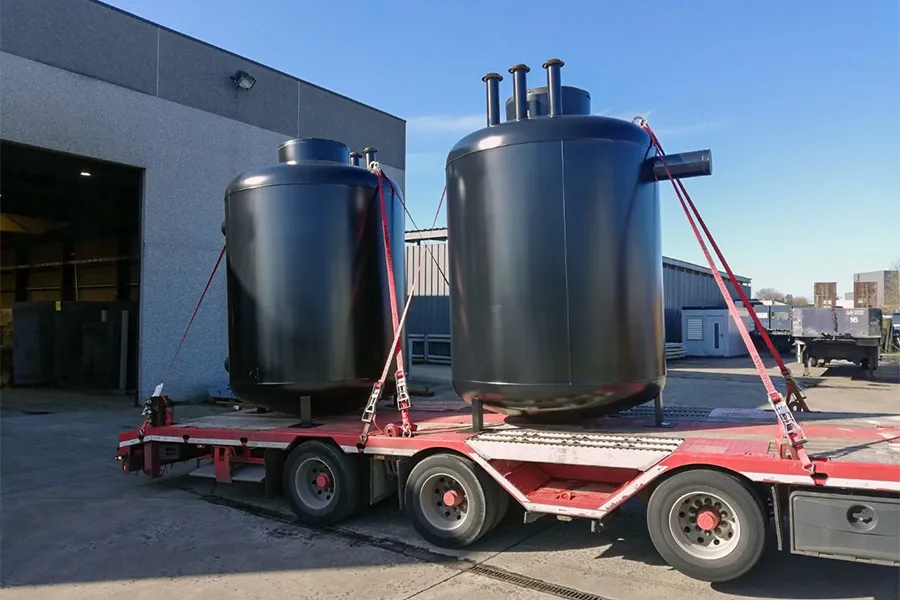
To keep production running smoothly, M-M-T holds a range of raw materials in stock, the managing director explains. “This ensures efficient lead times for buffer vessels with diameters of 500 to 1,600 millimetres. We do not stock raw materials for larger sizes, but they are readily available.”
“We tailor our operations to meet production requirements as effectively as possible. Everything is done in-house. We have already manufactured buffer vessels with a diameter of 3.6 metres and a capacity of up to one hundred thousand litres, for district heating networks, for example. We recently also invested in a new CNC plasma cutter, which allows us to process materials even more efficiently. The new machine can handle not only sheet metal, but also pipe with a diameter of up to 700 millimetres.”
“During this process, all the necessary cut-outs, markings and weld preparations are made. If the material is flat plate, it is then rolled into a cylindrical shell using a plate rolling machine. The maximum length of a shell is 2.5 metres. Need a longer shell? That is no problem either. We can weld multiple shells together professionally.”
Made-to-measure assembly
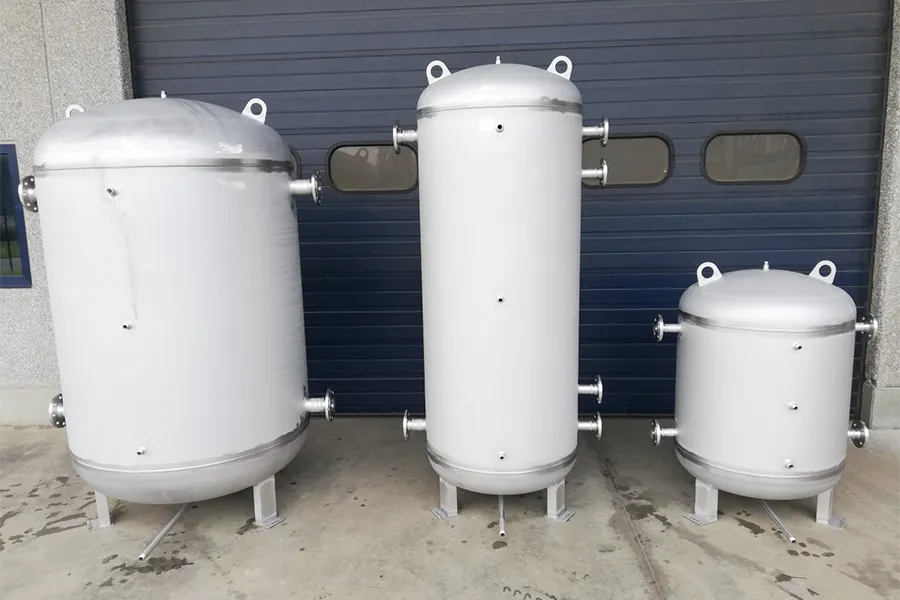
“The next step in the manufacturing process is assembling the shell or shells and the end caps, which are then welded together. The necessary connections are added next, followed by the installation of the required support legs as the final step. Once the buffer vessel has been fully manufactured, it is tested. We carry out a pressure test at one and a half times the maximum operating pressure. This ensures that safety is fully guaranteed after installation.”
“After the pressure test, the vessel is spray-painted. Most buffer vessels have an anti-corrosion primer on the outside, but options also include a weather-resistant coating, full hot-dip galvanising or a stainless steel buffer vessel. These are suitable for storing domestic hot water or for chilled-water applications.”
“Once the buffer vessel is ready, we take care of delivery ourselves, using a lorry or a crane truck. After installation, the buffer vessel can be fitted with the specified insulation jacket. For this, we call on a specialised subcontractor,” concludes Francis Colpaert.
Question about this story? Ask your question
Keep following this
Get an email when a new story is published. No account needed.
- SubjectNews







