











Fully automatic device for detailed measurements on gas and water pipes
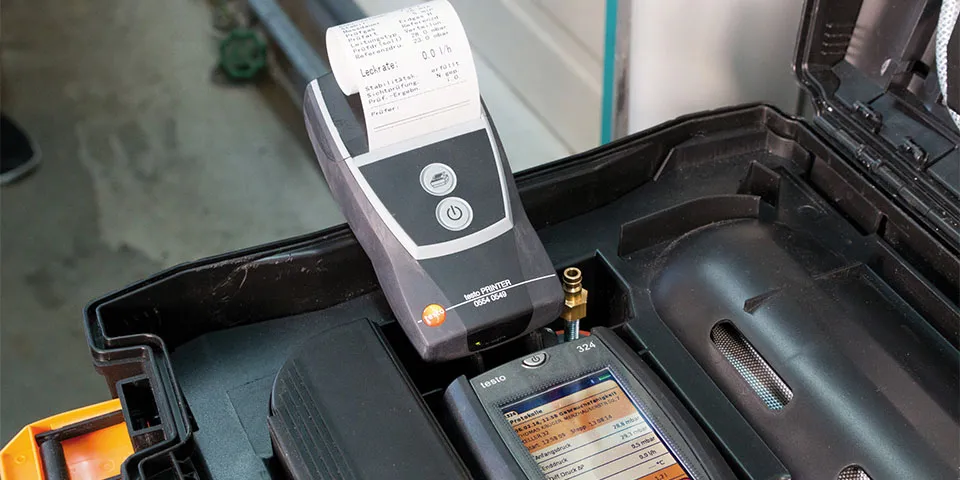
Gas and water systems can develop leaks over time. That is why all pipes and valves need to be regularly checked for leaks and correct operation. Leak-tightness is particularly important in new installations or when modifications are required. The testo 324 enables all the key measurements on gas and water pipes to be carried out with just 1 device.
The Testo 324 is a multifunctional pressure meter for checking the leak-tightness of gas pipes, water pipes and heating oil tanks. The device was developed with tradespeople in mind, with ease of use and detailed analysis capabilities at the top of the priority list.
Fully automatic device
Koen Van Nieuwenhove, Product Manager HVAC at Testo, explains: “Whichever option you choose, you will always see a similar screen. A clear overview of the parameters and settings shows the tradesperson at a glance what needs to be done. They can set the parameters themselves, depending on the application. Once that is done, there is nothing more for them to do: the device operates fully automatically. It runs through all the steps automatically and presents the installer with a detailed report at the end.”
A leak-tightness test must always be carried out when installing a new gas pipe. The test must show whether the pipe can withstand a higher pressure for a predetermined period, with the pressure also set in advance. The first step is to raise the pressure in the pipe. The Testo 324 can do this itself, up to a pressure of 300 millibars, so no external pump is needed. After a stabilisation period, the actual measurement can begin. If there is a pressure drop after the test, the pipe may have a leak.
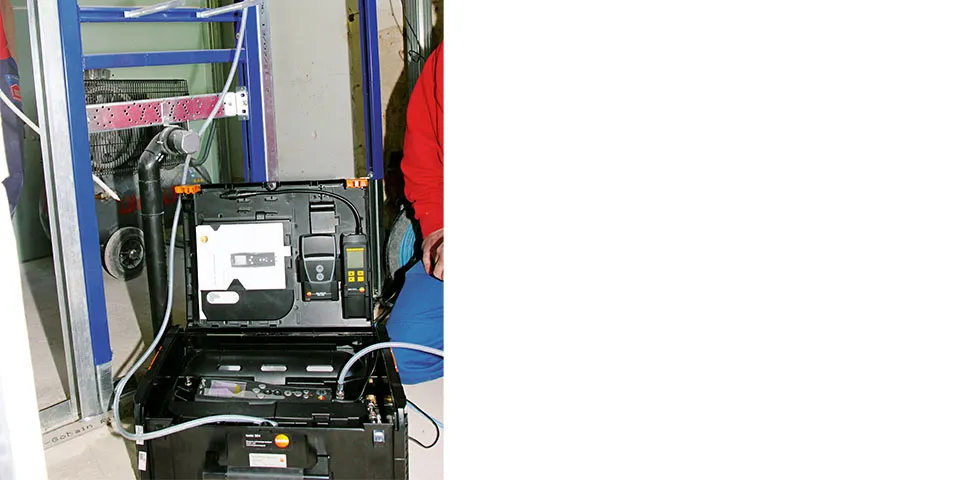
The device operates fully automatically.
To eliminate as much uncertainty as possible, the testo 324 offers particularly extensive analysis capabilities, says Van Nieuwenhove: “The device automatically records all measured values every second. The results are then read out using software. This gives the installer an immediate view of how the pressure changed: did it drop all at once, with a sudden dip, or did it fall gradually? This can prevent a great many disputes, unlike a device that only shows the final result.”
Leak test
If there is still any doubt, a leak test using a flow sensor can provide a definitive answer: a buffer is created which pumps gas into the pipe if a leak is detected. At the end of the test, the tradesperson receives an estimate of the leak rate, expressed in litres per hour. “This test is ideal for temperature-independent operation because it is not affected by temperature fluctuations,” says Van Nieuwenhove.
The procedure for checking heating oil tanks or water pipes is similar, although tank checks require a longer measurement time: one hour.
A whole range of additional functions completes the picture. “The device can also perform volume calculations,” says Van Nieuwenhove. It has a maximum internal range of 1100 hPa. An external probe can also be connected to the device for higher pressure ranges.
Een zakelijke vraag aan Testo NV/SA? Get in touch
Companies in this story

Keep following this
Get an email when a new story is published. No account needed.
- SubjectNews
- CompanyTesto NV/SA







