











First green gas injection into the Walloon grid
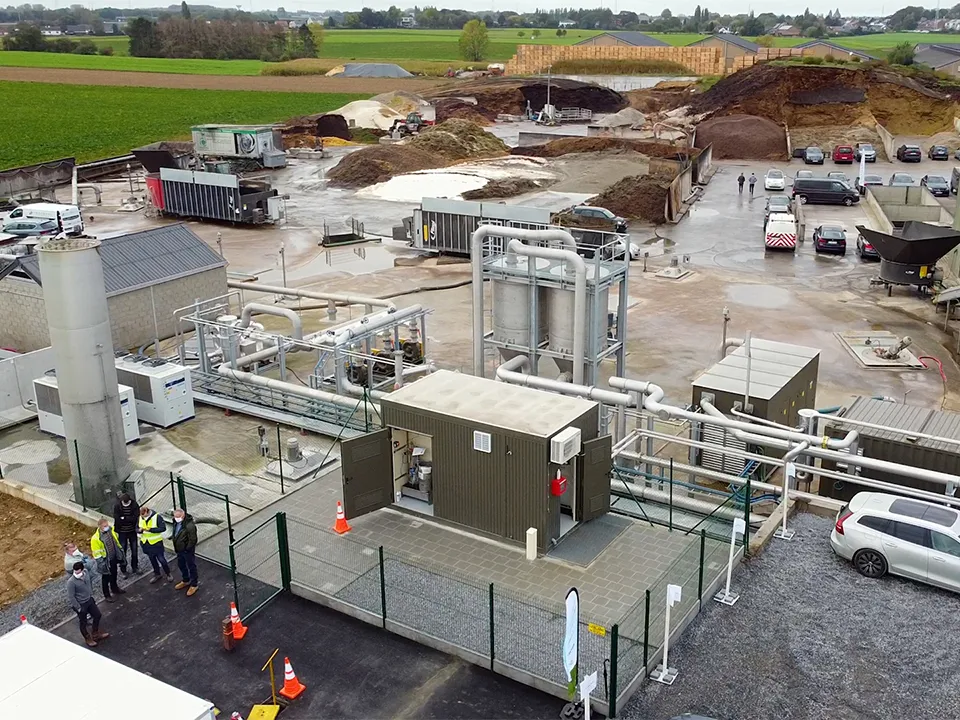
Wallonia’s first site for injecting biomethane into the gas network has recently become operational.
Agro-industrial company Cinergie, based in Fleurus, has invested in a facility that both reduces its environmental footprint and supplies green gas to local authorities.
Belgium aims to move towards a low-carbon society by 2050, and green gas is essential to achieving this. Once purified into biomethane, it can be injected into the gas transmission and distribution network that supplies vehicles, local authorities and industry. Biomethane also produces virtually no CO2 emissions. The site was not chosen at random. A study commissioned by gas.be found that Wallonia is a promising region for biogas production. Didier Hendrickx of gas.be says: “At present, less than 10 per cent of the biogas potential is being used. Cinergie is the first operational project in Wallonia and the second in Belgium.”
Households and businesses
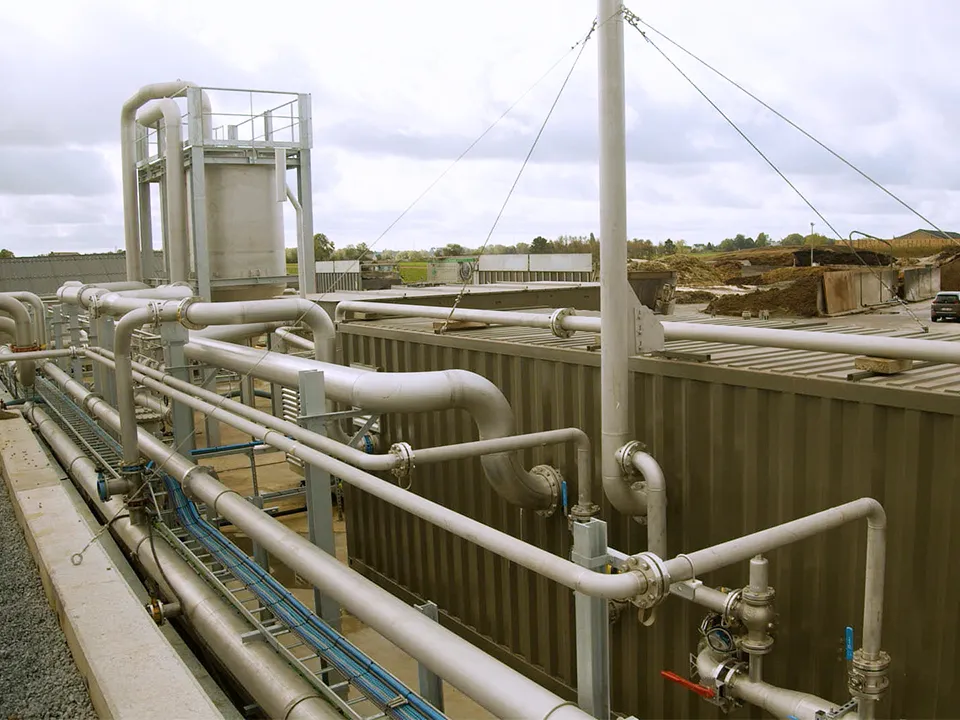
The family-run agro-industrial company Cinergie, based in Fleurus, recycles around 100,000 tonnes of materials a year, consisting mainly of livestock manure and agricultural products. It also processes residues from various crops, such as maize and grasses, as well as waste from the agri-food industry, sugar beet and potato processors, and breweries. These materials will now be converted into biomethane, a 100 per cent renewable gas, and transported through a shared network to households and businesses. This will significantly reduce Cinergie’s environmental footprint. The energy produced is equivalent to the consumption of a city the size of Gembloux, with 25,000 inhabitants. “Cinergie has always aimed to promote the circular economy and ecology. With the support of our partners and investors, we are delighted to have established a green energy production solution that benefits Wallonia and its citizens,” says Éric Pierart, managing director of Cinergie.
2,000 m² of biogas per hour
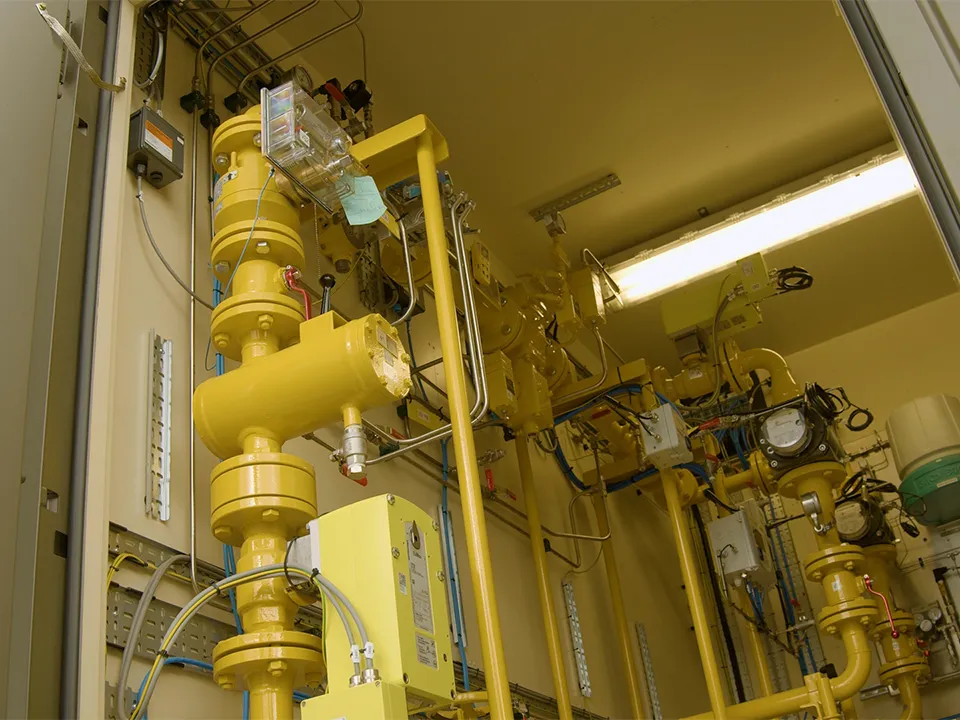
The biomethane facility was recently connected to the gas grid. For the first time, several municipalities in Wallonia will receive green gas. The facility currently produces around 2,000 m² of biogas per hour. 45 per cent of this goes to the CHP plant, which has an output of 2MW. The remainder is used to produce 600 m² of biomethane per hour, which is injected into the natural gas network.
“The biomethane produced here in Fleurus is supplied mainly to residents of Sombreffe and Gembloux. Depending on conditions, biogas can also be supplied to other municipalities in Walloon Brabant,” says David De Lange of ORES. ORES acted as facilitator for the feasibility study on this project, working with the Walloon Commission for Energy (CWaPE) and the various authorities. “This was necessary to establish the legal framework for injection,” says De Lange.
More projects
Agriculture is responsible for more than 10 per cent of greenhouse gas emissions, a large share of which comes from livestock manure. With its extensive agricultural land, Wallonia therefore has considerable biomethane potential. Around 20 projects, some of them in Wallonia, are due to be delivered in the coming years. This green alternative brings climate targets another step closer. It also offers an opportunity to make Wallonia’s gas supply greener.
Een zakelijke vraag aan Gas.be? Get in touch
Companies in this story
Keep following this
Get an email when a new story is published. No account needed.
- SubjectNews
- CompanyGas.be







