











Everything you need to know about underground cables
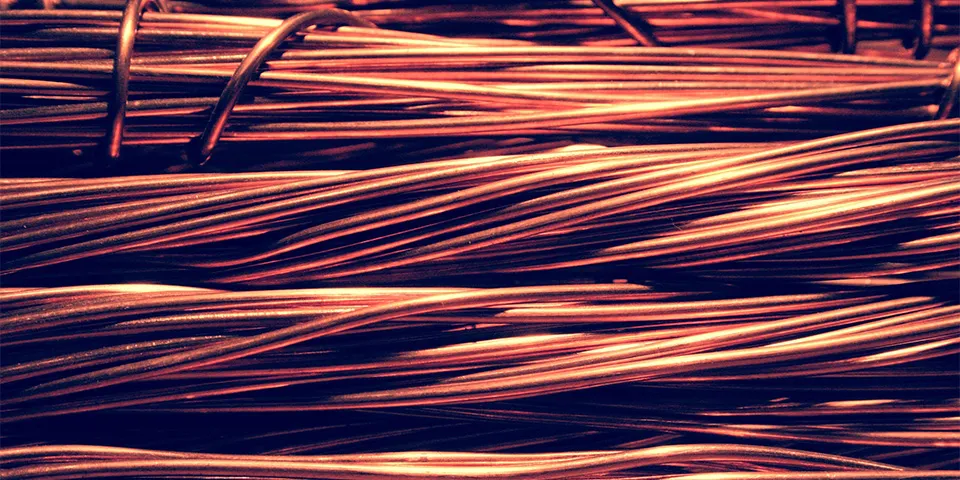
Underground cables are electrical or power cables made up of several cores. A core is a copper wire surrounded by electrically insulating material. Each core is made of electrically conductive material. In addition, each core is insulated from the others, and they are all enclosed in a watertight sheath.
Underground cables may be exposed to groundwater, as they are laid in the ground. Their sheath must therefore be watertight. Underground cables also have an earth screen inside the cable, positioned directly beneath the outer sheath. Underground cables are designated YMVKAS or XMVKAS, where AS stands for earth screen.
Earthing
The earth screen also serves as an earth conductor. It consists of a braided steel wire screen, which also contains the earth wire, known as the drain wire. As well as acting as an earth conductor, the screen provides additional protection against accidents, for example if someone puts a spade into the ground. The braided screen prevents electric shock. One requirement is that a 5-core underground cable must be laid at least 50 cm below ground in a trench at least 60 cm deep.
The difference
Outdoor cables are also available, but they differ considerably from underground cables. Buying an underground cable is a different matter. They look the same on the outside, but the inside is quite different. An underground cable has an earth screen (AS), whereas an outdoor cable does not. So if you have laid an outdoor cable in the garden and put a spade through it, you will get an electric shock. The difference lies in the insulation thickness and the quality of the outer sheath. An underground cable is constructed as follows:
- Copper conductors or cores;
- XLPE insulation around each core, with colours based on HD 308;
- Additional core covering;
- PVC inner sheath;
- Earth screen (galvanised steel braid and armour);
- Flame-retardant grey PVC outer sheath.
It is also essential to know the exact maximum permissible current rating, as this determines the cross-sectional area of the conductor or cores. You also need to know the maximum permissible voltage, which determines the choice of sheath in relation to its insulation rating. The number of cores determines the application and the number of phases.
If AS is not included in the type designation, the cable is not suitable for underground use, as it does not have earthed armour.
Question about this story? Ask your question
Keep following this
Get an email when a new story is published. No account needed.
- SubjectNews







