











Europe’s first 3D-printed home is also a healthy home.
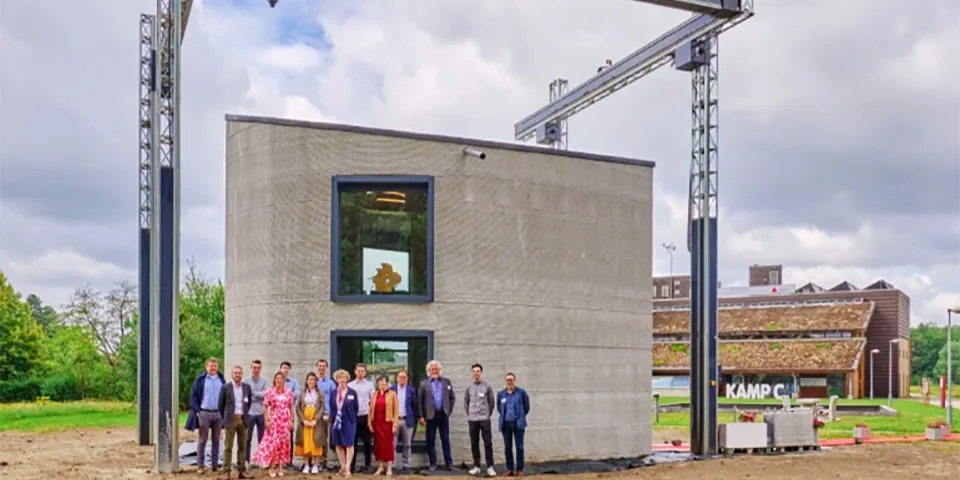
3D printing is one of the latest trends in the construction industry. It is being watched with great interest, and expectations are high. The technology is still in its infancy, particularly in Flanders. In response to the major challenges facing the construction industry, including CO2 reduction, material circularity and energy efficiency, new techniques are being tested on a large scale.
3D printing: a revolution in the construction industry
Printed in one piece
The aim of this project was to print the building envelope as a single unit, directly on site. According to Emiel Ascione, project manager at Kamp C, this is an exceptional project. It is not the first 3D-printed home ever built, but it is “unique (…) in that the house was printed as a single unit using a fixed 3D concrete printer.” It is also a two-storey home. Most buildings printed to date have had just one storey, were printed in a factory and assembled on site. Printing everything in one piece saves a great deal of time and transport. It took three weeks in total to construct the building, but it is expected that, in future, a home could be printed in just two days. This could save an estimated 60% in materials, time and money.
A healthy home with adequate ventilation
Thermal bridges in a home lead to higher energy consumption, and higher energy bills for the end user, prompting us to insulate our homes. This printed home was designed with this in mind, to minimise thermal bridges. The air inside a well-insulated, airtight home is heavily polluted with CO2, moisture and toxic VOCs (volatile organic compounds) simply as a result of people living in it. Ventilation is therefore extremely important for comfort and health. The project uses Renson’s C+ system. The Invisivent Air, the window ventilator that sets the standard for acoustic, energy and thermal comfort, supplies fresh air naturally, while polluted air is extracted mechanically.
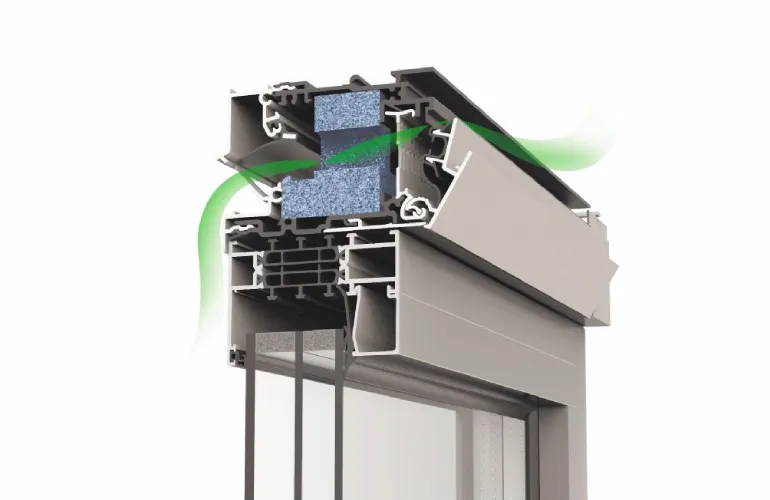
Healthbox 3.0, a smart, connected ventilation system
The Renson Healthbox 3.0 is described as a smart ventilation system because it only ventilates where and when people are present. The ventilation system continuously monitors CO2 levels in the home. This is a substance found in the air we exhale. High CO2 levels mean that the air quality is no longer healthy and the air needs to be refreshed urgently.
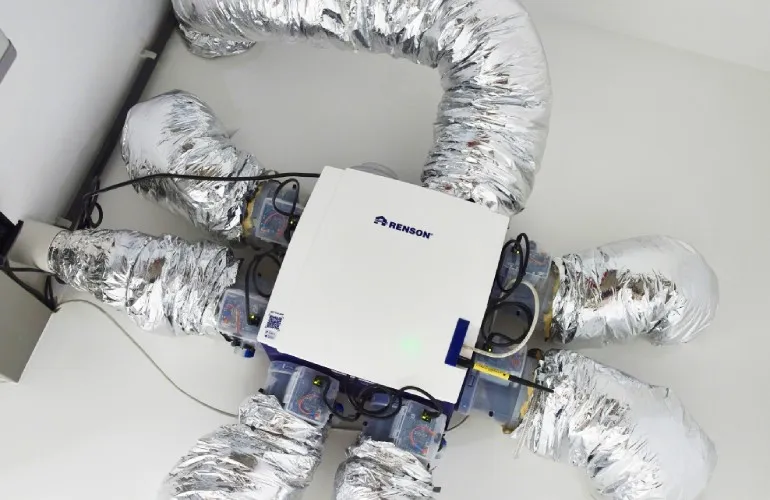
When everyone is at work, the ventilation system operates at its basic setting. If people are present in, for example, the kitchen, the smart ventilation system provides extra ventilation there. In other words, the Healthbox 3.0 adapts fully automatically to the end user’s lifestyle.
Proud
As an established name in the construction industry, we recognise the enormous value and potential of this project. We are very proud to be able to contribute our innovative ‘Healthy Living’ solutions. More and more attention is being paid to the health and comfort of the end user, which is clearly a very important and positive development. A project like this gives that progress an extra boost.
Watch how the home was built here:
Question about this story? Ask your question
Keep following this
Get an email when a new story is published. No account needed.
- SubjectNews







