











Ecodesign and energy labelling: revision on the way
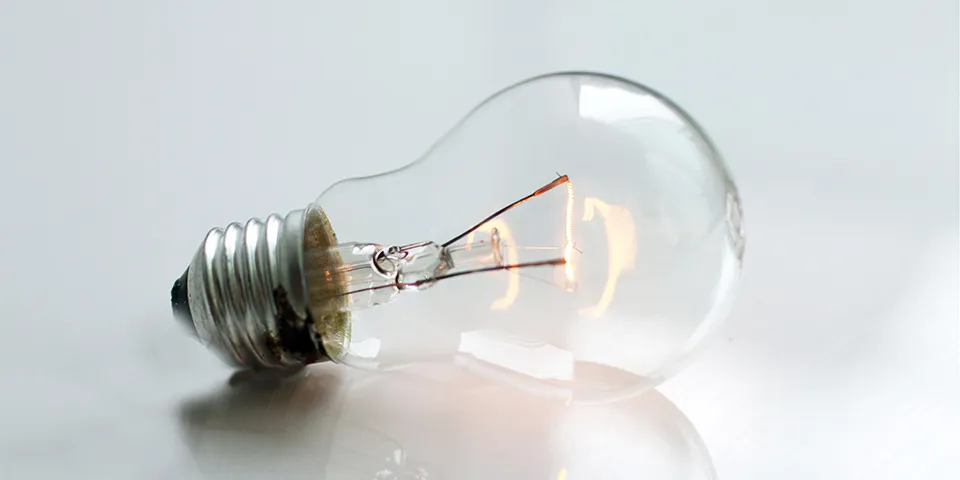
Since EU Member States jointly decided to ban energy-guzzling lamps, much has changed, and certain lamp types are no longer available. The European Ecodesign Directive lies at the heart of this, an essential part of the European Union’s policy to improve the energy and environmental performance of selected products. The phase-out is taking place in stages. Here is a refresher.
What are ecodesign and energy labelling? The aim of this legislation is simple: to improve the energy efficiency of products and thereby save energy and raw materials. In addition, from a ‘material efficiency’ perspective, targets for product recyclability, repairability and durability have recently been introduced through revisions to existing product groups and new ones. This is achieved by setting minimum requirements for products (ecodesign) and making it easier to compare products (energy labelling). But not arbitrarily. These decisions are preceded by a substantial process in which numerous parties have a say and market impact is continuously monitored. The purpose of this process is to establish whether enough more energy-efficient alternatives are available on the market to make future ecodesign targets realistic.
For example, the original date for phasing out certain types of halogen lamps
was pushed back from 1 September 2016 to 1 September 2018, because the process showed that consumers did not have enough alternatives available. New legislation is on the way for both ecodesign and energy labelling. The proposal brings together a number of ecodesign and energy labelling product groups. Where previously the legislation referred to lamps and luminaires, the new proposal refers to ‘light sources’. This simplifies the legislation on the one hand, but also requires careful interpretation, since luminaires with non-replaceable lamps are also included under the term ‘light sources’. Control gear has also been added to the legislation. Technology federation Agoria, like various other parties, is closely monitoring its publication
and will communicate about it in due course.
An example of an energy label for an LED lamp. Where it says ‘example LED lamp’, the brand name and type designation appear.
Comprehensive database
Already in force: a new registration requirement in the energy labelling database, EPREL. Since 1 January 2019, all products covered by energy labelling legislation, not just lighting products, have had to be registered before being placed on the market. Manufacturers and importers are required not only to register products, but also to upload the necessary documentation to the database. This includes energy labelling data and technical documentation for each product type. All energy-labelled products placed on the market on 1 January 2019 had to be registered in the database by that date. For products placed on the market between 1 August 2017 and 1 January 2019, the registration deadline was 30 June 2019. Today, therefore, every product covered by the legislation must be uploaded to the EPREL database. The result is a huge database containing a mass of products and data on their energy efficiency. Once fully completed, EPREL will consist of three main parts. The first part was discussed above and is already online. This is where manufacturers and importers must upload their products and information according to set structures. Parts two and three of EPREL are not yet ready and are therefore not online. For simplicity, we will call part two the consumer section. End customers will have access to it, where they can search for products, view information and compare them. Part three will be used by the authorities to
check the data submitted by manufacturers and importers. EPREL’s aim is to create a fair and transparent market.
Talks
Ecodesign, energy labelling, EPREL… it may seem like a complex web. If you are losing track (or have already lost it), there are support services available. We spoke to Charlotte van de Water, energy expert at technology federation Agoria. She closely follows decisions, revisions and other regulations. She regularly publishes information on this subject on the Agoria website (https://www.agoria.be/nl/ecodesign-en-energy-labelling-Wat-wijzigt-er-rond-verlichting) and knows every detail of this
legislation.
Question about this story? Ask your question
Keep following this
Get an email when a new story is published. No account needed.
- SubjectNews







